
Johanna Jainchill
It wasn't a great surprise to learn that the most-read stories on Travel Weekly's website this year were driven by world events: the war in Iran, a brief spate of violence in Mexico and alerts about travel safety all have major travel-planning ramifications.
But it does indicate just how important it is for our readers to understand global events and be confident in how to help clients adapt and pivot.
I reached out to Mignon Houston, deputy spokesperson for the U.S. State Department, to discuss current events and how advisors can help clients feel safe going abroad.
Her advice was to rely on the State Department's detailed, destination-specific information rather than headlines. One of the most-underutilized resources available to the industry, she said, is travel.state.gov, which she called a "one-stop shop" for Americans planning international trips, with information ranging from visa and entry requirements to vaccination guidance and local safety concerns.
"The message is, travel is safe, but when you are prepared, when you are informed," Houston said.
I told her that the sweeping nature of U.S. travel advisories can be confusing, and that when people see a Level 2 or 3 for a country ("Exercise Increased Caution" and "Reconsider Travel," respectively) due to serious risk, they might not understand that whatever unrest, health event or natural disaster caused it may be confined to one area and not impact others.
Houston said it's important to read the guidance closely, as it drills down to regional conditions.
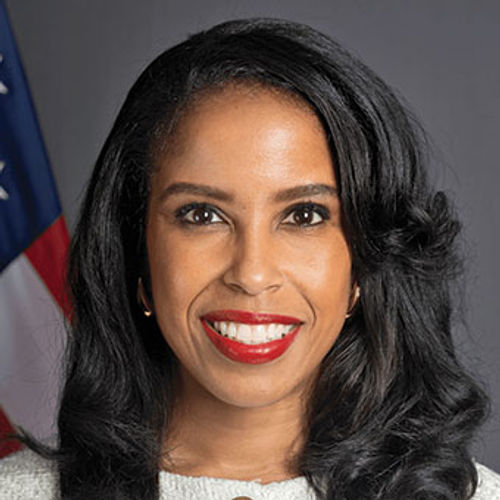
Mignon Houston
She pointed to Mexico as an example. A traveler heading to a World Cup match in Guadalajara, she said, will find the host city unaffected, while other parts of the surrounding state of Jalisco carry a higher advisory level.
"We take a lot of care in updating these travel advisories," she said.
It does take several clicks to find that drilled-down information. I had to get through a Level 3 for Jalisco to find that there are "no restrictions on travel in the Guadalajara Metropolitan area, Puerto Vallarta (including neighboring Riviera Nayarit), Chapala and Ajijic."
Another tip she had was to promote enrollment in the Smart Traveler Enrollment Program (STEP), which sends travelers real-time alerts from U.S. embassies and consulates related to any public health events, civil unrest and security incidents. And every U.S. embassy and consulate has a unit to assist with emergencies such as lost passports, illness, assault or arrest.
"I remember in the past, just kind of pointing to a picture on a map and saying 'That's where I'm going,' and buying my ticket and getting ready," Houston said. "But travel, internationally, it really is a responsibility."
Trusted sources
Our conversation came after I got a note from a travel advisor who said he was fielding questions about the Ebola outbreak from clients with safari plans in Africa and thought suppliers weren't addressing the situation as directly as he'd like.
I saw that during Houston's 20-year State Department career she'd been posted around the world, including in parts of Africa. I asked, given Americans notoriously poor geography skills, how travel advisors can talk to clients about the Ebola outbreak in the central African countries of Uganda and the Democratic Republic of the Congo.
She said to rely on official, localized guidance from the State Department and the CDC. So I looked up information for several major safari destinations: Botswana, Tanzania and Kenya, and none have any health alerts around Ebola, even though Kenya and Tanzania share a border with Uganda, which has a Level 4 advisory ("Do Not Travel") because of the outbreak.
"We want Americans to enjoy their trip, number one, and the best way to do it is to feel confident, to feel prepared, to feel like you have everything you need," she said. "Just a couple extra steps will get you there, and you'll be in good shape."
Her advice dovetailed with a Forum that ran on the Travel Weekly website this week from Jenn Lee, president and chief marketing officer of Travel Planners International. In it, Lee said advisors who have successfully kept business humming right now were "treating uncertainty as a reason to reach out, not pull back" and positioned themselves as the person with "answers when everyone else was adding to the noise."
The travel industry can't control wars or virus outbreaks, but it can control how it responds to them. For advisors, rather than challenge their business model, uncertain times are a reminder of why they exist.
It was a point underscored by Erin Florio, the global features director at Conde Nast Traveler, who said during a Travel Weekly consumer editors roundtable discussion in March that travel advisors are "not here just to tell us where to go and give us the most exclusive access. You're really there to help us pivot, navigate. ...Tell us how to get out of these situations that we find ourselves in unexpectedly."