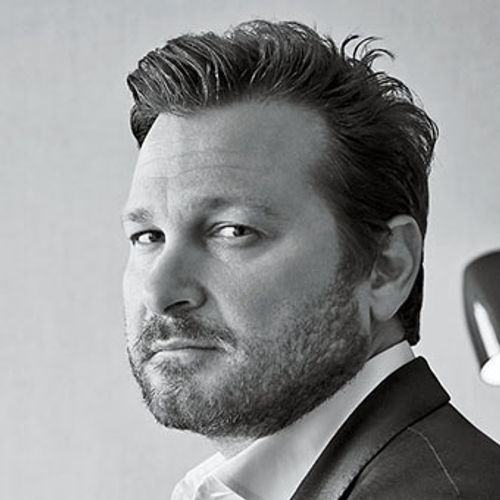
Jason Pomeranc
Sixty Hotels' Jason Pomeranc has operated in the boutique-luxury market since co-founding Thompson Hotels with the 2001 opening of New York's 60 Thompson. Thompson merged with Joie de Vivre Hotels in 2011, and while Pomeranc and his partners sold their share in 2013, they kept five hotels and have been competing against Thompson in New York ever since. With the Sixty Nautilus opening in Miami in October and the Thompson Miami Beach opening a year ago, the two companies now also compete in South Florida. Pomeranc, 44, spoke to hotels editor Danny King.
Q: What are your thoughts on Miami's South Beach and its rapidly changing hotel scene?
A: South Beach has evolved a lot during the last couple of years. It's getting a much broader audience and a much larger demographic. There is a big market for a more sophisticated and evolved product. It's not just a party culture anymore. For many years, there was a particular model on how to do a South Beach hotel. It was probably the Delano. That's changed.
Q: Do you view Thompson Miami Beach as a competitor to Sixty Nautilus?
A: It's a sensitive question. I was involved with Thompson in the early stage. It's a very different product than what I conceived. I don't think it's a [Miami] competitor at this point, and location is one reason. We're really in the heart of South Beach. I hope it goes well [for Thompson], but they're not first on our radar. We're really more geographically focused on our neighbors: the Delano, the SLS and, to a certain extent, the W.
Q: How has the boutique-hotel sector changed since you launched Thompson Hotels in 2001?
A: We built our brand [Thompson] and realized 10 years later that there's been an evolution because of the entry of the bigger brands following the playbook we did 10 years prior. So, to be relevant, you have to be in touch with what's the culture of our customer. They're a much more educated clientele. We can't hand it to them; we have to challenge them.
Q: With such a proliferation of boutique brands, especially within larger hoteliers, how will Sixty Hotels differentiate itself?
A: You have to deal with the aesthetic, and it's much more complex than it used to be. It's purposely eclectic and site-specific, and it's designed with a passion of someone designing a great home, so you can't pigeon-hole it. It's not just, "I need a big-name chef" or "check the box of a PR company." It's very soulful, and that can only be done with a small group of people. It can't be done in board meetings. Now don't get me wrong, I think it's wonderful that big brands are taking cues from operators like Sixty and are making them the new normal. That creates a different baseline for what the traveler can expect so that, 10 years from now, the Hiltons and Sheratons will really be different. That's evolution.
Q: Does Airbnb's growth have a greater impact on chain hotels or on smaller operators like yourself?
A: We're less susceptible. People are looking to us for a lifestyle and cultural experience. You can't get that with Airbnb. It's more of an attack on the extended-stay product. Having said that, when they flood the market and hotels are subject to standardization and taxation, it's obviously going to affect the market. It's illegal in New York, and it should be. It's creating an unfair playing field. I find the nature of the deregulation and lack of accountability troubling.