We took in the beauty of historic teahouses and wooden machiya townhouses while wheeling our suitcases down Hanamikoji Street in Kyoto, Japan.
And when we reached the 55-room Imperial Hotel, Kyoto -- in a courtyard, at the former site of a renowned public theater -- I began to understand what the newly opened property would mean to Gion, the city's historic geisha district.
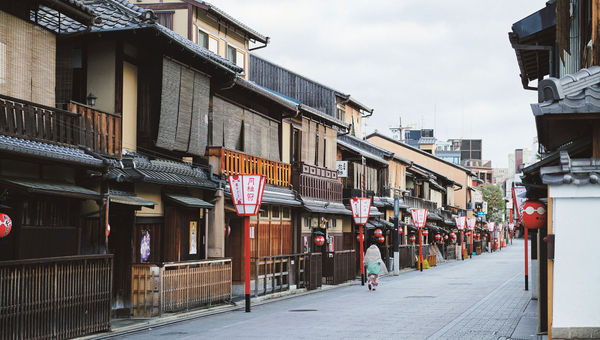
The Imperial Hotel overlooks Hanamikoji Street, one of Kyoto’s historic roads. Photo Credit: Imperial Hotel
My husband and I were among the first to stay at the hotel, which opened in March. The Imperial brand is known for its flagship property in Tokyo, which has more than 900 rooms and whose 1923 building was designed by Frank Lloyd Wright. While that setting offers big-city bustle, the new hotel welcomes guests in a serene setting that honors the destination's heritage -- just what we wanted for our stay.
Historic preservation
The hotel began as the Yasaka Kaikan theater in 1936, a key cultural center and nationally registered Tangible Cultural Property in Kyoto for its artistic and historic value. Geiko, the professional female performing artists known elsewhere in Japan as geishas, helped fund the theater's construction. After the building decayed over the years and closed, the geiko community sought to revitalize the structure, and the Imperial brand promised to reuse and restore as much of the original structure as possible during a multiyear renovation.
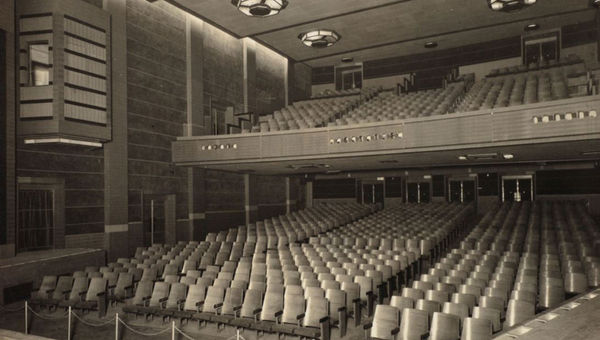
The former Yasaka Kaikan theater was built in 1936. Photo Credit: Yasaka Kaikan
They fulfilled that commitment with striking architectural details throughout the hotel. The first is visible from the street: Crews removed and cleaned tens of thousands of decorative tiles, handpicking some 16,000 for the new exterior. They also preserved or replicated terracotta reliefs and rebuilt the roof with copper sheet tiles.
Inside, walls of Oya stone pay homage to Frank Lloyd Wright, who used the same Japanese material in the Tokyo hotel. The southern and western exterior walls were retained from the theater, as was the etched glass ceiling in the entryway foyer. Add in domestic zelkova hardwood, Japanese marble and Tamina-ishi stone, and you get a minimalist design that feels expansive.
New meets old
Guestrooms within the hotel are divided into three areas: extension, preservation and renovation. In the new extension section, rooms with tatami flooring and Earth tones visually echo the machiya townhouses nearby. If clients book one of eight rooms in this wing, they may glimpse geiko and maiko (apprentices) strolling outside the window.
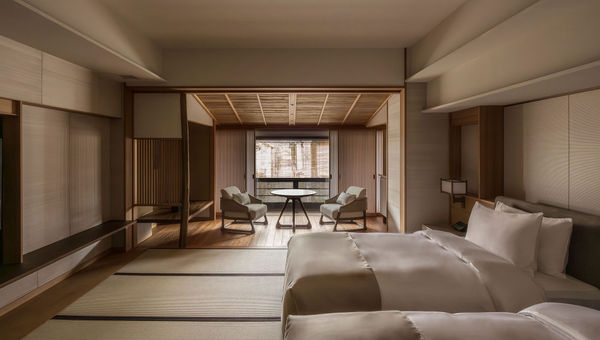
A guestroom at the Imperial Hotel, Kyoto Photo Credit: Masatomo Moriyama
In the preservation area, I found that the beams, pillars, window frames and other architectural components from the original 1936 structure enhanced the atmosphere of the guestrooms. Balconies in some rooms overlook the theater and lively courtyard.
Our spacious accommodations were in the renovation wing, with sunny windows, Japanese cedar wall boards and brushed metal lights. In the well-appointed bathroom, we appreciated the shampoo and other guest amenities in sleek, individual aluminum tubes to reduce single-use plastics.
Culinary quests
Though the hotel offers Western breakfast options at Yasaka, one of its two restaurants, we looked forward every morning to its Japanese breakfast. It arrived in a three-tiered wooden basket with multiple small dishes inside. Fish for a morning meal might not be what you'd choose in America, but here it made perfect sense. We relished small portions of grilled silver cod, salmon roe in soy sauce, black sesame tofu, taro and more. I even liked the squid sashimi, a dish I always found rubbery back home.
In the evenings, hotel guests can experience an intimate French dinner with regional ingredients at the 10-seat counter at Ren restaurant. (Or, if clients would prefer Japanese cuisine, book them the multicourse kaiseki dinner at Michelin-starred Gion Fukushi, less than a five-minute walk away.)
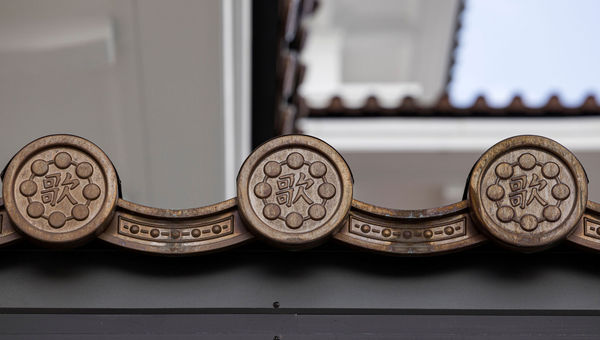
Roof tiles on the eaves, featuring the character 歌 or "to sing," remind visitors of the building’s original purpose. Photo Credit: Masatomo Moriyama
The indoor Old Imperial Bar at the hotel offers Kyoto-inspired cocktails. We opted to cap our evenings at The Rooftop, an outdoor bar reserved for hotel guests with views of the Kiyomizu-dera Buddhist temple, the Heian Jingu Shrine and Mount Hiei. The view will never be obstructed, we learned, as there's a restriction in the historic district on new construction projects over 40 feet high. However, the Imperial Hotel received an exception to maintain its previous height as a theater.
Immersed in Gion
We walked miles each day, including a tour of the neighborhood where we enjoyed performances from a geiko and a maiko and learned about their lives on and off the job. The hotel is in an ideal location for such explorations. Yasaka Shrine, a holy place in the Shinto faith, and the Kenninji Temple, featuring the oldest Zen temple in Kyoto, are among the landmarks within easy walking distance.
We arranged our own activities, but guests can take advantage of the concierge team for event bookings, plus intriguing cultural experiences. If we'd had more time, I would have tried the Kyo-Yuzen silk dye painting to create a custom memento. Other options include Gosho doll painting workshops, private rickshaw tours of historic Kyoto or access to the private teahouses called ochaya, where geiko entertain.
A refuge in the city
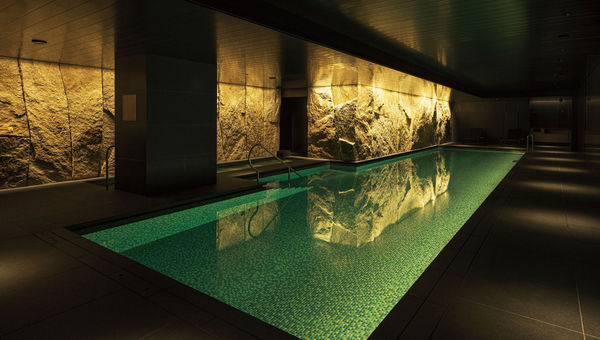
Walls lined with Kitagi stone add to the atmosphere of the hotel pool. Photo Credit: Imperial Hotel
Though the Imperial isn't marketed solely as a wellness retreat, its peaceful atmosphere can make it feel that way. Kitagi stone, a hallmark of the Yasaka Kaikan's original exterior, encloses the cave-like indoor pool beneath the hotel. At the spa, some treatments include Kyoto incense or sound meditation.
The quiet care extended to the evening when, in a rush to make a dinner reservation, we tossed our daytime clothes onto the bed and headed out. When we returned, someone from the hotel's turndown service had folded our clothing, refreshed our flowers and neatly coiled and clipped the cord to my phone charger.
If only someone would do that at home.