This is the third in a series of four Dispatches from Travel
Weekly editor in chief Arnie Weissmann about his pledge drive to raise money
for Tourism Cares
by climbing Mount Kilimanjaro with his daughter, TravelAge West associate
editor Emma Weissmann, and son Dashiell, a student at Boston University.
It was the evening before summit day, but the guides and I
were debating whether to send my 19-year-old son, Dash, down in a stretcher
that night or wait until morning. We were at our highest camp yet -- 15,000
feet -- and Dash was nauseous and sick to his stomach. He could barely sit up,
let alone contemplate climbing another 4,300 feet.
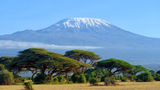
Photo Credit: Getty Images/Byrdyak
More from Arnie
"Go tell
it on the mountain."
By combining a Kilimanjaro climb with a pledge drive benefiting Tourism
Cares, Arnie Weissmann said he could overlay meaning, motivation and inspiration to a trip he'd
put on hold for too long.
"Facing the wall (and abject fear)."
Kilimanjaro keeps getting closer. Interestingly, the further you are from it, the more intimidating it seems.
"In the shadow of Kilimanjaro: Moshi Mamas."
We encountered some real challenges climbing Kilimanjaro, but were always motivated by the purpose and meaning that inspired this adventure.
His sister Emma and I wept. His life was not in imminent
danger, but if this was indeed altitude sickness, there was only one cure:
moving him to a lower altitude. We had all agreed ahead of time that if one of
us couldn’t make it all the way to the top, the others would still go on. But
even if Emma and I summited the next day, the accomplishment would feel
diminished.
Both the lead guide and assistant guide were medically
trained to deal with high-altitude sickness. Every morning they went through a
12-point medical questionnaire with each of us (“How is your appetite? Have you
been coughing?”), listened to our lungs with a stethoscope and took
blood-oxygen and pulse readings. Eliakim Mshanga, the lead guide, had led 280
ascents, and he wasn’t convinced Dash had altitude sickness. He thought perhaps
he had picked up a bacteria and had administered an antibiotic earlier in the
afternoon, as well as giving him oxygen. He said we should wait until morning
and see how Dash was doing before deciding next steps.
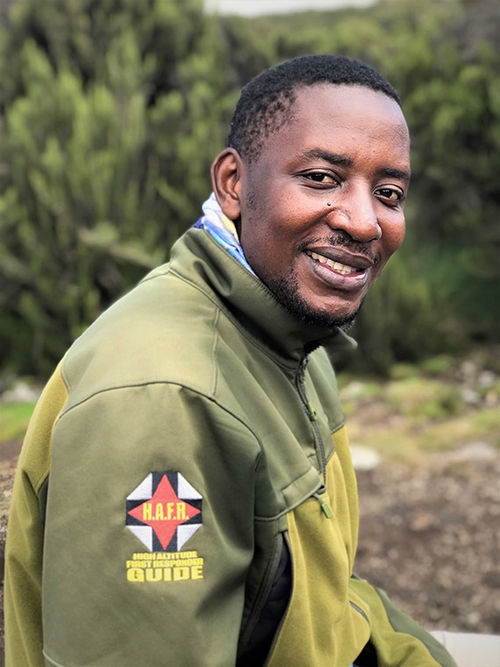
Lead guide Eliakim Mshanga, trained to assess high altitude-related illnesses, suspected the underlying cause of Dash’s symptoms was a stomach bug. Photo Credit: Arnie Weissmann
At 4 a.m. the next morning, Eliakim came to my tent. “Let me
control the game,” he said, referring to evaluating Dash’s condition. I
assented, though I added that as Dash’s father, I might want to take back
control at some point.
Eliakim went into Dash’s tent. I could hear him encouraging
him -- “You can do this!” -- and he
began dressing Dash as one might dress a 2-year-old. Dash got up and joined us
for breakfast, looking weak but with more color in his face than the night
before.
We started out into the dark, wearing head lamps. The first
part included an almost vertical scramble over boulders. Dash kept moving.
As the first rays of sun lit the horizon, we took a break
and assistant guide Pastori Minja poured pure white glucose powder -- “Kilimanjaro
cocaine” he called it -- down Dash’s throat, washing it down with water. The
grade of the trail continued to get steeper, and Dash continued to climb, the
glucose and guides’ encouragement keeping him moving.
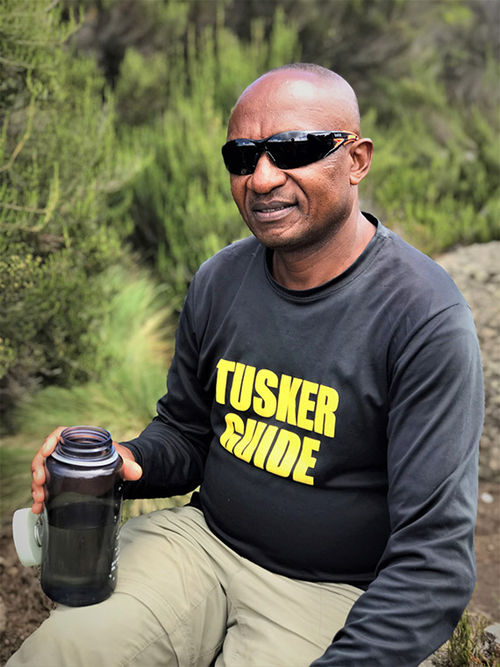
Assistant guide Pastori Minja. Photo Credit: Arnie Weissmann
At 17,000 feet, Eliakim took me aside. “What do you think?”
“He’s not complaining,” I said.
Eliakim went to Dash. “We’re at the point of no return,” he
said to him. “Up or down?”
“Up,” Dash replied.
At 18,000 feet, I knew Dash was feeling better when he asked
me to take a picture of him with the peak of Mawenzi, an extinct volcano,
behind him. He flashed a broad smile.
When we reached the glacier at 18,885 feet, Dash seemed
completely back to normal. The final 45 minutes, to Urhuru Peak at 19,341 feet,
was on a snow-packed trail through a sleet storm, but the sting of the sleet
didn’t bother us -- we knew we were near the end of our seven-day ascent. When
we saw the sign saying we had reached Africa’s highest point, the feelings of
emotion, elation and exhaustion came together in a mix akin to euphoria. We had
made it. We all had made it.
We spent about 20 minutes at the top, hugging each other,
hugging our guides, taking photos. Having made a relatively late start, we were
the only ones on the mountaintop, and our guides led us in a song of
celebration.
Tired though we were, we still had another challenge -- our
camp that night was 5,870 feet below us, via scree and a rocky trail. We had
started the day in the dark, and we would end it in the dark.
View this post on Instagram
Day 7 — Summit day! The night before was very emotional. Dash was feeling very ill, and we were debating with the guides whether to send him down in a stretcher that night or wait until morning. We were all bummed. But guide Eliakim — who has led 280 summits — sensed it wasn’t just altitude, but that Dash had caught a stomach bug, and gave him an antibiotic. In the morning, he motivated Dash to give it a try and, with encouragement and glucose powder, Dash rallied and climbed another 4,500 feet. We all made it! 2) As we climbed, the scenery changed to a moonscape with no vegetation. 3) We knew Dash had recovered when we saw this smile at 18,000 feet. 4) Stella Point is where you reach the plateau and glacier. 5 & 6) We took a short break there before the final ascent; behind Dash and Emma, the snowy cauldron. 7. The last 45 minutes, a steady upward trek, was through fog and a sleet storm. We were emotional, elated and exhausted when we finally saw the sign through the fog and sleet saying we made it! The guides led us in a song of celebration, before we began a 5,870 foot descent through scree and rocks to Millennium Camp. 8) On our way down, we passed wheeled stretchers used to bring down accident victims or those with acute altitude sickness. 9) Our final view of Kili before darkness fell. We started and finished this very long day in the dark. @tuskertrail @officialkenyaairways @ntgtravel @tourismcares #tourismcares #kilicares #kilicareswhentourismcares
A post shared by #KiliCares (@kili.cares) on
The next day, our eighth since we began, we had another
7,000 feet to descend over an uneven, rocky path and then mud and rain. But we
began the day with a ceremony of thanks to the 19 porters who accompanied us.
Most of the porters were actually carrying provisions, supplies and tents for
other porters and the guides -- like us, they had their own cook, food for
eight days, tents, etc. The logistics of a climb for just three people becomes
fairly complex, though climb organizer Tusker Trail made it seamless.
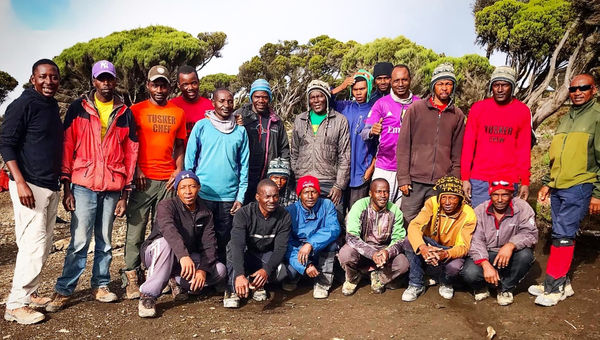
The Tusker Trail team of porters and guides kept us safe, motivated and comfortable. Photo Credit: Arnie Weissmann
The porter team was amazing, from start to finish -- whatever
we did, they did as well, right up to our camp at 15,000 feet, but without the
aid of trekking poles, while carrying significantly more weight and then being “on
duty” while we rested. Nonetheless, the entire team maintained a cheerful
disposition that we often wished we could muster after a day on the trail. We
were endlessly amazed by their strength, stamina and grace. Our success was
intricately tied to their support -- we never forgot that en route, and never
will.
We had been told that more accidents occurred on the descent
than the ascent, and I could believe it. We weren’t being rushed, but we seldom
heard “pole, pole” (“slowly, slowly”) anymore.
The flora continued to amaze us. We sidestepped columns of
fearsome red ants crossing the trail, and we happened across a beautiful civet
cat, the first any of our guides had seen on the mountain.
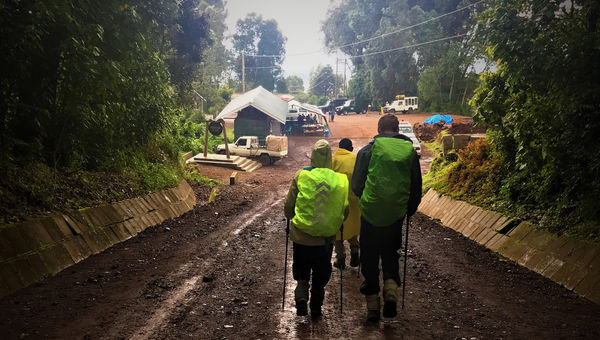
After eight days ... back to civilization. Photo Credit: Arnie Weissmann
There was a sense of accomplishment in having climbed
Kilimanjaro, but our journey wasn’t over yet. We had made the climb to raise
money and awareness for the industry nonprofit Tourism Cares, and we are still
hoping to move the total significantly higher. The following day we would visit
a fantastic project to teach local women tourism-related business skills in
Moshi, the town closest to Kilimanjaro. If it checked out as we hoped, it would
receive some of the money we were raising for Tourism Cares.
To be continued.
___
The Weissmanns are back from their climb, but the pledge
drive that inspired their journey continues. They climbed to support the
industry nonprofit Tourism Cares; click here to show your support with a
donation. Also, check out the pledge drive Instagram feed: @Kili.Cares.
Climb sponsors/disclosures: Sponsor Tusker Trail provided a
50% discount to operate the climb; sponsor Kenya Airways provided roundtrip air
from New York to Kilimanjaro International Airport; sponsor Northstar Travel
Group, parent company of Travel Weekly and TravelAge West, provided email
blasts and advertising space to solicit pledges.
Many thanks to the corporations and individuals who have
donated to the pledge drive so far. Click for a complete list of donors and
acknowledgements to those who supported the pledge drive.
Please add your name to the list by donating!