In the bright lights of Istanbul's Galata neighborhood, sleep seems useless. Music from nearby clubs and bars thumps out into the streets until the wee hours, while tourists and locals alike spill from the downstairs bars to the rooftops to take in the glittering cityscape over the Golden Horn.
In the glitz and glam that is Galata, neighboring Karakoy has stayed tucked and forgotten in the shadows. What was once a thriving financial center in Istanbul's history had fallen on dark times and was left a relic of what it used to be. But over the last few years, Karakoy has found a new voice and is calling people out of Galata and into a new, modern Istanbul.
During the Ottoman period, Karakoy was a thriving center for commerce and banking. But throughout the 20th century, the banks and insurance companies closed their headquarters and were replaced with industrial shops, while warehouses lined the waterfront. It became a shell of its former self with lighting shops, disgruntled fishermen and abandoned streets, while Galata grew around it as a thriving tourist hub.
"Karakoy is one of the longest-established and very historical districts of Istanbul," said Pinar Kartal Timer, the general manager of the Pera Palace Hotel Jumeirah, a luxury hotel in the nearby Pera neighborhood. "The history goes back to the 13th century when Genoese, Venetian and Catalan merchants settled in the area to make trade. In the 20th century, it became the financial center of the city. These were the glamorous days of Karakoy.
"However, with the move of the banks and the increased traffic of the harbor, lower-budget establishments and spare-part shops opened to serve sailors, which turned Karakoy into a less popular neighborhood."
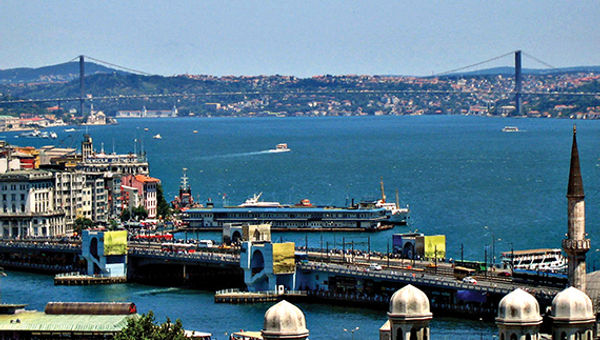
The Istanbul Salipazari Port Area has nearly 4,000 feet of coastline.
But at the turn of the 21st century, Karakoy was given a second chance, and today it is re-emerging as one of the hottest neighborhoods in Istanbul. Teamed up with Galata and Pera, the Beyoglu district (which is home to Pera, Galata and Karakoy, among other neighborhoods) is now the "it" spot in Istanbul.
Karakoy's revitalization unofficially began in 2004 with the debut of the Istanbul Modern Museum, which opened in a converted customs warehouse. The 86,000-square-foot space brought with it a wave of bohemian artists and art lovers, and where there are artists, real estate will follow. Karakoy began to pull in creative and bohemian types in search of cheap rent and a new, thriving art scene. With a prime waterfront location, seaside cafes and restaurants soon followed. Today Karakoy is a mix of industrial past and bohemian chic, where hardware stores share the block with late-night clubs, trendy boutiques, foodie havens and soaring rent prices. It has become the type of neighborhood that today's young travelers are desperate to discover.
"As Karakoy is a nonresidential area, it can be divided into two groups: during- office hours and after-office hours," said Timer. "During the office hours the majority of the crowd is local shop owners, restaurant workers, fishermen, students and cruise line passengers. The scene of the area changes a lot after the working hours, as it is time for dining and clubbing. You can find celebrities from all over the world, local people having fun, expats and tourists willing to explore the bohemian part of the city."
Book a boutique stay at Karakoy Rooms, a modern lifestyle hotel with nine bedrooms. The hotel sits in a renovated building upstairs from Karakoy Lokantasi, which is one of Istanbul's most well-known Turkish restaurants. A local favorite is Unter, a cafe and bar that serves Turkish, Italian and American fare and is open until the early hours. Late night, Unter turns into a hotspot for DJs and night owls. For more late nights, visit Fosil, a speakeasy-style spot that is accessed by walking down a dark corridor and taking an elevator to the third floor. Guests are greeted with a view of the Bosporus and an expansive bar. Food is also served for lunch and dinner.
But Karakoy's development is far from over. While the neighborhood has paused in a grit-meets-glam hold, it will not last. In 2001 an idea for the Galataport Project was introduced, a plan to completely revitalize the port area in Karakoy and transform it into a sleek waterfront. In 2013, developer Dogus Holding won the $702 million tender to convert the port, one of the 10 largest in Europe, into a popular coastal area packed with hotels, cafes, retail shops and space for cruise ships.
"The existing buildings will be renovated respecting their authentic forms and will acquire new functions," said Timer. Construction is anticipated to begin this year and is slated for completion over the next 2.5 years. The Istanbul Salipazari Port Area has nearly 4,000 feet of coastline and 25 acres of space. It's only a matter of time before Karakoy crosses the line from charismatic to cliche.