Sicily is Italy in high definition. Just off the toe of the Italian boot, it is the largest island in the Mediterranean, and everything here seems heightened -- the light sharper, the colors more vivid, the flavors richer, the contrasts between history and modern life more striking.
From volcanic landscapes, turquoise waters and dishes that celebrate land and sea to ornate aristocratic palazzi and ancient theaters hewn from rock, Sicily offers a versatile sweep of experiences.
Nowhere is this perception more vivid than in the island's southeast, in the province of Ragusa, where a cluster of baroque towns with dramatic architecture, golden stone and sun-drenched piazzas tell a story of both destruction and reinvention.
Four of these towns -- Ragusa, Modica, Scicli and Santa Croce Camerina -- are Unesco World Heritage sites, while a fifth, Ispica, fell short of the designation but matches them in artistic flair and architectural drama. Together they have launched the Enjoy Barocco -- Sicilian Experience brand, supported by GAL Terra Barocca, a partnership of local public and private players. The aim is to showcase the shared heritage and individual character of the Val di Noto towns while investing in tools to spark curiosity and make sure that visitors keep coming back.
"Digital innovation is central to our growth," said Marco Platania, director of the Enjoy Barocco Tourism Observatory. "On our portal we've introduced a business-intelligence dashboard specifically for travel specialists, an AI-powered chatbot to support visitors and English-language podcasts designed to bring the region's stories to life."
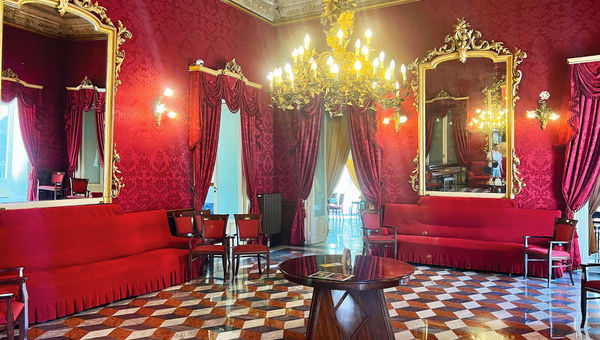
Ragusa's aristocratic palazzi have elegant salons reflecting the wealth of Sicily's baroque age. Photo Credit: Pamela McCourt Francescone
Barocca backstory
The Terra Barocca area owes its singular identity to a natural disaster. In 1693, a cataclysmic earthquake leveled much of southeastern Sicily. The rebuilding that followed skillfully blended Roman baroque grandeur with Mediterranean exuberance, with local limestone and lava stone used for sweeping staircases, carved facades, ornate balconies and churches designed to capture the light at its most dramatic.
The result is Sicilian baroque, a monumental and playful style that forms one of Europe's most enchanting cultural landscapes.
For U.S. travelers, this heritage is now closer than ever. In May, Delta Air Lines launched daily nonstop Boeing 767 flights from New York JFK to Catania Airport (just a 90-minute highway drive away), adding to the already solid network of legacy and low-cost carriers serving the island. This improved access, paired with new hotel product and destination initiatives, makes the Terra Barocca area increasingly attractive for custom itineraries.
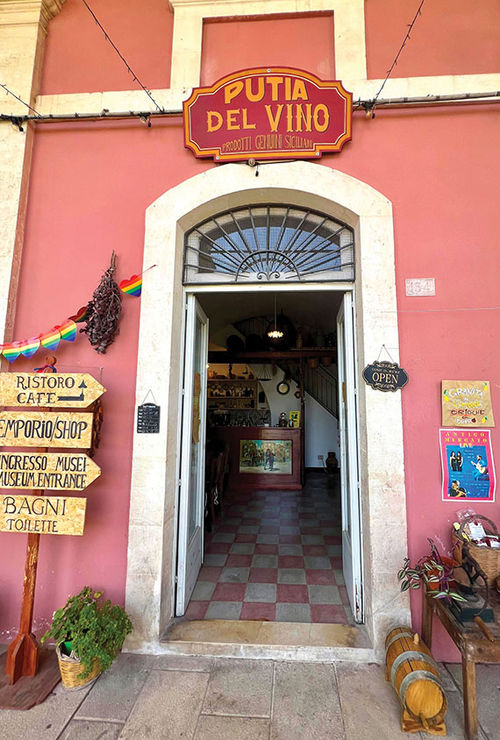
A typical putia, the old neighborhood shop reborn as a wine bar. Photo Credit: Pamela McCourt Francescone
Scicli is perhaps the most cinematic of the towns, having soared in popularity thanks to the long-running Italian TV series "Inspector Montalbano," which can be seen on various streaming services in the States. Fans of the show can step inside the town hall, which doubled as the detective's police station, or visit nearby Punta Secca, where Montalbano's fictional seaside home overlooks the beach in Santa Croce Camerina.
From the small marina, next to a 16th century tower and a 19th century lighthouse, boats depart for coastal excursions, adding a seaside vibe to the baroque splendor inland.
A feast for the palate ...
Modica, by contrast, is a feast for the senses. Known for its chocolate-making tradition introduced by the Spanish in the 16th century, the town is a pilgrimage site for food lovers. At Sabadi, a boutique chocolatier, visitors can taste bars infused with sea salt, Sichuan pepper and even tobacco and tour the world's first chocolate-aging cellar.
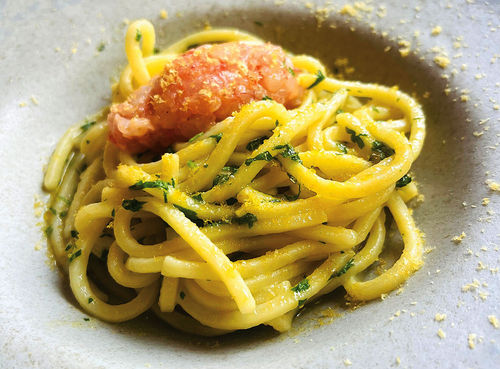
From Modica's famous chocolate to Mediterranean flavors, the region's cuisine pleases the palate. Photo Credit: Pamela McCourt Francescone
The dining in Modica is superb. Guests can enjoy a meal alfresco in one of the many restaurants on the town's lively main street, Via Marchese Tedeschi. At D'Abbana-Fichera 7117, the menu celebrates the sea, from ceviche to a tartare of Mazara's prized red prawns, alongside platters of lightly battered fish, or the succulent local roast suckling pig (maialino) and, in the fall, porcini mushrooms and truffles.
Modica's skyline is dominated by St. George's Cathedral, best appreciated from the majestic stairway that climbs up the steep hillside or by hopping on the Grand Tour electric train, which loops through the city in an hour.
Mayor Maria Monisteri said Modica is investing in cultural programming and cycling tourism to stretch the tourism season into spring and fall. This will offer travel planners more flexibility beyond the summer peak, as in this corner of Sicily you can still swim and sunbathe as the rest of Italy settles into winter scarves and coats.
Backing Monisteri's effort is the Terradamari Resort & Spa, which opened earlier this year in Marina di Modica. Part of Hilton's Tapestry Collection, the property has 42 rooms as well as three suites with private terraces and hot tubs. The spacious, full-service Ciatu Spa, private beach, meetings spaces and a restaurant serving fresh seafood and local specialties make it a natural choice for both leisure travelers and small groups.
... and a feast for the eyes
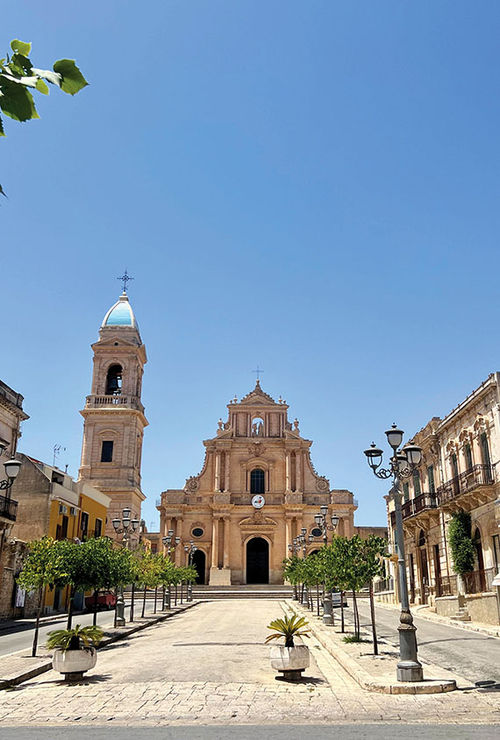
Ispica is outside the Unesco spotlight, yet has magnificent churches and other architectural gems. Photo Credit: Pamela McCourt Francescone
Ragusa, the provincial capital, presents two faces: modern Ragusa Superiore above and historical Ibla below with its aristocratic palazzi and the ornate San Giorgio Cathedral. Just outside town, Donnafugata Castle has handsome landscaped gardens and a collection of 19th century costumes that reflect Sicily's aristocratic past.
Though not included in Unesco's designation, Ispica more than holds its own against the other four towns with the Basilica of Santa Maria Maggiore and the Loggiato del Sinatra, a sweeping 23-arch arcade reminiscent of Bernini's colonnade in St. Peter's Square in Rome. This is one of the town's most Instagrammable spots, offering a reminder that even "off-list" and lesser-known places can serve up highlights that leave a lasting impression.
These towns deliver a high-value mix: Unesco heritage, cinematic cachet, genuine allure and branded accommodation, with Sicily's magnified light and flavors as a backdrop.
So whether admiring the sculpted balcony of a baroque palazzo or feasting on the day's catch as the sun sets over the sea, Terra Barocca serves up a pure dose of Sicilian authenticity, unveiling an Italy that feels both timeless and refreshingly new.