Tru by Hilton marked the hotel company's entry into the midscale sector when the brand's Oklahoma City property had its grand opening in May. Hilton is positioning Tru, its 14th brand, as a way to attract travelers looking to pay a little less than what Hilton offers with its Hampton upper-midscale badge. Alexandra Jaritz, global head of Tru by Hilton, spoke with senior editor Danny King.
Q: Given that the Oklahoma City property is a Tru prototype of sorts, have you had to tweak it?
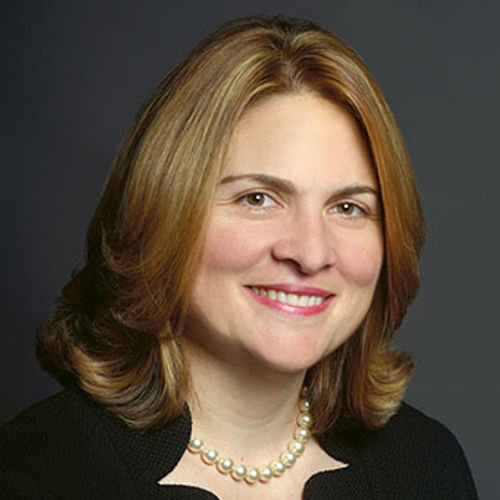
Alexandra Jaritz
A: Yes. We're all about being very fresh and contemporary, and some of the hues of the yellows were a little more traditional, so we went to a cooler blue. Rather than a beige wall vinyl, we went to more of a gray texture. And we went with canned lighting instead of LED strip lighting, which was harsh. Those were some of the nuances. But the bones of the hotel are absolutely solid, and, in terms of decisions, the sizing of the lobby and its layout have been working really, really well.
Q: Why was Oklahoma City chosen for the first Tru property?
A: Tru is 100% franchised, so in this particular case we really didn't choose the location. It just so happened that we had two groundbreakings; the other one was in McDonough, Ga. Those two were rivals, and it just so happened that Oklahoma City opened first. [Hotel owner] Champ Patel came to the U.S. in 1982 with limited resources, and now he has the largest privately held hotel portfolio [among Hilton property owners]. He was part of our original midscale advisory group, and he was very much a believer in the brand.
Q: What's next?
A: We're roughly expecting 15 hotel openings this year -- places like Lancaster, Pa., and Cheyenne, Wyo. -- and we're really going to ramp up to 70 openings in 2018. We have 425 deals in various stages of development. We are officially the fastest new-development pipeline in the history of the hotel industry, and we expect distribution and scale for this brand very quickly.
Q: What's the Tru prototype?
A: Our prototype is 98 keys, four stories, and [just more than 1.5] acres, so it requires a pretty small and efficient land size. We're shooting for roughly 15% to 20% lower total construction costs than Hampton, exclusive of land. We believe we will be Hilton's biggest brand yet.
Q: What's Tru's demographic?
A: Millennials, also [baby boomers and Generation X]. Really, anyone looking for a better price point at a greater value. With legacy products, it's hard to evolve with changing consumer trends, so there are a lot of consumers in those segments who don't want to sacrifice price for quality.
Q: With many new brands being upper-upscale and above, what's the strategy behind going midscale with Tru?
A: We're very strong on the upper-upscale and luxury side of things, but we had a real void. And 20% of our existing Hilton Honors members who'd looked for a midprice property within the past 12 months were staying at other [non-Hilton] hotels. So we're looking to gain that share of wallet. Also, there are another 20 million customers who we could target who have traditionally not been with our existing portfolio, in large part because of the price point or our features from our other brands weren't tailored to their needs. And if you look at the midscale segment, there hasn't been a lot of innovation in that segment.
Q: Why is Tru without the "e"?
A: It says we're simplified, we're spirited, we're grounded in value. Those are our pillars. We wanted to be more fun, a little different and unique. It's funny because the word 'Tru' has really helped us, and we've been having a lot of fun with that. For instance, in the logo, 'Tru' isn't in the center of the circle. And, realistically, the rights to 'True' weren't available.