Fort Lauderdale traces its roots to a general store built by Ohioan Frank Stranahan after the turn of the 20th century on the north bank of the New River.
The Historic Stranahan House Museum gamely survives 125 years later. But it sits in the shadow of the city's tallest residential tower, one of dozens to join the skyline in the past few decades.
While it was supplanted long ago as a center of tourism by Fort Lauderdale's beach, the city's downtown, with its mix of history and modernity, is increasingly a focus of visitor interest.
The meandering river and the Las Olas Boulevard shopping, dining and entertainment district are the chief attractions. And convenient to both is the Hyatt Centric Las Olas, the newest of a handful of hotels that serve the downtown market.
Opened in 2020, the 14-floor hotel is itself cojoined with a larger condo project. It is squarely on brand for Hyatt Centric, which is positioned as an accommodation option for guests who "want to be in the center of the action in prime urban destinations."
I spent a few nights as a guest of the hotel in April, affording me the chance to reconnoiter downtown and its visitor appeal.
In the neighborhood
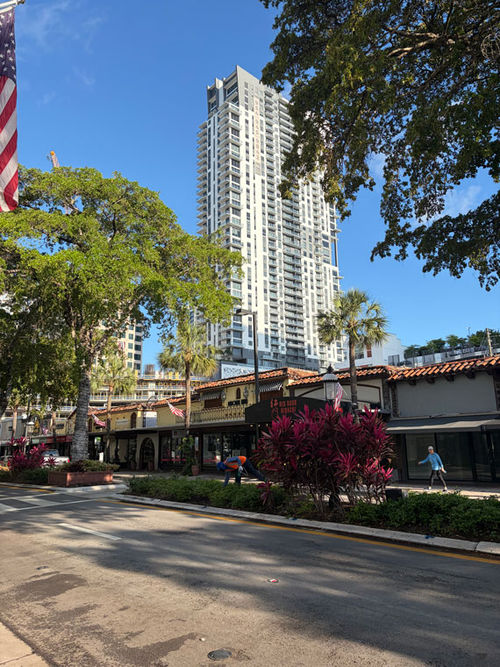
Fort Lauderdale's pedestrian-scale shopping street, Las Olas Boulevard. Its median and olive trees are being removed to provide space for emergency vehicles. Photo Credit: Tom Stieghorst
One of the delights of Fort Lauderdale is its riverwalk, stretching 2.5 miles along the New River, which is narrow enough to be picturesque and wide enough to be lined with oceangoing trawlers, catamarans, schooners and power yachts.
Seeing all the nautical finery on display is one of the best reasons to visit. But the riverwalk also connects some of the top attractions, from Stranahan House Museum on the east to the Broward Center for the Performing Arts on the west.
A district of pioneer buildings lies a few blocks west of the hotel, across a set of railroad tracks that carry the Brightline high-speed train. The Fort Lauderdale station is six blocks away. And close by the tracks is Himmarshee Village, a raucous nightlife district with an under-40 crowd.
Also accessible are the Fort Lauderdale Museum of Discovery and Science, the NSU Art Museum Fort Lauderdale and no fewer than 10 parks, one of which sits across from the Hyatt.
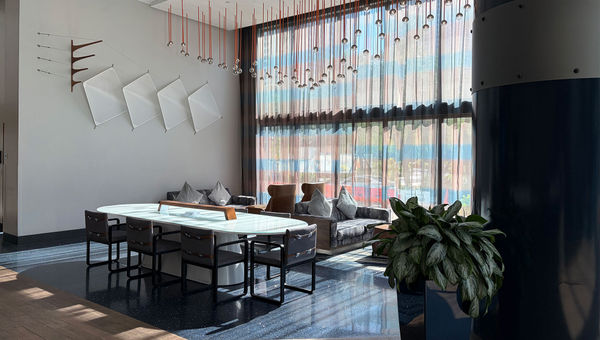
The first floor of the Hyatt Centric includes communal work and lounge space as well as a coffee station and a bar. Photo Credit: Tom Stieghorst
On-site offerings
The 238-room hotel devotes its ground floor to communal space, including loungey-work areas and the indoor-outdoor Harborwood Urban Kitchen & Bar, which has a lively happy hour.
There is a vending machine in the elevator lobby that dispenses minisplits of Laurent-Perrier Champagne and other single-serve wines. Floor eight is devoted to a fitness studio and formal meetings space as well as a long outdoor pool with loungers, a small bar and brightly painted murals for decoration.
My guestroom overlooked the pool. It was outfitted in that sparse way hotels now favor: few drawers but lots of hanger space. An abstract black and white design covered one wall, and the light fixtures were stylishly modern.
Free cruiser bicycles at the valet stand make city exploration more feasible.
However, I found the hotel's most intriguing feature to be Rm. 901, which originated as a ninth-floor guestroom with a pool view and was converted during the pandemic into a speakeasy-type bar.
The dimly lit room, intended to evoke the Prohibition era, has space for 14 patrons, who can reserve space in one of three two-hour blocks on Tuesday through Sunday evenings. Bartenders rotate, bringing individuality to the menu and music playlist.
Rm. 901's signature cocktail is a bacon-infused old fashioned called Smoke and Mirrors, which allows the bartender to torch some bacon in a display that is both visually exciting and aromatic.
A small-bites menu offers items such as beef carpaccio, garlic-seared shrimp and roasted octopus.
The concept is found at a few other hotels, but none in Fort Lauderdale or at the brand's roughly 60 other outlets worldwide, a hotel spokeswoman said.
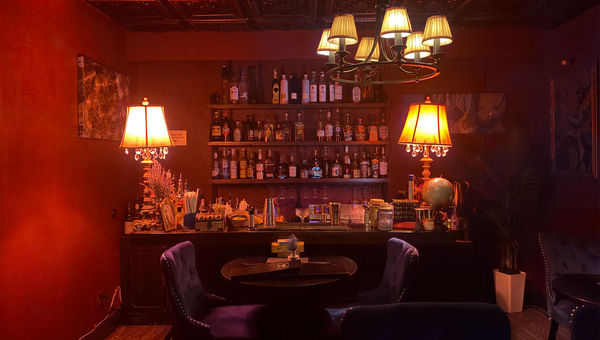
A former guestroom on the ninth floor is now a reservation-only speakeasy decorated to evoke the Prohibition era. Photo Credit: Tom Stieghorst
Out on the town
Guests at the Fort Lauderdale hotel are right on Las Olas, the city's main drag since it was commercially developed after World War II. The high-rise building boom has stressed the once-sleepy and quaint boulevard, but it is still lined with mostly one- and two-story shops, restaurants and galleries.
A controversial plan to remove the street's median and its shady black olive trees was recently approved to ease emergency vehicle access and widen sidewalks for cafe seating.
Restaurants along the corridor vary in quality, but one place our group tried, Earls Kitchen + Bar, had top-notch food, drinks and service. A 14-ounce tomahawk pork chop special might have been too filling, but mine was so juicy I finished every bite. (There's also supposed to be a fine view from Earl's rooftop patio, but we ran out of time.)
Alas, most of Fort Lauderdale's new, tall buildings are rather same-same. Instead, visitors might take in the city's midcentury-modern apartment hotels or the older Mediterranean and art deco buildings of the past as well as the mansions of the rich and semifamous that line the city's canals.
A delightful way to do that is an electric launch dinner cruise sailing out of the Casa Sensei pan-Asian restaurant just off Las Olas. The covered launches take up to six passengers on a 90-minute sunset waterside tour of some of the city's priciest real estate, with dinner catered by the restaurant.
Also a few blocks from the hotel, the "Carrie B" excursion boat offers up to 300 passengers a similar tour three times per day, with prices starting at $33 for adults.