Countless reports and surveys have confirmed the growing popularity of gastronomy in travel planning. But specific culinary preferences are far from (pardon the expression) cookie cutter — so advisors who know how to match clients with the most appropriate foodie experiences are especially well positioned to build sales, according to multiple industry experts.
“Cuisine is no longer a secondary consideration,” said Marguerite Scully, a luxury travel advisor with Embark Beyond in Washington, D.C. “It’s often the reason clients choose a destination in the first place. They want to experience a place through their senses, especially taste, as a way to understand the culture and the story of its people.”
Scully’s observations are reflected in recent surveys. According to the TravelBoom 2026 Leisure Travel Study, nearly 80% of travelers say food is an “important” or “very important” factor when choosing a destination. In addition, street food and unique local experiences scored as more important than fine dining and Michelin stars.
American Express Travel’s 2026 trend report confirms the growing influence that gastronomy has on travel. Among its finds: strong interest — especially among Millennials and Gen Z — in “snackpacking,” with 89% of those travelers actively seeking out local snacks and 69% interested in sampling street food.
Scully describes current trends as “a shift towards the importance of authenticity over formality.” In her words, “a perfect bowl of noodles can rival a Michelin-starred meal. Clients are moving beyond just needing reservations, they want access, context and story.”
Karen Shiers, co-founder and CCO of Parea Travel, is seeing similarly strong demand for culinary-focused itineraries, especially among big-budget clients. “Cuisine is not just part of the trip — many times it’s the reason for the trip,” she said. “For our clients, especially at the ultra-luxury level, dining is a major decision driver when choosing both destination and where they stay.”
Shiers notes that travelers at the high end are looking for diversity of dining, Michelin-level experiences and exclusive chef collaborations. “We are also seeing a large interest in which dining experiences are and are not included,” she added. “This is especially evident in the hotel-branded yacht space, which is a core focus for us. We’ve had clients choose one yacht over another purely based on the culinary offering and inclusions.”
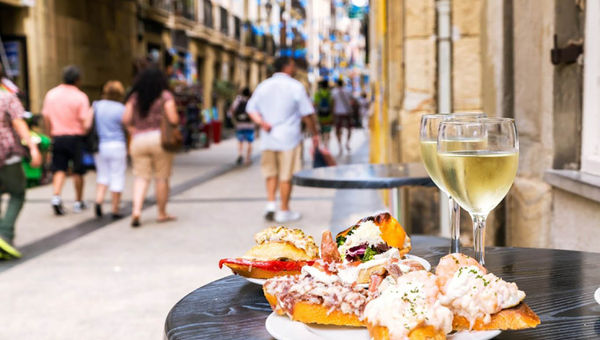
Culinary scene in Spain © Getty Derechos Turespaña
Qualifying clients
As travelers develop stronger preferences for certain types of gastronomy, the ability of advisors to match clients to the right kind of culinary experience has become even more crucial.
Scully takes a strategic approach to the qualification process. “I focus on three things: adventure level, access and pace,” she said. “A client considering the Basque region [of Spain] may think they want ‘great restaurants,’ but the real question is whether they want structured, high-end dining or something more spontaneous, like chasing the perfect pintxos.”
“Once you take the time to listen and understand their preferences, the right experiences and destinations become very clear,” Scully added.
Michelle Spear, team leader and personal vacation specialist at Magical Vacation Planner, a TRAVELSAVERS affiliate, starts with a targeted prompt. “’Tell me about the best dining experience you’ve had on a past vacation’ is a great way to start the discussion,” she said. “The client's answer will provide insight into the kind of experience they value, and it will guide you to their next favorite meal.”
Beth Rowan, owner and travel advisor at Tapestry Travel in Rockville, Maryland, also emphasizes the need for attention to detail during the qualification process. She frames culinary experiences in terms of how they will actually feel to the traveler. “Cooking classes may sound great, but when they realize it might just be them with locals, some more introverted clients realize that might not be the right choice,” she explained. “Knowing your client is important when aligning the right experiences for them.”
Mindset and demographics
Surveys may be handy for generalizing about current trends, but Scully notes that successful advisors depend on a deeper understanding. “It’s less about demographics and more about mindset,” she said. “The clients most drawn to food-focused travel are curious, usually well-traveled, and looking for deeper cultural connection.”
Shiers sees strongest demand among two different groups. “The first would be our very well-traveled, established clients, often couples, who have experienced the best hotels and restaurants globally and are now looking for something more curated,” she said. The second is “a younger demographic in their 30s and 40s who prioritize food as a central part of travel.”
Also on the rise is foodie-focused family travel, Shiers adds. “Family and multigenerational travel is where foodie travel gets really interesting,” she said. “You almost always have different expectations across the group; the older generation is looking for Michelin-level dining, while younger guests either aren’t as engaged or simply aren’t allowed in those environments. Our approach is to customize around that rather than compromise.”
Spear, meanwhile, reports that even younger travelers are increasingly savvy about foodie travel. “Children and teens are more informed than ever before,” she said. “They know what's trending in dining, and they have a voice in the family's plans and travel priorities. Many kids are also interested in cooking classes, which are becoming more frequent at all-inclusive resorts and on cruise ships.”
Regardless of the specific activities, Rowan said the rewards of foodie-oriented travel are clear. “I find that well-traveled clients are the most appreciative of culinary experiences,” she said. “Food says a lot about a culture, and a well-traveled person knows this is a way to look deeper into a culture. It’s also a great way to spark conversations with locals about not just their food, but their traditions and history.”