The opportunity to create lasting memories is a powerful motivation for families to travel together. For travel advisors who sell multigenerational travel, the appeal also lies in its increasingly great potential to generate substantial bookings and repeat business, according to multiple experts.
Recent statistics shed light on the importance of the multigenerational market. A report by Market Intelo, for example, valued the global multigenerational travel market at $65.4 billion in 2025, and predicted it will reach $122.8 billion by 2034. A Skyscanner survey, meanwhile, found that 22% of Millennials had traveled with their children and parents during the previous two years, while the same percentage of Gen Z respondents had traveled with parents and grandparents.
Advisors on the front lines are witnessing growing demand firsthand. “We are seeing a definite increase in multigenerational travel,” said Ronit Naccache, owner/manager of Boca Express Travel in Boca Raton, Florida. “I believe it is one of the most meaningful areas of travel today. Families are realizing that time together is incredibly valuable, and they want to create experiences and memories that everyone from grandparents to grandchildren can share.”
Multigenerational travel bookings have also surged for Aida Mollenkamp, founder of Salt & Wind Travel in Mammoth Lakes, California. “Today, multigenerational travel is the single largest and most profitable segment of our business,” she said. “Our typical multigenerational trips have on-the-ground budgets exceeding $50,000 over a 10-day trip.”
Sharon Rockman, owner of Sababa Travel in Fanwood, New Jersey, has seen a similarly positive trajectory. “It’s a really fast-growing segment,” she said. “My business continues to grow because I do a lot of family travel.”
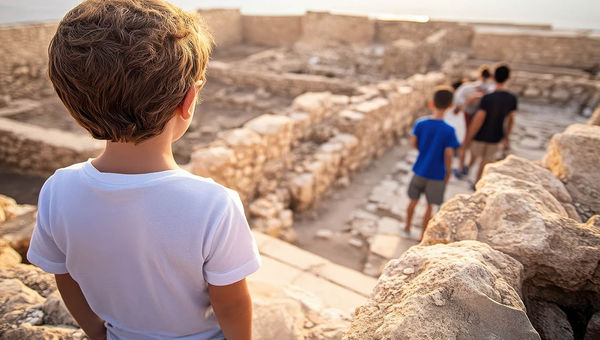
Photo Credit: Adobe Stock, YaMi Studio, Generated with AI
More Than a Vacation
The growth of multigenerational travel is rooted in a simple realization: opportunities are limited for multiple generations to spend time together.
“Families are becoming much more intentional about spending time together,” Rockman said. “We're circling back to more meaningful family time. They're also finding that it's very hard to find that time where they can all get together, so people are looking to celebrate milestones, and they want to create those memories.”
Those milestones are varied. Naccache regularly sees trips built around birthdays, anniversaries, graduations, bar and bat mitzvahs and family reunions. “Sometimes there is no milestone at all,” she added. “It’s simply a family deciding that they want to make the time to be together and experience something special.”
“Long before multigenerational travel became an industry buzzword, Israel was already perfecting it through milestone family journeys,” noted Chad Martin, director of the Northeast US for the Israel Ministry of Tourism. “A traditional bar or bat mitzvah trip often includes three generations as well as extended family members of all faiths and backgrounds. Whether it’s gathering the entire family for the Tower of David’s Night Spectacular or visiting a winery with on-site, hands-on chocolate making for the kids, Israel appeals to each individual directly and each group collectively. Our attractions and destination specialists have long catered to families, forging memorable experiences and deep connections across generations.”
Budget and Value
When it comes to spending, Rockman said the cost of multigenerational trips falls mostly on one generation. “Generally, the grandparents are paying for the trip,” she said. “They usually come from a higher source of income — however, that doesn’t mean the sky’s the limit.”
Betsy Ball, co-founder and owner of Euro Travel Coach in Madison, Wisconsin, stresses value when discussing cost with multigenerational clients — even if one person is paying for all or most of a trip. “Being able to travel with your whole family is a joy and a privilege,” she explained. “If we can make that happen by paying for everyone to join in, then it's worth it to have that special family time.”
Mollenkamp stressed the need for a careful approach to budgets and costs. “The biggest budget challenge is not the price,” she said. “It is the math. We encourage families to think in per-person costs instead of focusing on one intimidating total. We also structure trips so different generations can choose different room categories or optional experiences without creating awkward family dynamics.”
Complex Planning Makes Advisors Valuable
Multigenerational travel is, by nature, a complex undertaking, and that makes the role of the travel advisor even more important, according to Rockman.
“When you're building a multi-gen trip, it's not the same as building [a trip for] a couple or even parents with their children,” Rockman said. “There are different interests. There are different ages, there are different mobility needs. There are different travel styles, budgets, expectations, activity level — and all of that has to be taken into consideration.”
Naccache takes a similarly nuanced approach. “The most important thing is to understand the family as individuals before creating the itinerary,” she said. “I want to know the ages of everyone traveling, what they enjoy doing, their previous travel experiences and what they consider to be a perfect vacation.”
She also confirms details like activity levels, mobility, dining preferences and sleeping arrangements. “I also want to understand who likes structure and who prefers flexibility. Are there family members who want adventure while others want relaxation? Who wants to shop? Who wants to sightsee? Who wants downtime? Once I understand those expectations, I can build a journey where everyone feels considered.”
“This is where the value of a professional travel advisor really comes into play,” Naccache added. “My job is to listen to everyone and find the common ground. I try to understand what is most important to each person and then design a trip that accommodates those differences without making anyone feel that they are compromising.”
The importance of understanding the varying needs and interests of family group members surfaced repeatedly among advisors.
“I design itineraries featuring one shared daily activity alongside optional tracks for different age groups, often utilizing multiple vehicles for tours,” said Gunjan Prakash, a New York City-based independent advisor and Virtuoso member hosted with Coastline Travel Advisors, who also operates a website called FamiliesLoveTravel.com. “I also serve as a neutral party to navigate budget discussions.”
Mollenkamp takes a similar approach. “The hardest part is not logistics,” she said. “It is family dynamics. Understanding that family dynamic early often determines whether the trip ever gets booked.”
Rockman summed it up succinctly. “The success of a multi-gen trip isn't about everyone doing the same thing every minute,” she said. “It's about creating opportunities to spend meaningful time together, while still respecting everybody's individual travel styles.”
Choosing Appropriate Products
Certain products lend themselves particularly well to multigenerational travel, notes Megan Amelio, founder of Bridie Travel in Chicago. “All-inclusive resorts are my top recommendation for multigenerational trips because they flex to fit a range of budgets within one property, and families know their total cost upfront with minimal spending once they're there,” she said.
Cruises, villas and customized touring can serve the segment well, too, according to Angela DiLanzo, founder of Let’s Go Globetrotting, a Departure Lounge company and Virtuoso affiliate in the Philadelphia area. “A lot of multigenerational groups choose cruises, but there are also tour operators that specialize in family travel, that will mix in playground stops or kid-friendly activities with the expected sites,” she said.
As strong partnerships go, Israel, with its combination of family-oriented heritage, breadth of culinary offerings, all levels of outdoor activities, varied resorts, history and religious tours, is an especially appealing destination for many of Rockman’s multigenerational clients, she said. And a trusted supplier, as the role of supplier partnerships in building successful itineraries is paramount. “After I have a conversation with my clients, I then look at all of my notes and take into account their budget, their style of travel. And then I choose one of my preferred providers. And I lean into them heavily.”
“I’m not creating [itineraries] on my own,” she said. “I’m working with a provider to handle all logistics on the ground. The success of multi-gen travel comes down to thoughtful planning and strong partnerships between myself and my suppliers.”
Building Business for the Future
Multigenerational travel is an especially rewarding proposition due to its ability to generate additional business in the future, according to Amelio. “Families who traveled with me once tend to loop me in for the next big trip, whether that's a milestone birthday, anniversary or reunion,” she said.
Mollenkamp agrees. “Multigenerational travel has become our strongest referral engine because it showcases our work to an entire family at once,” she said. “Many of them later become clients for their own family vacations, anniversaries, honeymoons and milestone trips.”
Tahryn Nicastro, owner of Shore to Sea Vacations in Howell, New Jersey, sees multigenerational business developing from other types of bookings, too. “One trend I find especially interesting is that many of my multigenerational trips begin years before anyone starts talking about traveling as a family,” she said. “I often meet clients while planning their honeymoon. As their lives evolve, I help them celebrate anniversaries, plan babymoons and take vacations with young children. Years later, I start receiving calls from the parents of those same honeymoon couples who want to bring the entire family together on vacation.”