The travel industry has spent the last decade making strides to tackle overtourism. The issue came to the sector’s forefront in 2017 when resident protests erupted in congested European cities like Venice and Barcelona. Since then, various destinations and tourism organizations have put measures in place to change that negative trajectory. Mass visitation, as the EHL Research article "In Search of Solutions to Overtourism" states, risks destroying destinations for future tourism.
So, new initiatives are intended to alleviate the strain that large visitor volumes put on resources, local infrastructure, waste management and natural habitats. Increasingly, governments are stepping in to affect those changes. “This is the great awakening that needs to take place, that governments need to understand — tourism is a sector that needs management,” said Randy Durband, CEO of the Global Sustainable Tourism Council, speaking on Squawk Box Asia.
The most obvious means of addressing the issue is limiting visitor numbers. Machu Picchu, Peru has already done this, capping visitors to about 2,500 daily and Hallstatt, Austria, a UNESCO World Heritage village with a population of less than 800, is seeking provincial approval for a reservation-based daily cap of 5,000 visitors. But curbing tourism numbers is just one tactic for managing any destination’s tourism capacity. To reverse the course of overtourism, government agencies must also have the support and participation of all travel “industry stakeholders.
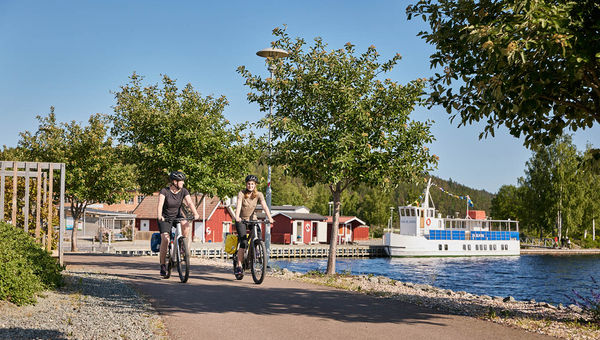
Dalsland, Sweden Photo Credit: West Sweden Tourism Board, Jonas Ingman
Educating clients
That includes travel advisors who have so much sway over where and when their clients vacation. “It’s our job to educate clients about why it's important to choose locally owned accommodations and tours guided by local residents and to give options to our clients that support that model," said Nicole Anderson, travel advisor with Adventuresome Nicole.
In fact, creating advocacy and awareness campaigns is one of the strategies suggested in the World Economic Forum article “What is Overtourism and How Can We Overcome It?” Travel advisors can let clients know how overtourism will impact their travel experience. They can also make clients aware of new accommodation taxes levied in destinations like Amsterdam and Hawaii or new visitor entrance fees in Bali and Venice. Travel advisors can also steer clients toward low-density time periods when clients can better enjoy their experience without battling through crowds.
A changing approach to popular destinations
Ms. Jerrol Golden, travel advisor with Golden Travel Co., an independent affiliate of Santa Barbara Travel Bureau, recently had a client who wanted to visit Mont-Saint-Michel, France. She advised them to spend the night so they could enjoy the quiet evening and early morning hours before tour buses arrive. “They got to experience the magic of this extraordinary place without the daytime crowds, and then move on,” she explained.
The industry, too, recognizes that redirecting visitors to popular destinations during low season can be an effective tool for diminishing overtourism with economic benefits for local communities. Cruise Europe, a trade network of ports and destinations in Northern and Atlantic Europe, promotes off-season itineraries to mitigate peak season visitor traffic. “Even the time of year that clients travel can make a huge difference with overtourism,” said Anderson. “During off season, there aren’t as many people and clients can have a more authentic and less crowded experience.”
Clients who want to visit sought-after destinations in high season can still diminish the impact of overtourism by exploring the neighborhoods outside of main tourism zones. For example, a trip to New York City could include a day learning about Brooklyn’s brownstones. “It’s also important to remember that it’s not just destinations that are off-the-beaten-path, but also experiences,” Anderson added.
Sustainability and overtourism
Of course, overtourism also leads to sustainability issues. Yet, according to the Phocuswright article "Do Travelers Connect Overtourism and Sustainability?", just 13 to 21% of travelers across markets understand that sustainable travel includes visiting less popular or off-the-beaten path destinations. Although, most travelers will readily grasp the relationship between overtourism and sustainability thanks to decades of public messaging around everyday actions like recycling and reducing plastic waste. They just “need a push during the trip-planning and booking phases.”
Sustainable travel encompasses a wide range of initiatives and actions. To understand which aspects will best resonate with an individual client or client group, take a look at this Travel Weekly article on purposeful travel or this article from the non-profit Sustainable Travel International, "Striking a Balance: Overtourism Solutions that Embrace Regenerative Travel and Reduce Tourism’s Burden".
Social media influence
However, not all clients will need to be prodded toward the road less traveled. Those with the proverbial well-stamped passport are clear candidates for “hidden gem” travel experiences. So are avid social media users, particularly Millennial and Gen Z travelers with a social media presence. The aforementioned EHL Research article cites that 75% of travelers choose destinations based on social media inspiration. This phenomenon has furthered overtourism to iconic destinations and flooded newer destinations like Croatia with visitors. However, it has also had the opposite effect. Earlier this year, Fast Company dedicated a full article to the topic: Gen Z Travelers Want Destinations That Haven’t Been Spoiled by Instagram. As these two generations are increasingly reliant on technology for destination ideas, they are also searching for under-the-radar locales where they hope to lay their own trailblazing claim, with the hashtag #hiddengems now up as much as 50%.
Denise Mackey, co-founder of LLocalz, a travel agency specializing in Europe, is already taking advantage of this social media shift with the weekly series “Places We’d Send Our Friends.” Mackey described the series as opening travelers’ eyes to other places, destinations and experiences that might not be as well known, but that travelers might thoroughly enjoy. She continued, “one of our specialties at LLocalz is helping travelers experience places that are a little more off the beaten path and that travelers might never have found on their own.”
Delivering enhanced value to clients
The LLocalz team is based in the U.S., but all European-born. So, when they recommend Austrian alternatives to Hallstatt, or southern Germany gems such as Lake Constance — which borders Austria, France and Switzerland — these are based entirely on lived experiences. This insider knowledge increases their value with clients, with many returning from these under-the-radar trips thanking the LLocalz team for “letting them in on a special place that they would never have found just searching the Internet.”
Even travel advisors who weren’t raised in other countries can deliver this same value to clients. Tour operators are increasingly adding highly localized trips to their offerings. “Partnering with suppliers that are on the ground really makes it easier for clients to understand and realize that different places are going to be just that: different,” said Anderson. “Accommodations might look a little different and having a local guide can make it so much easier for clients to better understand cultural nuances and feel more comfortable.”