Chaos at Houston Bush Intercontinental Airport. Lines stretching out the door at Hartsfield-Jackson Atlanta. Elevated TSA officer callouts across the country.
Turmoil caused by the Department of Homeland Security shutdown in February and March might be galvanizing interest in a little-used federal program allowing airports to privatize security screening.
"I'm predicting that in the next six months, more airports are going to apply," said aviation security expert Sheldon Jacobson, whose research as a University of Illinois professor included the foundational analysis of what became the TSA PreCheck program.
The TSA's Screening Partnership Program (SPP) enables airports to have the agency hire a private contractor to run operations. Contractors are selected from a list of prequalified vendors, and they work under TSA guidelines.
SPP isn't a new program. It was authorized by Congress in 2004, but there has been minimal uptake. So far, just 20 airports have chosen to utilize private companies at TSA checkpoints. The largest of those is San Francisco Airport (SFO), followed by Kansas City. Most participants are small airports.
SFO spokesman Doug Yakel said the airport joined SPP in 2005 to get ahead of the curve. The TSA was established and airport screening federalized after 9/11. But Yakel said SFO's expectations were that the industry would move back toward privatized screening.
It was only later that SFO realized that privatizing its checkpoints would provide an unexpected benefit: a screening workforce whose paychecks were guaranteed during increasingly frequent government shutdowns.
Some airports saw callout rates up to 40% in March, when TSA officers weren't being paid due to the DHS shutdown, resulting in undermanned security checkpoints and hourslong lines. Meanwhile, travelers at SFO waited on line just over 10 minutes during peak travel times, Yakel said.
Since the latest DHS shutdown began in February, airports have reached out to SFO inquiring about privatized screening with increased frequency, he said.
Some conservatives in Washington have long advocated for the reprivatization of U.S. airport security. Sens. Mike Lee (R-Utah) and Tommy Tuberville (R-Ala.) introduced a bill last year to abolish federalized screening and create an office within the FAA to oversee private screening.
During a call with reporters in late March, Tuberville renewed his push to abolish the TSA.
Is the TSA competent?
TSA opponents have criticized the agency's effectiveness. Tests that the TSA conducts on itself are classified, but results that leaked in 2015 showed a failure rate of 95% for detection of mock explosives and banned weapons. Just last month, CBS reported that the TSA failed to respond, as required, to a classified inspector general's audit identifying continuing screening vulnerabilities. The TSA did not respond to Travel Weekly's requests for comment.
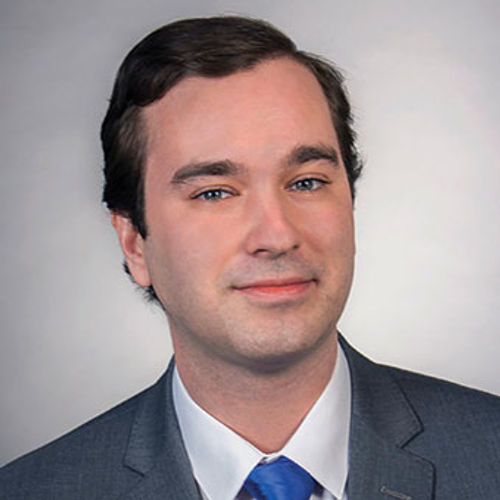
Marc Scribner
Marc Scribner, senior transportation policy analyst for the Reason Foundation, a libertarian think tank, said that under its existing mandate, the TSA is both the provider and regulator of airport security.
It's the TSA's job to scrutinize and report on the quality of its own output, and that has led to a bunker mentality, he said.
"If you had screening services separated and TSA just focused on the regulation, I don't think you'd have that bunker mentality," Scribner said. "I think you'd have an agency demanding answers and a higher-quality performance from the providers it oversees."
He noted that the EU requires individual countries to set the security guidelines and conduct oversight, while airports implement their own security programs.
Scribner said the SPP program is a partial antidote to the problems caused by the TSA's role as both security regulator and provider, but that it's too rigid. Airports don't get to choose their contractors or decide to do screening in-house.
And if an airport's relationship with the screening contractor sours, only the TSA can enforce or cancel the contract. Those are likely reasons why more airports haven't chosen to participate.
Not everyone views the SPP program, or broader privatization, as a panacea for airport security. During the two most recent shutdowns, the U.S. travel lobby has pushed for legislation that ensures TSA officers are paid during future shutdowns, not security privatization.
The American Federation of Government Employees, a labor union representing TSA workers, argues that the profit motivation of private contractors would lead to lower pay, higher employee turnover and worse security.
"If you're old enough to have lived through the 9/11 terrorist attacks in 2001, you know what happened at airports before the government and Congress decided to federalize airport security," reads a missive on the union's website.
Jacobson pushes back against that argument, noting that under the SPP, contractors must meet guidelines set by the TSA.
"There is a standard. If you're not meeting the standard, you're not going to keep the contract," he said.