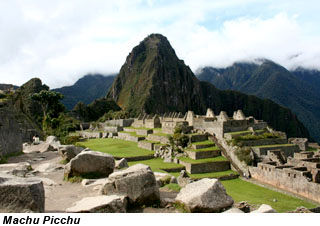
 A federal court has ruled that the tour operator Grand Circle is not liable for injuries suffered when a client fell off stone steps at Machu Picchu that were obviously wet and dangerous.
The client, Jill Kalter, who is a quadriplegic as a result of the accident, was on a guided tour to the mountaintop ruins in Peru when she fell.
According to court documents, Grand Circle before the trip provided a written warning that Inca ruins were spread out over steep hillsides "with large stone steps and uneven surfaces" and that there were sometimes no handrails. At the destination, the guide provided written instructions not to climb the walls that support Machu Picchu’s terraces and to follow only the designated walking routes.
The guide said he also warned of slippery conditions because it was raining, although Kalter said she had not heard that.
On a second visit, Kalter’s group could opt to explore the ruins on their own, and Kalter took up the offer. She left the designated trails and stepped onto two stones that protrude from the terrace walls, called floating steps, for a better view. When she fell, she rolled over several terraces before coming to a stop.
Kalter sued for damages last year. Grand Circle sought and won summary judgment based on "the doctrine of primary assumption of risk," meaning the client assumed the risks inherent in the activity, and on the grounds that Grand Circle had no duty to warn of dangers anyone could see.
Judge S. James Otero in the U.S. District Court for Central California agreed with Grand Circle on both points.
The court said that Kalter, an experienced hiker, was aware of the risks associated with a hike through Machu Picchu, and the judge said walking through the ruins was inherent to the experience of seeing a phenomenon that travelers wish to see.
Besides, he said, the client left the established stone pathway and "further endangered herself by stepping onto the floating steps."
As for the duty to warn, Otero said it was established law that there is no duty to warn when a danger is equally obvious to everyone. The possibility of slipping when stepping on a wet stone step protruding from a vertical wall is "undoubtedly an obvious danger," the judge said.
Rodney Gould, Grand Circle’s attorney, said the case was important for tour operators and travel agents because, as far as he knew, it was the first decision based on California law that "frontally addresses the primary assumption of risk … in the context of a guided tour."
And, he said, "it is a ringing endorsement" of the notion that people have to take care of themselves. He said there have been too few cases where a judge said that.
Gould said the Peru case provided significant precedent in California because it was based on California law, but judges outside the state could cite the "well-written, well-reasoned" decision when they have cases with similar fact situations.
The plaintiff can appeal, Gould said, but the defendants may offer a settlement to help with legal fees in order to ensure the matter ends.