Travel Weekly Editor in Chief Arnie Weissmann spoke with executives in every segment of the industry and explored what they expect in 2012. He found pessimism, optimism, bold thinking and cautious conjecture -- sometimes all within the course of one conversation.
Helen Coiro
CEO, Direct Line Cruises
 Whenever I'm asked how my business is doing in this economy, I always answer, "Good." Agents shouldn't make excuses or fall victim to the "I can't succeed in this economy" mentality. There is a multitude of potential clients looking for that well-deserved vacation, and there is plenty of product to sell. But agents need to go after the business. It won't come to them.
In fact, when we make strategic decisions about an upcoming year, we rarely focus on the state of the economy. The economic situation may impact the outcome of whatever decisions we make, but we try not to let it distract us from keeping our eye on the big picture.
As always, our plan is to get out there and generate as much business as possible.
So much of the success of our business revolves around aggressive marketing. We're committed to growing the business next year and every year, so we'll make the necessary adjustments.
In an unhealthy economy, that may mean we'll budget more advertising dollars to move the needle. For independent or home-based travel agents who are serious about creating business, there has never been a better time to advertise. There are more print and Internet advertising bargains available because in a soft economy many businesses reduce or eliminate their marketing efforts. For the same reason, this is also the ideal time for those agents to discuss co-op advertising with their [cruise line business development manager].
We see some positive trends and expect them to strengthen in 2012. The first is that bookings are coming in earlier. We're seeing many bookings for second- and third-quarter sailings, and we have a much higher number of bookings for 2012 than we had for 2011 at this time last year.
Also, as a result of sluggish pricing, we saw many first-time cruisers over the last few years. Some of these people may not have been inclined to take a cruise were it not for the "buyers' market" prices, but I think it will continue.
And we expect to continue to sell an increasing percentage of balcony staterooms and suites. Perhaps also because of the pricing, cruise passengers who had not yet experienced a balcony stateroom discovered how wonderful it is to be able to step outside your room on the open seas. In my opinion, once you've sailed in a balcony stateroom, there is no going back to anything else.
Agents shouldn't allow their business to stagnate or get stuck in neutral because of external factors over which they have no control, such as a weak economy. The travel industry has proven its resiliency, and we, as travel agents, need to take advantage of the opportunities out there and turn them into business on the books.
Bill Marriott
Chairman and CEO, Marriott International
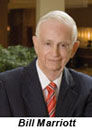 For U.S. hotels, I don't think 2012 will be better than 2011. We continue to see softness, which impacts our company. It may be as good as this year, maybe not quite.
Washington, D.C., has really been struggling this year [as a destination], and of course we have a huge concern about government cutbacks in travel. Obama has been telling [federal workers] they've got to cut travel by 20%. And on top of that, [Congress] is away, electioneering. Lobbyists don't come to Washington because no one's here. Very little legislation is being passed, and gridlock is not helping things.
Consumer confidence is low, and businesses are sitting on cash. There's a lot of uncertainty.
Only 47,000 new rooms will come on line next year, same as this year. You'll see about .5% room growth, and that's low by any standard, and that's good. The less capacity coming on, the more opportunity to fill our own hotels.
The [global] economic outlook will continue to be fairly soft. Europe is close to going into a recession. Eastern Europe is stronger than Western; Western will be very weak. But this is temporary. Europe is the biggest lodging market in the world and will continue to be so. We know it's not permanent and continue to look for opportunities.
The Middle East is almost all about Egypt, and if they could settle down and get a stable government, it will help the entire region.
We see continued strong growth in Asia, particularly in China. China has [gross domestic product] growth of 8% to 9%, and that's huge in today's environment. Asian economies continue to grow, although India has raised interest rates so high that it will give them pause in terms of their growth.
South and Latin America, particularly Brazil, are strong and will continue to be strong.
So, I'd rank Asia first, U.S. second, Europe third and Japan fourth. Japan hasn't grown in 20 years, and I don't see them coming out of this malaise.
We really don't know about the strength of leisure business vs. corporate business in 2012. There's still a lot of uncertainty in the economy, and people are holding onto their money. There was some light because of how well things went on Black Friday and Cyber Monday. People are spending on Christmas.
But consumer confidence is a big key to leisure travel; it's all discretionary. If your job is at risk or you're unemployed, you're not going to take a cruise. And we have a lot who are unemployed.
But from our standpoint, group business for 2012 looks strong, stronger than 2011, so that might give us a lift as opposed to some leisure and business transient bookings.
One big difference for us in 2012: We spun off our timeshare business, so we're totally a lodging company. We only own six or seven of our 3,700 hotels and will be continuing down the road of a management, franchise and branding company.
Kevin Sheehan
CEO, Norwegian Cruise Line
 The economic situation will continue to be somewhat of an issue. We've been through an unbelievable period, one thing after another: unemployment, oil prices, the stock market, real estate, Europe.
But we've learned to persevere through all this. Whatever happens happens to everyone. As an industry, we've taken some body blows, but we've learned to take proactive steps each and every day. We need to be a little more on our toes, smart and nimble, and we'll ride through whatever comes our way. The economy will continue to be an issue, but we're anticipating, and not reacting, to events. We've ridden the worst of it.
And consumers have learned to live in this environment. The 90% who are employed live in an environment with benign mortgage rates, and there is hope out there, but they're also cautious. They've become conditioned to understand that it's not a simple world, and many consumers are saying, "OK, I get it. Now I have to figure out how to live and enjoy life." I see confidence beginning to creep in the right direction.
People want to take their vacations, and cruising is such a phenomenal value. I wish it weren't such a phenomenal value, but it's a balance, it's supply and demand. There are always peaks and valleys, but in the long term, things are very, very solid.
I think things will be a little bit better than 2011, and 2011 was a pretty good year for us and the cruise industry. We're up nicely on advance bookings compared to a year ago.
2012 is a very important year for Norwegian. In '08, we [launched] the Gem. In '09, we worried about the economy. In '10 we launched the Epic. And in '11 we had our first full year of the Epic. The Breakaway will come out in 2013 and the Getaway in 2014. We won't have any new capacity in 2012, so we're under the microscope. Everything we do, every initiative, every success in pricing, the ways we become more efficient, it will all be there when we put out our quarterly report. [Unlike our competition,] we only have one brand, so everyone knows, exactly, how Norwegian is doing.
So we're working with laser focus to make sure we're hitting on all cylinders. We have a new training program called "Vacation Heroes" to help [employees] understand that the little things they do on a daily basis aboard a ship add up to a wonderful vacation. We've developed "Platinum Standards," and we really want to get even higher satisfaction levels.
Every incremental thing we do, we want guests to come back and tell their travel agents. And with the clarity of our Partners First program, we want to have more affirmation for agents about how important they are to us.
Ken Pomerantz
President, MLT Vacations
 One of the challenges I face is that I'm not sure my segment is fully defined anymore. What we think of as traditional labels -- tour operators, ethnic consolidators, home agents, traditional agents -- they're all bleeding across channels. OTAs are promoting travel agent programs, consortia are negotiating with wholesalers, consolidators are working with corporate agencies. It's difficult to say what the outlook for wholesalers is. Everyone's participating in many channels, and I think that will only grow.
You have to ignore some of the general economic negativism because, from a strictly business perspective, trends are very positive for travel. Demand is rebounding, hotel average daily rates are up, airfares are rising and Mexico volume is rebounding.
So 2012 is looking positive. Group travel, small groups in particular, are leading the way: family reunions, weddings.
We had very high expectations going into 2011, and we nearly achieved them. Revenue is up significantly, a little over 30%. We launched United Vacations and integrated Continental and United vacation brands when the two were merging. We grew our network of travel agents, held our largest MLT University [agent training seminar] and started new relationships with Alitalia and Air France.
But having said all that, there were some challenges. We dealt with a unique situation with flooding in North Dakota at our reservation center. And because of a weak economy and softness in Mexico, we fell a little short of our lofty expectations.
We're always looking for opportunities to handle more brands. We have a unique business model, which makes sense for airline-branded products. We've got our hands full now, but once we get past [integrating new brands], we'll see what comes next.
We think the positive trends we saw will continue into next year, and we'll see more significant revenue growth for both United Vacations and Delta Vacations. We're looking at growing our Europe business, our global offerings, because of the new relationships there. We'll also be expanding our luxury offerings in Costa Rica and the Caribbean, and we've got some new programs in Australia and New Zealand.
Closer to home, we're really encouraged about positive trends in bookings to Mexico. It's weighted toward the east coast. The west coast, other than Cabo, is still lagging. But Cancun, Riviera Maya, Cozumel and Cabo are looking good.
Hawaii looks great. People are booking earlier, and there's new service and route opportunities with the United relationships.
One thing that I think tour operators and travel agents will continue to deal with is the tens of thousands of airline schedule changes. There are more than ever before. Passengers get reaccommodated, but they might have a connection when they thought they were going nonstop. The American bankruptcy doesn't really affect us, not at all.
Our efforts with travel agents are focused on strengthening relationships with agents who have sold us traditionally and adding agents where we traditionally didn't have a presence, primarily on the East Coast.
Agents are and will continue to be our primary means of distribution. The best way to sell complex itineraries and high-priced vacation products is through travel agents.
Jeff Boyd
President and CEO, Priceline
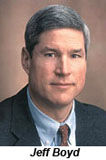 Corporate earnings and consumer sentiment are not in as bad shape as a lot of people think. But there is a lot of uncertainty around the deficits, government policy and political dysfunction.
If the leadership in the U.S. and Europe had put in programs that gave comfort that we're not looking at sovereign defaults, the economy wouldn't be too bad. We had [a] good Cyber Monday and Black Friday, and we're seeing strong hotel average daily rates and airfares. So if government policy can get there, it's not a foregone conclusion that we'll have a recession next year.
And I think that for the online travel segment, particularly on the international side, it has been growing at healthy rates for the last couple of years, and most would expect international growth to be strong. But if there's a significant financial crisis -- a recession, a break in the euro -- that's another matter.
In the U.S., you don't have that tailwind of migration to the Internet. It's so well-entrenched over here. But there is still growth to try to get, and we'll be investing in innovation, new functionality and improved content. We'll be adding more hotels, expanding geographically and investing more in mobile platforms. I'm sure most [other OTAs] will be doing the same.
We have a very big business now, so by the laws of math and large numbers, growth rates will decelerate. But we still have plenty of room for attractive growth. Asia is an important growth market, and the two brands we have out there are doing well, but it's still pretty small. We have good penetration in Western Europe, but Southern and Eastern still have a ways to go.
To the extent that there are concerns about the impact of the economy, companies like ours are better positioned than ever before to help suppliers if they see softness in demand. We're obviously biased, but I think regardless of the economy, the public's hunger to find value, a good deal, is still there. Value is timeless, and the tools that a consumer has to find value are so powerful, and to find a discount is a simpler job today than ever before. And it's all available from a handheld device.
What's happening, however, is that there are a lot of people selling what they say are big deals, but they're not really. Claims are overblown, and consumers are getting wary.
I can't predict exactly what's going to happen with the other OTAs, but I don't think we'll see a static playing field. The ownership of many of these businesses, like Orbitz, Travelocity and Kayak, is held by private equity or venture capital, and they're in the business of monetizing their interests. So there'll be sellers, or companies going public. Expedia is selling TripAdvisor. I'd be surprised if it weren't interested in strategic transactions going forward. Expedia is acquisitive, and I don't expect that to stop.
Some of the OTAs who are more focused on packages, cruises or business travel are working more with traditional travel agents, but it's not something we'd be interested in.
A lot more is going to happen on mobile platforms in the next year, with people trying to figure out what kinds of functionality they can provide that are better than and different from what goes on a desktop. It used to be that people would try to emulate the desktop on a mobile platform, but I think that's ancient history. The new platforms, especially on tablets, allow you to build a distinctive and superior user experience and not be bound by the functionality of a desktop. I can see new products and interfaces using geographic information to encourage suppliers to be more aggressive in promotions and discounting. That's what's really more important in today's market, in terms of today's rapid transactions.
That's happening, and by the way, it's not happening on social platforms. There's tremendous traffic there, and it's great for brand advertising, but there's a relatively limited amount of transactional advertising, where people are going on Facebook to buy something from an e-commerce or travel site. People are not in purchase mode. And it doesn't seem to be rapidly moving toward transactional platforms.
Steve Ridgway
CEO, Virgin Atlantic Airways
 The challenge is that the recovery keeps moving to the right. We all went through 2008 and 2009, which was pretty traumatic, but we navigated through pretty well, thinking things would pick up in 2010. And it didn't. And then we thought 2011 would be a recovery year and, sadly, it doesn't look likely that 2012 will be a recovery year, either.
We're in a secondary economic crisis, around sovereign debt in Europe. The economies in Europe and America are struggling to grow again. We seem to be in a two-speed world, with Asia performing very well and the Old World economies challenged.
I think the challenges for the developing economies, and aviation within it, is consumer confidence -- are we going to see any pickup? -- and managing fuel prices. It takes a long time to adjust to rising fuel.
We are obsessed with fuel prices. Fuel is now four-fifths of our cost. How does the industry adjust to that? We hedge, and we're good at it, but it only buys us time; it doesn't give a perpetual advantage. We have to see airfares rise in real terms. We're looking at taking delivery of next-generation aircraft over the next few years that are more fuel-efficient, new widebody twin-engines.
And we have emissions trading starting in Europe, though that's likely to be contested. And our [U.K.] government is being ridiculous about levels of taxation. It is absolutely affecting demand and activity and jobs and the number of people traveling.
[At the beginning of the economic crisis,] there had been discipline about capacity, but the U.S. carriers put a lot of capacity back in over the Atlantic. It's not a smart way to behave, and they have seen that it really didn't work, and there was some pullback. There's a real delicate balance between the right amount of capacity and too much.
[The battle with British Airways over buying BMI from Lufthansa is,] I think, a key thing for us. If Lufthansa does try to do a deal with BA, there will be a massive battle. Heathrow is already full, and BA has the most slots. This is the last block of slots that will come on the market, and [the airport authorities are] saying they won't build a third runway. We have to maintain competition and choice. [The BMI slots are] complementary to our business, and we will be very, very fierce in making sure that regulators block [a deal with BA]. That is the issue of the moment, and it will play out in the coming weeks. We have a viable network connecting big business capitals, and we want to make sure we're in the best position, whichever way the cookie crumbles.
We're in a good position regarding partnerships and even alliances, and that may come into the frame for us in the coming year. We had to be cautious in 2008 and 2009 but didn't close down investment and have a new fleet of A330s and a new version of the Upper Class suite coming up. There are more A330s coming in 2013 and then 16 787-9s in 2014. As regards the fleet size, we can stand still, simply replacing aircraft, or can shrink if the economy does get worse but also have the aircraft to grow if the economy develops.
Next year will be good from the product, reputation and brand point of view. We've got a lot of Web development going on that will make our site really funky, and we'll be rolling out new IT in the cabins. We're all quite excited around here.
And we'll see where the economy goes. But in a tough economy, having a good brand and product and reputation for providing nice, friendly service will make sure you're in the front line for what business is out there.
Matthew Upchurch
CEO, Virtuoso
 Looking into 2012 in the luxury sector, we don't focus as much on the general economy as on the stock market. It tells you how people are feeling.
What you see there is volatility, and the truth is that financial volatility is here for quite some time. There are too many things going on: globalization, troubled financial markets, consolidation of the airline industry, on and on.
So, how do you budget, how do you expand? Is bigger better? How do you operate? Do you focus on growth, profitability, margins? It's harder than ever to capture profit.
You have to have a strong stomach, and you must understand your own game plan, but you are also going to have to zig and zag [in reaction to current events], and each movement has to stand on its own. You're going to have to do things that allow you to deal with trends of the moment but also stick to the core of your strategy.
The strategy must take into account the biggest business problem: how not to be commoditized. The pressures of commoditization are so strong, and most advisers are associated only with the booking process.
But when I look at really successful luxury agents, their common denominator is that their clients are just as nervous about an adviser firing them as [agents] are that they'll be fired by their clients. It's not about whether clients value a specific trip but whether they value the adviser and are willing to compensate the adviser for the value they are bringing.
I think we'll continue to have one foot in commissions and one in fees, though you shouldn't be thinking about commissions when delivering what each client needs. And you've got to listen to what they're saying beyond rates, dates and space.
The process itself needs to be brought from the subconscious to the conscious so that the process is better defined in the eye of the customer. When it's at the conscious level, you'll be able to charge for the process itself. Going forward, merchandising what a great travel adviser does will be the key.
Steve Perillo
CEO, Perillo Tours
 If there's a single factor that affects travel, it's the damn economy. When the U.S. was downgraded to AA+ [credit rating by Standard & Poor's], I saw an immediate drop-off of sales. When the stock market has a great week, we see an immediate uptick.
We're all waiting for Europe, to see if we'll get a double-dip recession. It would be another three years of hell. But we're going into 2012 with a big spend for consumer and agent marketing because conditions are better. There's no doubt that Obama improved the economy: It was much worse when he got into office.
And people get tired of waiting to travel. They can go two, three years without a trip, but older consumers don't feel they have all the time in the world. They have a window. So when the stock market goes up, they feel good, and they'll go.
My father taught me that travel goes down in election years. It's probably a myth, but it may be tied to the uncertainty of things. I have noticed it around especially big elections, and this is a big election.
And then, the belief is that the year after an election is great. Provided, of course, that the Mayans are wrong.
If it's not one thing, it's another. Geo-political problems, economy-related problems, and now airline rates to Europe. The airlines deserve to make money, and it costs more than $400 per seat to cross the Atlantic, but it does make it harder to sell European tours.
On the other hand, the dollar is strengthening. And I don't think the fact that Europe is facing an economic crisis will affect sightseeing. If someone wants to go to France, they'll go to France. In fact, [France will] roll out the red carpet; rates will be lower.
There was a silver lining with this recession. You have to redo your business. You cut all the waste away and buy smarter. We now profit more easily because our expenses are so much lower. You need to do these things, but I prefer it does not go on forever.
Escorted tours are still the No. 1 way to make a living in the operator/packager business. But you have to broaden your product line, to new destinations, or go after FITs or ad hoc groups.
As people get older, they don't want hassle. Baby boomers are much more sophisticated, so the meals have gotten better, and there are more unique experiences offered: cooking classes, vineyards, meeting local people. But I'm convinced that baby boomers are getting on tour buses almost as much as their parents. It's not a generational thing, but an age thing. There's a future in tours.
I'm learning about the paradox of choice. The more options a travel agent or tour operator offers, the more interest you might get, but fewer sales are closed. Too many options stress people out. If you say, "I'll send you anywhere you want to go," that doesn't help clients. Scout out the best trip, the best deal, and you'll sell 100 of them. People want to be led. They want leadership.
To hedge bets, I've started ItalyVacations.com, and it's for agents and consumers, selling FIT and hosted packages. But we don't sell much [to consumers] online. These are still complicated trips, and agents still need to talk to clients.
Mike Batt
Chairman, Travel Leaders
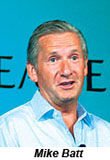 I think people should budget for a fairly neutral to tough year, but travel agents can ignore the economy. We're talking about a $500 billion or so market, and there's a lot of growth for agencies who want to find customers who want to be persuaded to use a travel agent. They're there.
It's an election year, and that raises uncertainty, but it's such a huge business, and there are so many ways to buy travel that it doesn't matter if the GDP goes up or down 3% to 4%. It's not like we're working in a saturated environment, surrounded by people who are doing what we're doing. There's as much growth as you would like.
We have both traditional agencies and home agents, and you can't really differentiate their opportunities. Both can optimize and expand their existing customer relationships, making sure existing customers are walking ambassadors. That's the way most agency businesses grow: word of mouth.
Increasingly, people are seeing value in travel agents. There are a lot of bookings directly through suppliers or through OTAs that could be captured by travel agents who have a solid, valid growth plan. Let's hope all the politicians in Europe and the U.S. turn out to be geniuses, but that's not what people should be counting on. Rather, set goals and work every day toward the goal.
We've got interesting dynamics all around us. The airlines are much better at managing capacity, and we'll see further structural change. American Airlines will become a more sustainable business in the long term, and that will be better for consumers.
If you don't sell air, you're handing your customers to someone else, and that's never a good idea. With our programs, you can be profitable if you sell the right carriers with the right yield. There is money there. You will get paid, and you should get paid.
In the cruise business, we're seeing relatively soft yields, and the downside of that is that it's harder for cruises lines to make profits. But it does make it more affordable for people to take a cruise. Still, we share their pain.
River cruising stands out as a big opportunity. It's well-liked by customers, and the quality is increasing exponentially. Suppliers in that area have a very aggressive presence before agents. They may sell direct, but they really want business from travel agents.
We are seeing some dismantling of the lower-end tour packages as consumers become more confident about booking their own hotels and air tickets. Agents still get better value through tour operators. It's not hard to sell a package, whether a 14-day, high-end package or a three-day to Las Vegas. If the value is there, you can easily sell it.
Corporate spending has been quite strong, and it was a good year for our corporate business. We have a lot of large agencies coming back to Travel Leaders. We took a little hit when we came out of Carlson. People weren't sure what we would become, but those cards have now been played and we're a lot bigger. Any doubts about our place in the industry have been satisfied.
Our online strategy is gearing up to compete with OTAs. We want to give agents anything the OTAs have, including the ability to sell a hotel or air ticket at 3 a.m. It's not something you just snap your fingers and do; we've made significant progress in hotels, and air is coming along. We'll get there. We just want to level the playing field, and suppliers should want that, too.
Looking at mobile, we're not spending anything like what Priceline or Expedia is spending, but we are definitely buying as much technology as we can to provide to our agents. We want to make the best technology available and make it affordable for agents.
All our divisions are growing. We acquired businesses in 2011. What attracted us about Cruise Shoppes [acquired earlier this month] is it's right in our sweet spot. It was a good outcome for the owners and we hope even better for the agencies within that brand.
We intend to continue to buy businesses while doing the best with what we own.
Andy Taylor
Chairman and CEO, Enterprise Holdings
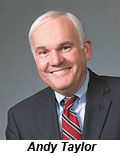 The economy will continue to play a major role in customer behavior across the travel industry.
We've seen some encouraging trends, particularly in the business travel arena. As long as the economy continues to recover, we'll see demand continue to come back in a similar way that we saw in 2011. For example, we achieved a 12% increase in worldwide revenues in fiscal 2011 over fiscal 2010 and ended our year at $14.1 billion. We feel that these numbers are a direct result of our focus on customer service and conservative financial management.
That said, the economic environment is still very fragile -- as evidenced by the troubles in Europe, for example -- so we will continue to have a conservative approach. Passenger enplanements have been relatively flat to slightly down, so a turnaround there would be helpful across the industry.
Further globalization of our business will be a focus in 2012. We recently acquired Citer SA and its Spanish subsidiary Atesa. Our customers asked us to expand our footprint in Europe, so joining forces with Citer responds to those travelers' needs and opens up new markets that are highly complementary to our existing European operations.
We will also continue our public commitment to economic, social and environmental sustainability. In 2011, we joined the Electrification Coalition and the National Clean Fleets Partnership. We also represent a hugely significant part of the value chain for bringing alternative-fueled vehicles, such as electric vehicles, to the mass market.
And we are identifying opportunities to offer our customers new technologies, such as our OnRamp QR code program, arrival alerts at airports, a robust social media presence and enhanced loyalty club offerings.
Regarding the acquisition battle [between Hertz and Avis] for Dollar Thrifty, I really can't speculate about how things will resolve. But whichever company acquires Dollar Thrifty will find that acquisitions and the subsequent integration process is a lot of work, and it can be distracting if you let it. Since acquiring the Alamo and National brands in 2007, we have been careful to take a thoughtful, long-term approach to the integration while leveraging the strengths and expertise of each of the brands. In this way, we've not only developed a strategic approach to serving a variety of customer segments but also established a diverse network that allows us to respond to demand fluctuations.
Travel agents will continue to be an important distribution channel for us in 2012. Enterprise started building relationships with travel agents once we had enough [airport] coverage to effectively serve travelers. When we began, we had around 2% share of the traditional travel agency market. Over the past eight years we have seen the segment grow more than fivefold.
National, of course, has always relied on travel agencies as a key distribution channel. Alamo primarily serves the leisure traveler and has a long-standing relationship with travel agents. Along with National, Alamo has the oldest travel agent rewards program, Cash-in-Club. This year we expanded the program to include Enterprise Rent-A-Car. We want to demonstrate our commitment to rewarding travel agents.
Meanwhile, as a company, we continue to invest in our three brands with our primary focus on exceeding our customers' expectations each and every time they rent with us. That focus has paid off with the highest customer satisfaction rates in our history.
Email Arnie Weissmann at [email protected] and follow him on Twitter.