
Arnie Weissmann
The declaration by the World Health Organization on March 11, 2020, that Covid-19 was officially a pandemic was certainly disconcerting but didn't necessarily prepare some of us Americans for the announcement that evening that visitors from Europe -- the U.K. excepted -- would be banned from entering the U.S.
For those in the travel industry, the words fell with stunning weight.
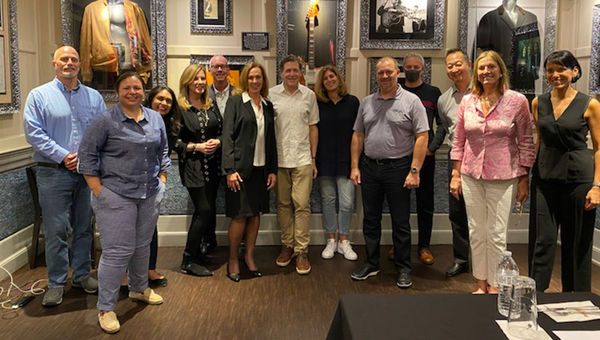
The Tourism Cares Board, meeting at Miami's Hard Rock Cafe on the day the pandemic was declared. The photo was taken before the Europe travel ban was announced.
I listened to former President Trump deliver the message while I was sitting in a meeting room in the basement of Miami's Hard Rock Cafe along with the rest of the Tourism Cares board, which had just assembled for a two-day retreat. A few hours earlier, we had greeted each other cheerfully with "Wuhan shake" foot taps rather than hugs and handshakes. A small bottle of hand sanitizer was in front of every seat, and former chair Derek Hydon, president of MaCher, had already donned a cloth mask for the meeting. Things seemed strange, but not yet dire.
The mood changed suddenly with the president's somber televised announcement. When it was over, USTOA CEO Terry Dale said, "I just feel so sad," speaking for everyone present.
Where were you on March 11? I sent an email asking that question to some friends and colleagues and asked them to send their thoughts about a year living in a pandemic. Their replies, some edited for length, follow.
Nik Morales
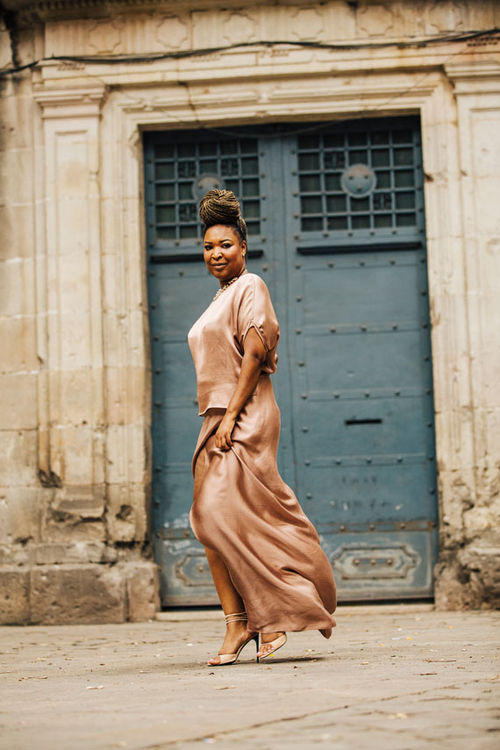
Nik Morales, the Travel Goddess
My immediate thoughts were ... wait ... what??!! What is happening? I was working and phones were ringing like crazy! I initially went into machine mode. Cancellations left and right. Every music tour we had: canceled. Every luxury vacation: canceled. Every summer vacation: canceled. All within 48 hours. We had clients out on the road and were planning future promo and festival travel. It all stopped. The silence was deafening. We went from preparing for our biggest year to watching it all crumble right in front of our eyes. I told my team that there would be immediate revenue loss of millions across the travel industry and that we should prepare for impact. Those first days were filled with unanswered questions, fear and confusion. [Eventually], I also felt a sense of relief, using the time to rest, reset and reimagine. Initially, I naively thought that it would be like a three-month staycation.
Tony Wheeler
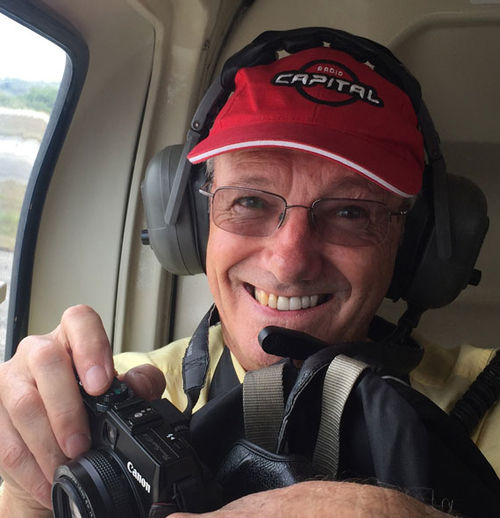
Tony Wheeler, co-founder, Lonely Planet
OK, you'll probably have trouble beating where I was on March 11, 2020: Yemen. Actually, Socotra, the Yemeni island (closer to Somalia than Yemen itself, but quite safe), described as "the Galapagos of the Indian Ocean." We spent a lot of time trying to follow what was happening in the outside world, but internet connections were extremely patchy so there was a lot of passing around of the latest rumors. We were woken on Day Five just before midnight and told the once-weekly flight to Cairo was leaving 48 hours early because everything was shutting down. So we departed on March 16, arriving back in Australia March 18.
In early February, I had rented a beach house with friends just outside Hobart, Tasmania. We talked a lot about the coronavirus news as each day we watched one cruise ship (remember cruise ships?) arrive and another depart in front of us.
In mid-February, I flew to Wakayama, Japan, for a university conference on overtourism (remember overtourism?). I had gotten a message from an academic who I was supposed to be on a panel with saying he wasn't going to risk going to Japan because of the outbreak; he was going to stay safely in Italy! Italy was about to become the world coronavirus epicenter, but let's face it, there have been plenty of epicenters since then. While I was in Wakayama, the Diamond Princess story was unfolding not far away, in Yokohama.
Not being allowed into the USA has had zero impact because we are not allowed out of Australia. In fact, very often, we're not allowed to go from one state to another. We have absurd situations like the border between New South Wales (where Sydney is) and Victoria (Melbourne) being shut on Jan. 1, 2021, with almost no notice. If you'd flown up to Sydney for the day you couldn't go back to Melbourne. It wasn't that you had to go into quarantine for 14 days. You were simply not allowed to return home at all!
When I had arrived back in Melbourne from Yemen, they were requiring you to go home and stay there, in isolation, for 14 days. Which meant that if I'd gone home, my wife Maureen would have had to go into isolation, as well. So I didn't go home. I got an Airbnb apartment for two weeks.
I think early in 2020, we thought normal life should return by the end of the year. Now, it's "who knows?" I think at some point in the future we're going to look back and think "well, that was clever" or alternatively, "that was stupid." We may have virtually zero cases in Australia, just like New Zealand and a few other places in Asia and the Pacific, but is that necessarily a good thing? Are we going to find that countries where the pandemic story has been much worse developed some sort of immunity while we haven't?
And I'm fascinated why the pandemic story varies so much from one place to another. Right now, the U.K., vaccinating at warp speed, has the daily new infection rate down to less than 100 per million. The USA, also vaccinating rapidly (but starting in a much worse place) is down to less than 200. France is over 300. In Germany, the story is similar to the U.K., despite not doing much vaccinating as yet. In Europe, why is the story so shocking in tiny Andorra? Why did Georgia seem to escape the pandemic for most of 2020 while neighboring Armenia was going through the roof? And then suddenly at the end of the year, Georgia went through the roof, as well. Why has most of the Pacific pretty much escaped the pandemic, but French Polynesia is a horror story? New Caledonia is also a French Pacific colony and has an almost identical population, yet French Polynesia has over 300 times as many cases. Weird!

Christine Duffy
Christine Duffy, president, Carnival Cruise Line
March 11, 2020, was one of many busy days that week. I was in Doral, Fla., at our company headquarters. We were actively managing the guest and crew communications related to growing public concerns about Covid-19 as well as engaging with our port and destination partners. At the time, many small island nations were denying cruise ships the right to dock and disembark guests, and the media was reporting on even the slightest hint of a possible case on board any cruise ship, so there was a great deal of confusion and uncertainty. The March 11 declaration of the travel ban from Europe was an omen for things to come -- it was a clear signal of the severity of the pandemic. And then two days later, on March 13, the cruise industry announced its voluntary 30-day pause in global operations. We had no idea then that we'd be sitting here one year later, still awaiting a clear sign on when cruising can resume from U.S. homeports.
Dennis Pinto
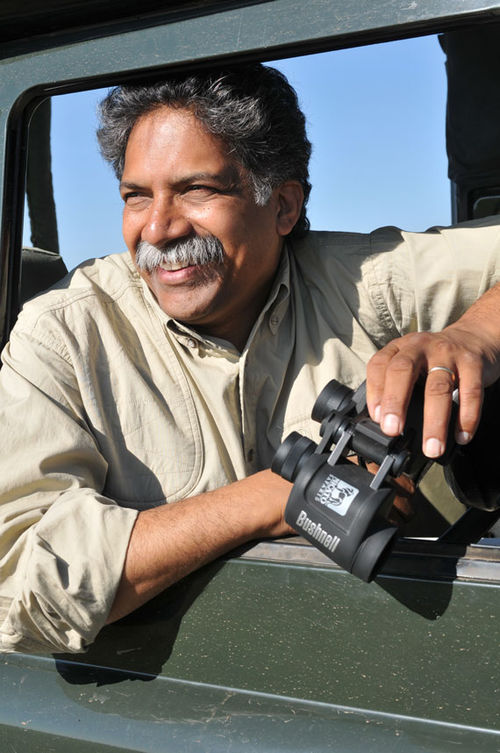
Dennis Pinto, managing director, Micato Safaris
As a 55-year-old family business, Micato has been through dozens of crises: SARS, election disruptions, financial meltdowns, 9/11, etc. I'd like to think that each crisis has made us more adept at handling the next one.
We have five levels of "Incident Protocols" in the event of situations like natural disasters, terrorism, etc., with No. 5 being the most serious. When the World Health Organization declared the outbreak a global pandemic, we activated our Level 5 emergency protocol, triggering a series of actions and responses in anticipation of a significant falloff in the number of travelers on safari.
By then, we had transitioned most of our New York team to a work-from-home environment because of a growing unease amongst our staff about public transportation. Fortunately, we had a comprehensive "go plan" in place since Hurricane Sandy, so it was just a matter of flipping the switch.
I was at home when I heard the news about the European ban -- on a late evening call with our management team reviewing a series of "what if" scenarios that were generated earlier in the week. Initially, it was a 30-day ban and there was conflicting information about the duration of the pandemic. Because Africa was (and still is) relatively spared by Covid-19, I was somewhat optimistic that the impact of the virus would diminish by the end of July. I was off by about six months!
Shortly before the pandemic was officially declared, we had our first virtual company meeting and reviewed how every crisis has a beginning, middle and an end. Our strategy would be to keep our focus on the "end" and plan accordingly vis-a-vis travel advisors and their clients.
At the time, I didn't anticipate such a prolonged shutdown, but fortunately, past crises had taught us the lesson of ensuring that the company had sufficient reserves to weather even the most severe of storms. Our very flexible refund policies and advance commission payouts, for example, served to strengthen relationships with advisors.
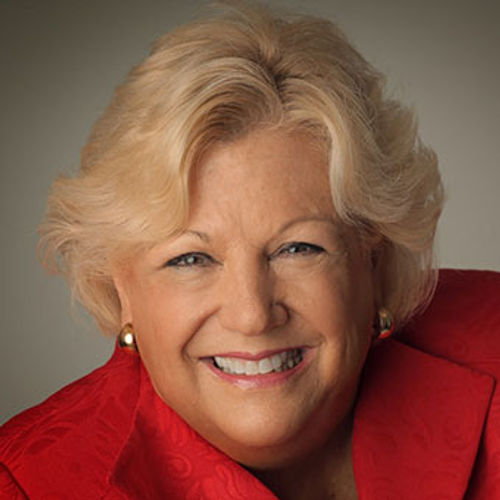
Kathy Sudeikis
Kathy Sudeikis, vice president corporate relations, Acendas Travel
For Spring Break 2020, I had 40 passengers in two groups -- high school senior trips -- departing Kansas City, Mo., for Italy on March 14.
The news of border closures was swirling around. I called a parents' meeting for Monday, March 9, to advise on options for canceling the trip. I told them that if they canceled on March 10, there would be no refunds, but if we waited until Wednesday or Thursday and the airlines canceled their flights, thing would be different. Thirty-plus years of experience helps!
They reluctantly agreed, and on Wednesday, March 11, both American and United canceled their roundtrip flights to Rome.
After 36 sleepless hours trying to reach someone, I was able to finally be put on hold with United! An hour later, I was actually speaking with someone.
But the response was, "vouchers only." I went all the way up the chain, because high school seniors wouldn't be able to use $2,000 in vouchers before they headed to college.
In addition to my pleas, we had a substantial prayer team going at these two Catholic high schools and ... United said they'd give back the airfare.
One problem solved. We had also immediately canceled all the land arrangements with our wholesaler, who had negotiated a partial refund for the groups.
Then we filed an insurance claim with Travel Insured. Trip cancellation coverage was not applicable to Covid-related claims. But with assistance from the school's legal teams, we refiled for trip delay coverage. We were advised by Travel Insured that it doesn't kick in until 12:01 a.m. on the day after the scheduled departure and were denied.
We made a formal complaint to the Insurance Commission of Kansas. That review is still in process. The saga continues, as I'm sure it does with many other agents.
We've all been through ups and downs in the travel agency business, and we've weathered storms -- with enthusiasm -- and emerged on top of our game. Agents will keep fighting and using our time and small resources to redo systems and influence organizations.
And we've set new goals and are ready and waiting, with excitement, for when the travel floodgates reopen. I'm still bullish on travel agency distribution. We have so much to offer!
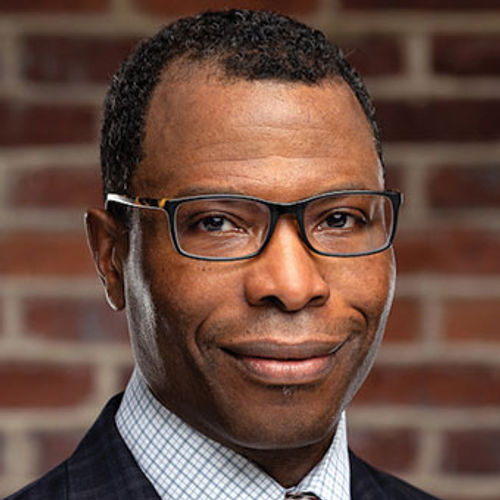
Elliott Ferguson
Elliott L. Ferguson II, CEO, Destination DC
Last March, I remember being stunned when the NBA shut down. We had no clue of the disruptions yet to come. The year prior was such a high point, and then our industry fell off a cliff. My immediate focus was on ensuring the longevity of Destination DC and the well-being of my staff. At first, we were shocked to hear of lockdowns. Our feelings progressed to being scared, feeling despair and finally being able to focus on recovery. Now, my optimism is tied to vaccines and the administration making safety a priority, which is key to rebuilding consumer confidence in travel and offsetting the nearly $5 billion in visitor spending lost in D.C. last year. If our cities and states didn't understand the importance of tourism on our economies before, they do now.
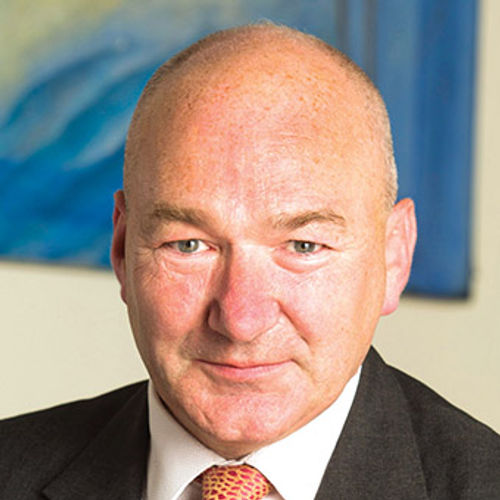
Tom Jenkins
Tom Jenkins, CEO, European Tourism Association
The Covid crisis broke slowly. All the other tourism crashes I have
witnessed were comparatively sudden. The Libyan bombing of 1986, the
first Gulf War of 1991, the repercussions of 9/11: These broke into a
comparatively benign environment like a sudden storm.
With coronavirus there was a slow burn. First, news of a problem in
China, then the cancellation of Chinese groups, then the news that it
was spreading in Italy. There was plenty of time for people (like
myself) to issue reassuring statements: These things always blow over.
So our reaction to the news of March 11 and 12 was that this was
precipitative. The European Tourism Association and European Travel
Commission issued a statement pointing out that a pandemic is (by its
nature) everywhere: You cannot contain it by banning travel.
Whilst this looks mistimed, it wasn't wrong. One of the dangers of
crises is that politicians have to be seen to be active, and they do
what they can. Banning internal travel is very difficult, so
international travel gets it in the neck. At first, it was treated as a
zero-sum game: "We will only allow visits from countries with a lower
infection rate." And those countries, were they to deal with higher
infection rates? Then came blanket bans in expiation of a rising toll.
If no one can leave their house, who can leave the country?
This was a real crisis. Millions of people died. All previous ones
were phantom. In 1986, terrorists were amazingly successful in
generating needless panic; in 1991 governments did the job for them. Yet
throughout April and May 2020, the tourism industry displayed a
resilient attitude. Every poll we conducted said that 40% thought
business would return in the fall.
Twelve months later we are still determinedly optimistic. Bookings,
held over from last year, are waiting to be delivered. But tourism is
now part of a command economy, and politicians are sitting with their
thumbs on the controls. It is upon this that the optimism is founded.
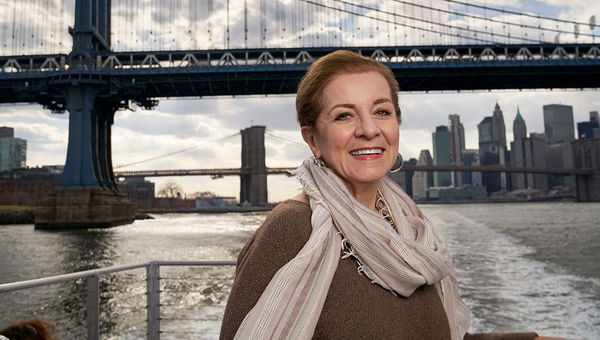
Patricia Schultz Photo Credit: Laura Barisonzi
Patricia Schultz, author, "1,000 Places to See Before You Die"
I thank the travel gods that, in February 2020, I squeezed in a three-week trip to northern Thailand and Laos. I had found far more precautions being taken upon arrival in Southeast Asia -- with masks being widely worn in the international and regional airports -- than anything found or seen in the U.S. at that point. (And, to date, Laos has had zero recorded Covid-related deaths).
In early March, there was a subtle but palpable sense of potential danger for the international travel market at the busy Travel & Adventure shows that I spoke at in Atlanta and Washington. But no one was ready for the ban: It came like a bolt of lightning, accompanied by a whirl of confusion about who was being blocked -- and with no assurance that the original 30-day limit would not be extended.
I was safe. I was home. The next U.S. travel shows where I was scheduled to speak were canceled, as was an international trip I had scheduled two months later. We found ourselves in a suspended moment where social media and online news fed us a steady mix of stay-strong optimism and who-knows conjecture. It was deeply scary, and the following briefings and news grew progressively worse. It impacted not just our large but tight-knit travel industry, but the world on every imaginable level.
I still relive those idyllic days sailing down the Mekong. I have not been abroad since. No one could have imagined how radically our world would change from one moment to the next. I have lost friends and I have lost money, but I have not lost hope.
Shannon Stowell
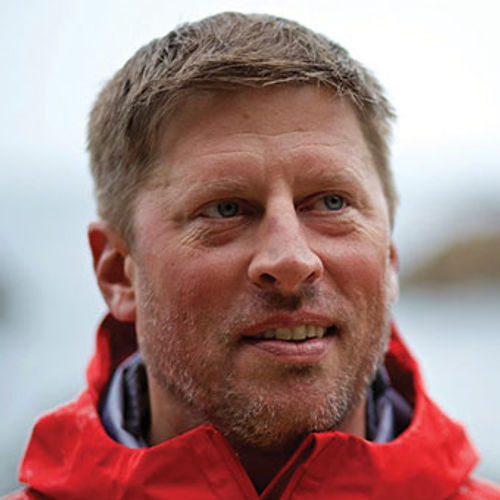
Shannon Stowell, CEO, Adventure Travel Trade Association
I was at home working when I heard both the official declaration of Covid-19 being a pandemic and Trump's ban of European travelers coming into the U.S. I think the shock factor was probably not as high as it would have been simply because we were all still reeling from the cancellation of ITB Berlin, which was the first massive shockwave for the travel trade. Trump's announcements were often capricious, so it was hard to understand why he'd ban Europeans with the exception of the U.K., which had higher numbers of cases than many European countries. It felt like there was something political behind that decision. But regardless, this was a shocking realization of how serious things were getting for the travel industry. I also recall how we were still planning our AdventureElevate event in September 2020, which would have some European involvement. At the time, it felt like there was plenty of time for things to recover. How wrong we were!
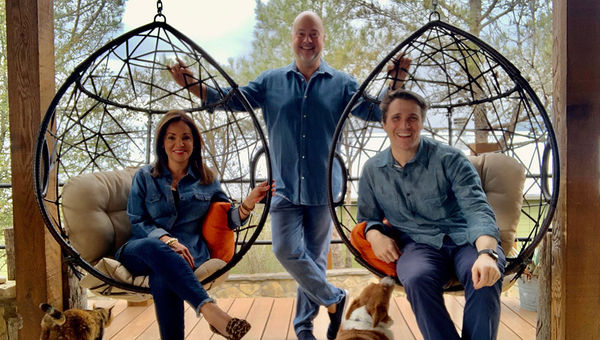
Claudia Monks of Hilton, Keith Waldon of the Departure Lounge and Sam Chamberlain, formerly of Hilton and now with Wheel’s Up, on March 11, 2020.
Keith Waldon, founder and director, Departure Lounge
I was sitting with my industry colleagues Sam Chamberlain (formerly Hilton Luxury Brands) and Claudia Monks (currently Hilton Luxury Brands) at my home when we heard about the borders closing. We had just finished some training for my travel advisor team in Austin, Texas; we were processing the news that South by Southwest and several travel conferences had canceled. We were drinking tequila and trying to wrap our brains around what was to come. I remember that some of my advisors were trying to get home from Africa and other faraway places. Another advisor was trying to get a spring break group back home from the Bahamas safely before the borders shut down.
I don't think we imagined the severity or length of time we'd be dealing with this ... or how long it would be until we saw each other again. I just recently had Claudia back at my home last weekend, and we talked about that time in March 2020 when the world seemed to be closing down. We feel lucky that we survived this past year and used the time wisely for developing our businesses. And we're feeling hopeful in March 2021.

Zita Cobb Photo Credit: David Howells
Zita Cobb, founder, Fogo Island Inn
When the pandemic was declared, I was in Vancouver for a Destination Canada Board meeting. Fortunately, I was in the good company of others from the Canadian travel industry, and we spent the balance of our time together trying to make sense of what was happening and what it would mean. Unfortunately, I would soon find out that I would not be able to make it home to Fogo Island for over a year due to pandemic travel restrictions inside Canada.
At the Fogo Island Inn, our immediate response was to "zoom in" and focus on the international guests who were in-house with us, to support these guests as they did their best to make the most of their time away under these changed circumstances, and also trying to understand the implications of the crisis for their families back home. We decided right away to temporarily close the Inn until we understood the situation better.
Our team got busy reaching out to intercept guests due to arrive imminently, all the while staying cognizant of rising anxiety about the virus in our local community. Once travel rearrangements were in hand, we were able to "zoom out" to try to understand what this seeming unmooring of the world would mean for us. The community of Fogo Island owns the Inn. It was built to serve this place via a regenerative, 100% social business model and is a critical economic and cultural engine for the island. By the second week of the pandemic, we began to grasp that the consequences for the island would be profound and that this was a dynamically complex situation. We understood that we needed an agile, many-minded approach to balance the needs of our community, our guests, our employees and our business.
What we thought would be an event has turned into an era. In those early days, we certainly didn't imagine that the Inn would be closed for an entire year. We hope to reopen soon and continue to await the removal of the travel ban imposed by the government of Newfoundland and Labrador. We keep heart through the knowledge that we created Fogo Island Inn with a 100-year planning horizon and the belief that everything the Inn stands for and offers -- nature, culture, a remote destination, raw wilderness, low density, authentic human connections and a purposeful travel that involves learning from and supporting a real community -- is the future of travel. We just have to survive the present to get to the future.
Eduardo Santander
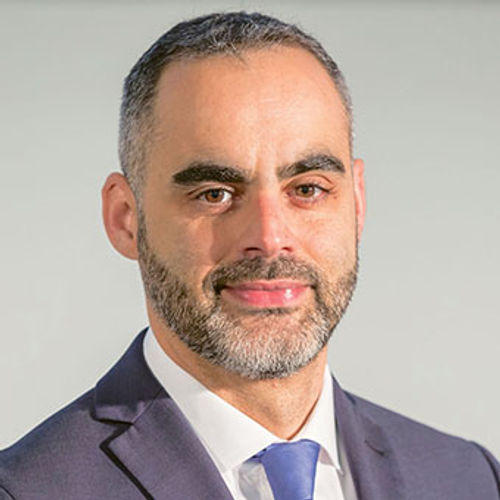
Eduardo Santander, executive director, European Travel Commission
The U.S. travel ban last March was a real wake-up call for my team.
It sent us a strong message that Covid-19 wouldn't continue to be just a
local problem in China but would massively affect our lives, work and
international travel.
My immediate reaction was an understanding of the vulnerability of
travel and tourism and its economic success. Without any doubt, only
international cooperation and public-private partnerships will allow us
to develop a more resilient sector in the aftermath of this crisis.
A year has passed, but global coordination is still our major concern
and will be the greatest challenge on the path to recovery. We truly
hope that the new U.S. administration will work closely with its EU
counterparts to quickly restore international mobility and boost travel
once the time is right.
Where were you when travel stopped? Share your recollections in the comment field below.