 Senior editor Michelle Baran traveled through Thailand for one week with the Tourism Authority of Thailand following severe flooding in the country. Her second and final dispatch follows. Click to read Michelle's first dispatch.
While traveling through Chiang Mai and Phuket, Thailand’s top tourist destinations outside of Bangkok, it’s easy to forget about the flooding woes plaguing the country’s capital.
The mountains and hills surrounding Chiang Mai (known for elephant treks and soft-adventure activities) and the island paradise of Phuket are far removed from the flood surges that threatened Bangkok and resulted in a loss of about 500,000 tourists who canceled their trips to Thailand, according to Juthaporn Rerngronasa, deputy governor for the Tourism Authority of Thailand.
“The biggest challenge from our flooding crisis was the communication,” Rerngronasa said last week at the Chiang Mai Travel Mart, a conference and trade s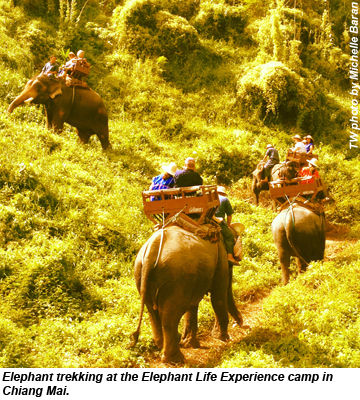 how to showcase Chiang Mai suppliers. “This is the worst crisis in flooding for our country in 50 years. But the reality is that central Bangkok and some of our main destinations haven’t been affected.”
Rerngronasa’s statement couldn’t ring truer. In fact, Phuket — which is booming with tourism development as hotels crop up all around the scenic island and on its surrounding archipelagos — actually saw an increase in tourists during the flooding crisis from travelers that opted to bypass Bangkok and chill out seaside instead.
There is something seemingly unstoppable about Thailand’s allure as a tourism destination. Rerngronasa and the Tourism Authority of Thailand estimate that despite the 500,000 tourists (and estimated $1 billion in revenue) lost this year due to the floods, the country will still be up in tourism numbers compared with last year.
The first nine months of this year, Thailand saw a 27% increase in tourists, said Rerngronasa. Last year, Thailand welcomed 15.9 million tourists, and it still expects to end 2011 about 20% ahead of that, with about 18.5 million to 19 million tourists.
It’s not surprising that despite the deadly and destructive tsunami that struck Phuket in 2004, despite the political clashes from 2008 to 2010, and despite this year’s devastating floods, Thailand’s tourism industry continues to flourish with its something-for-everyone offerings and hard-to-beat value.
As we kayaked through a cave in a small island off Phuket into an opening in the middle of the island, where we could see the stars above, fireflies clinging to the island’s fantasy-like flora and the water glistening with a sparkling bioluminescent plankton as part of one of John Gray’s sea canoe journeys, it seemed a shame that anyone would miss an experience like that because of Bangkok’s flood plight.