Within a span of five days this month, Norwegian Cruise Line Holdings unexpectedly bid farewell to its CEO, appointed a new one and became the target of an activist investor's call for a strategic overhaul.
The stunning series of events put NCLH's performance in relation to its closest peers under a new level of scrutiny. It also set the stage for what could be major changes aimed at improving the company's financials to be more aligned with its competitors, but what those changes may be are far from certain.
Missteps in private-island development and ship deployments have eroded NCLH's competitive edge with Royal Caribbean Group and Carnival Corp., activist investor Elliott Investment Management argued in a presentation outlining a vision for NCLH's overhaul that it released Feb. 17.
The hedge fund, which said it has built a more than 10% stake in NCLH, wants a new board of directors at the cruise company and for that board to initiate a leadership review and new business plan. It claims better management could mean a 159% increase in the company's stock value.
NCLH, meanwhile, threw Elliott a curveball. Three business days before the investor went public with its plan for the company, CEO Harry Sommer stepped down and board member John Chidsey was appointed to fill his role.
Deutsche Bank analyst Chris Woronka described it as an unusual offensive move for a company in NCLH's position.
"It's also about having control, and the board selected one of their own to be the new CEO," Woronka said.
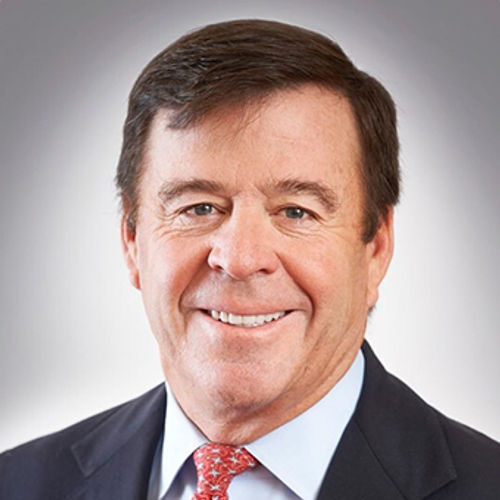
John Chidsey
What specifically NCLH might have planned under Chidsey's leadership is unclear. Though he has spent 10 years on NCLH's board, Chidsey's background as a CEO is not in cruise but instead in fast food at Subway Restaurants and Burger King Holdings.
In response to Elliott's call for changes, an NCLH spokesperson said its board and management team "regularly engage with our shareholders to hear their views on our strategy and progress, and we appreciate their perspectives.
"This is the first we are hearing from Elliott Investment Management. We are committed to delivering durable, long-term value creation, which will be led by our recently appointed CEO, John Chidsey."
Truist Securities analysts are speculating that an acquisition may be top of mind for NCLH given Chidsey's background -- at Subway, he oversaw the sale of the company -- and that it looks like the cruise company did not run a formal CEO search. Truist called that "very unusual."
"This is where things can quickly get more interesting," its analysts wrote the morning of Elliott's announced involvement.
A series of missteps
When describing what led to the current situation, analysts, and Elliott in its presentation, paint a picture of a series of missteps they say cost NCLH a competitive edge over the last five to six years.
While Royal Caribbean transformed its island into the blockbuster hit that is now Perfect Day at CocoCay, and Carnival Corp. followed with the opening of Celebration Key, NCLH's Great Stirrup Cay sat largely stagnant. When the company developed plans to update it, those plans fell behind schedule.
Elliott and market analysts asserted similar lags in its core cruise product. While Royal Caribbean debuted its spectacle-infused Icon class, Norwegian Cruise Line played it safer with smaller ships that broke fewer boundaries, they said, and while its competitors capitalized on growing interest for short Caribbean cruises, NCLH placed bets on longer European sailings.
Until CocoCay's upgrade, NCLH and Royal Caribbean were generally viewed as being neck and neck, said Truist Securities analyst Patrick Scholes.
"Norwegian, it just really hasn't kept up, and Royal has clearly moved ahead," he said. "It is what it is. You can also see that in the stock prices."
In Elliott's presentation outlining its plan, it frequently paints NCLH's competitive position as stronger pre-Covid than it is today. From 2013 to 2019, for example, the company's net yield was 18% while Royal's was 21%, one slide shows. But since 2019, Royal's has jumped ahead to 31% while Norwegian's has slipped to 17%.
Elliott is considering Adam Goldstein, who spent 32 years at Royal Caribbean Group, as a board nominee. Goldstein authored a Fortune column this week about his involvement with the hedge fund where he said he believes NCLH "could be doing much better" in capitalizing on the cruise industry's current strength. He was president and CEO of Royal Caribbean International from 2007 to 2014.
While this is its first foray into the cruise space, Elliott took on another player in travel, Southwest Airlines, in 2024.
It achieved only a partial board overturn at Southwest and failed to force out CEO Bob Jordan. But it sped up change at the company, playing a role in new policies like a bag fee that Southwest might not have otherwise implemented.
Although analysts have also cited many of the same issues that Elliott did, Woronka described some of Elliott's financial expectations for a turnaround at the company as "a heavy lift."
For example, Elliott projects that NCLH can achieve an Ebitda of more than $4 billion next year, while analysts estimate that figure being just $3 billion this year, he said, adding that's "a lot of ground to cover."
The first thing Woronka will be looking for is whether Chidsey is willing to engage with Elliott. Typically, Elliott would be facing a CEO who is deeply entrenched in the company.
"This is not that," Woronka said. "John's not entrenched. He's been in the job for three days."