 South Africa continues to be a popular destination for U.S. travelers, thanks to its accessibility and infrastructure. Travelers and travel agents have become confident about the destination and feel the country is the ideal base from which to explore Africa.
Unfortunately, most international travelers tend to stick to the well-known South African draw cards: the iconic Kruger National Park and cosmopolitan Cape Town with its renowned wine lands. Although it’s definitely worthwhile to tick those two experiences off your bucket list, South Africa has a lot more to offer. With Indaba, Africa’s largest travel trade show, around the corner, the time has come to focus on what the host city of Durban and KwaZulu Natal province have to offer travelers from around the world.
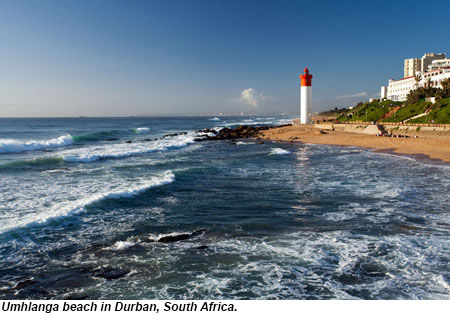
Durban is a cosmopolitan city on the shores of the Indian Ocean. With warm weather all year round, the city and its province are best known for their magnificent bathing and surfing beaches, which stretch along the city's waterfront from Durban Harbor in the south to the upmarket suburb of Umhlanga in the north all the way up to Mozambique.
KwaZulu Natal boasts one of the world’s top dive sites at Sodwana Bay Marine Reserve. Excellent visibility makes Sodwana an underwater photographer’s paradise, featuring more than 80% of the world’s marine fish groups. Humpback and southern right whales visit the area from May to November; and from November to January, Leatherback and Loggerhead turtles as large as 1,600 pounds lay their eggs on the beaches at Sodwana. Numerous community-guided tours in the area enable travelers to witness this spectacle first-hand.
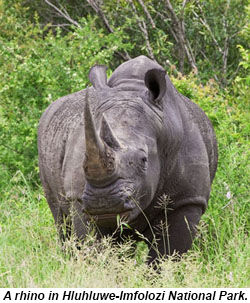
However the province doesn’t only offer marine wildlife. Among South Africa's largest game reserves, Hluhluwe-Imfolozi is one of the best places in the country in which to see the endangered rhino. The reserve has both black and white rhino, along with all the other members of the Big Five (lion, leopard, elephant and buffalo). And although the Kruger is undoubtedly the best-known game park in South Africa, Hluhluwe is the oldest game reserve on the African continent, established in 1895.
 There are a number of basic camps within the Hluhluwe reserve that offer affordable accommodations as well as some five-star private lodges, such as Thanda Private Game Reserve. This five-star lodge promises "exclusivity, romance and Zulu culture in the heart of the untamed African bush.” It has been named Africa's leading luxury lodge in the World Travel Awards and is also the only private game reserve in the world to hold membership with the Leading Hotels of the World. Thanda offers a main lodge perched on a hillside overlooking the bushveld and a safari-style tented camp.
For families with childre, who prefer not to venture into malaria areas, KwaZulu Natal also offers the malaria-free Nambiti Private Game Reserve. The reserve is one of the newer kids on the block but is already giving the more famous and established private game reserves in KwaZulu Natal a run for their money. The Nambiti Game Reserve offers more child-friendly and affordable options than most other private game reserves in South Africa, such as the Ndaka Safari Lodge.
Not far from the Nambiti Private Game Reserve, lies the uKhahlamba Drakensberg Park, the first site in South Africa to be recognized as both a Cultural and Natural World Heritage Site. The park is home to the majestic Drakensberg, South Africa's largest and most spectacular mountain range. The uKhahlamba (Zulu for “barrier of spears”) is a biodiverse wonderland of river valleys, mountain streams, rugged cliffs, hiking trails and stunning scenery.
The rugged landscape with its gorges and rivers, lends itself to numerous outdoor adventure activities such as kayaking, tube-riding, horseback- riding, 4x4 trails, hiking, hang-gliding, mountain-climbing, swimming, canyoning and fly-fishing.
Hundreds of caves lie hidden in valley folds and in the sandstone cliffs that typify the Drakensberg. It's on the walls of these caves that a living legacy of the nomadic San people is recorded in the form of paintings. An estimated 600 rock art sites feature in excess of 35,000 images depicting humans, animals and the complex spiritual life of the San over 4,000 years. Other 19th and 20th century paintings are attributable to the Bantu.
For the truly adventurous who are prepared to rough it for a night, overnight campouts in one of the Drakensberg’s many caves are available. Ezemvelo KwaZulu-Natal Wildlife will give travelers a comprehensive list of caves where they can overnight.
Fast Facts
• Languages: There are eleven official languages in South Africa. In KwaZulu Natal, English and Zulu are widely spoken.
• Banks: Banking hours are Mondays to Fridays 9 a.m. to 33 p.m. and Saturday 8:30 a.m. to 11 a.m. ATMs operate 24 hours a day and can be found in most shopping centers.
• Currency: The currency in South Africa is the rand. Bank notes currently available are R200, R100, R50, R10 and coins of R5, R2, R1, 50c, 20c, 10c, 5c, 2c and 1c.
• Value added tax: A 14% tax is charged on most purchased goods and services. However, foreign tourists may reclaim this money on their departure from the country provided that the goods purchased exceeds R250. Ask for more information at the airport upon arrival.
• Weather: KwaZulu-Natal has a warm, subtropical climate, with temperatures moderated by the expanse of the Indian Ocean. Summers are hot and humid, averaging 84 degrees, and experience the majority of the annual rainfall, while winters, with average temperatures of 73 degrees, are warm, dry and clear. The climate of the province is described as year-round tourist-friendly.
• Sea temperature: Sea temperatures are relatively stable, averaging 70 degrees all year, providing possibilities for a diversity of aquatic activities in any season, including diving, fishing, swimming, boating and surfing.
• Accessibility: Emirates operates daily flights to King Shaka Airport in Durban from its hub in Dubai. Several flights a day are also available from Johannesburg through local carriers South African Airways, Mango, BA Comair and Kulula.
• Health: In KwaZulu Natal, malaria is endemic on the Maputaland coast. In areas such as Kosi Bay, Sodwana Bay, Mkuze Game Reserve and St. Lucia Lake, the use of anti-malarial drugs is advisable only from October to May. Check with your physician or travel clinic.
Photos courtesy of Shutterstock.