On a summer afternoon in Le Plateau-Mont-Royal (or simply "the Plateau") neighborhood in Montreal, my family and I strolled down wide, pedestrian-friendly streets beneath brightly colored murals.
We'd already spent the morning lounging beneath leafy trees in the canopied Parc La Fontaine and walking along historic streets, admiring charming Victorian-era homes with twisting exterior staircases. We'd scarfed down hot wood-fired sesame bagels at St-Viateur Bagel, one of Montreal's famed bagel shops. Flowers were everywhere -- bursting from planter boxes, blooming outside businesses and displayed on outdoor cafe tables.
The lively, entrepreneurial energy of the neighborhood was on full display in the summertime, and it was electric.
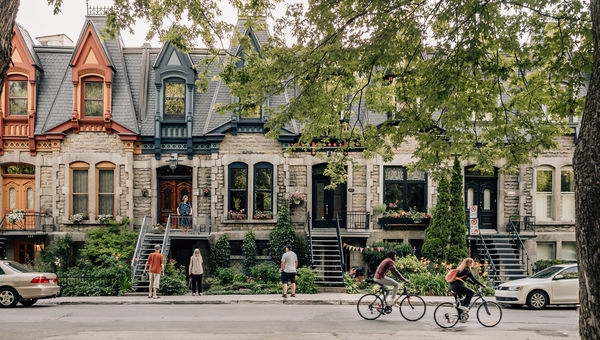
Montreal’s Le-Plateau-Mont-Royal is home to charming Victorian homes with exterior staircases. Photo Credit: Laurene Tinel, courtesy of Tourisme Montreal
Recently ranked as one of Time Out magazine's Coolest Neighborhoods in the World, the Plateau gets its name from its location on a plateau on the eastern side of the city's central mountain, Mount Royal. Technically a borough, Le Plateau-Mont-Royal includes the individual neighborhoods of the Plateau, Mile End and Milton Park and is one of the most densely populated boroughs in Canada.
Just north of downtown Montreal, the Plateau and its Mile End enclave are known as much for their urban parks and colorful homes as their nightlife and arts scene. Bookstores abound, as do curated vintage stores, coffee shops and artisan bakeries. A quick metro ride from the cobblestoned streets of Old Montreal, this neighborhood is a place for clients to truly relax and soak up the innovative, multicultural spirit of the city.
"Every city has one neighborhood that really captures its essence, and I would say that the most 'Montreal' neighborhood in Montreal is the Plateau," said Thom Seivewright, founder of Tours Montreal, which offers group and private tours of the city. "It's a combination of the history, culture, unique architecture and mix of people who live there. The Plateau has a very distinctive look and vibe."
While Montreal is known for being multicultural, the Plateau's identity is distinct because it has been shaped over generations by specific cultures, including Jewish immigrants from Eastern Europe, French Canadians and those from France (especially in recent years), Portugal and Romania.
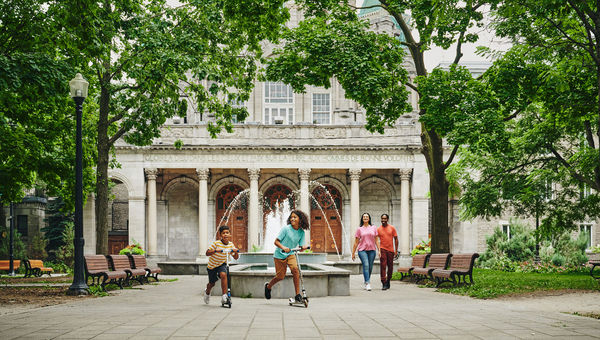
Lahaie Park in front of the Eglise Saint-Enfant-Jesus in the Mile End enclave. Photo Credit: Daph & Nico, courtesy of Tourisme Montreal
Mile End is known for its large-scale street art and splashy murals, while Mont-Royal Avenue is home to open-air markets and cafes with ample sidewalk seating. A top cultural hub is Little Portugal, stretching several blocks of Boulevard Saint-Laurent (also known as "the Main") and offering trendy boutiques, restaurants, a thriving arts scene and strong microbrewery culture, according to Seivewright.
"If you want to see a stand-up comedian or local bands playing in an intimate venue with only 100 people, Little Portugal is the place to go," he said. "And when the weather is great, everything spills out onto the street. There's festival after festival in the summertime."
The borough is also known for its expansive parks, all of which feature year-round activities. In the winter, parkgoers can ski cross-country or ice skate across ponds; in the summer, people can attend free performances at the 2,000-seat outdoor amphitheater Theatre de Verdure in Parc La Fontaine.
Where to dine
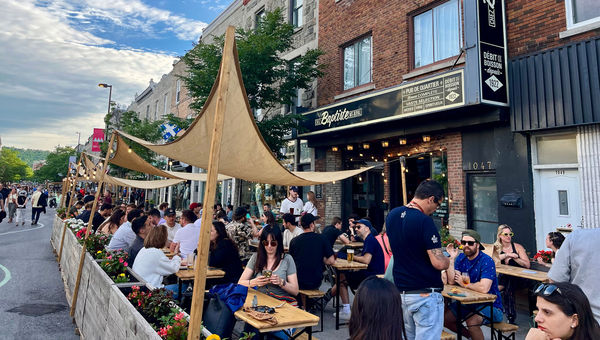
Bar Chez Baptiste has been open since 1922. Photo Credit: Linnea Bailey
The neighborhood is home to a lively and diverse dining scene, with restaurant options that range from classic French bistro fare to Japanese, Spanish, Peruvian, Mediterranean and even Malagasy cuisine. It also has numerous cocktail bars, pubs and intimate neighborhood spots, such as the late-night venue Bar Suzanne (named in honor of the song "Suzanne" by Leonard Cohen, who lived in the Plateau for decades).
Founded in 1928 by Romanian immigrant Reuben Schwartz, the Plateau is home to the oldest Jewish deli in Montreal: Schwartz's Deli, known worldwide for its famous smoked meat sandwich. And another notable eatery is right next door: Rotisserie Coco Rico, an authentic Portuguese rotisserie.
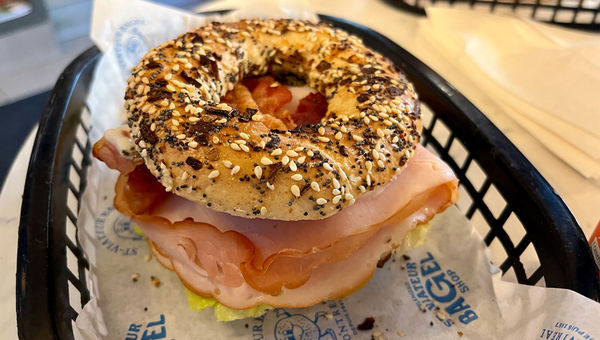
St-Viateur frequently wins accolades for its hand-rolled, wood-fired bagels. Photo Credit: Linnea Bailey
There are also two longstanding locations of the legendary bagel shop St-Viateur Bagel: its flagship bakery in Mile End (open daily from 6 a.m. to midnight) and a lauded shop and cafe in the Plateau. The bagel shop frequently wins accolades for its hand-rolled, wood-fired bagels, including Best International Bagel at the New York BagelFest in 2025 and 2023.
Montreal's strong bagel culture, combined with the rising popularity of bagel sandwiches, has taken the shop's Plateau location to a new level of international tourism, drawing visitors from as far as Australia, South Korea and Ireland, said general manager Nicolo Piazza.
"We're very blessed to have people from across the world that not only travel to Montreal, but put St-Viateur Bagel on their list of things to do," he said. "Many times, fans will even visit both locations. They'll visit the bakery to buy bagels and see 70 years of magic, and then will visit the cafe to eat a lox and cream cheese bagel sandwich."
Where to shop
A great place to find unique clothing and handmade gifts, the Plateau has jewelry boutiques, shoe stores, vinyl record shops and specialty grocery markets.
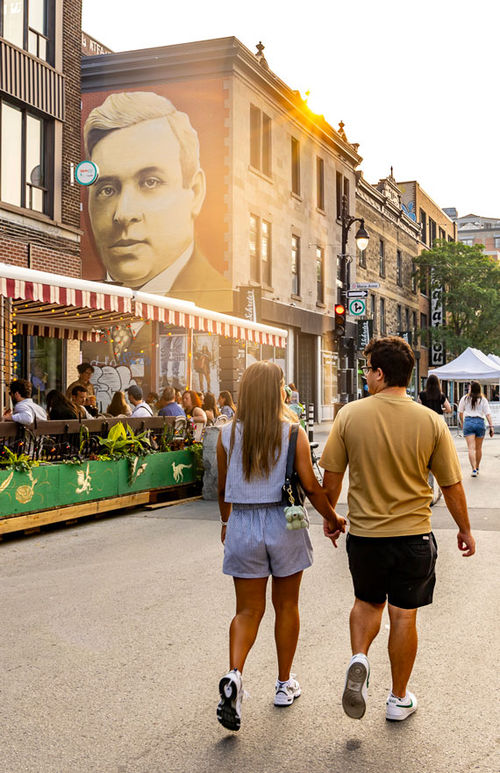
Le-Plateau-Mont-Royal during summer street closures framed by "The Angel of Bordeaux" mural by artist Matthew Cadoch. Photo Credit: Eva Blue, courtesy of Tourisme Montreal
And for vintage fans, the borough offers next-level thrift shops where merchandise is not only upcycled, but carefully restored and well-organized, adding enjoyment to the experience of shopping. Two of the best streets for thrifting are Boulevard Saint-Laurent and Saint-Denis Street, Seivewright says.
"This neighborhood and the people who live in it are very active in terms of artistry," said Shawn Ann Ribotti, founder of the Saint-Laurent shop Ribotti Vintage, which specializes in retro ski outerwear and movie-inspired, shop-branded sunglasses made from water bottles recycled from the oceans.
"Every vintage or secondhand shop has their own concept that they specialize in, so it's a very fun community to be in because we complement each other," Ribotti said. "There's something for everyone: high-end vintage, affordable vintage or very trendy apparel."
When to visit
Many sections of Le Plateau-Mont-Royal are transformed into pedestrian-only zones each year from June to September, meaning that the experience of exploring renowned streets like Avenue du Mont-Royal, Avenue Duluth and Prince Arthur Street on foot is exceptional. Special art installations abound, as well as outdoor farms growing produce.
"When the streets become car-free, all the shops spill out onto the streets and all of the cafes and restaurants have outdoor seating," Seivewright said. "For the price of the cup of coffee, you can sit and watch the world go by. It's like the greatest show on Earth."
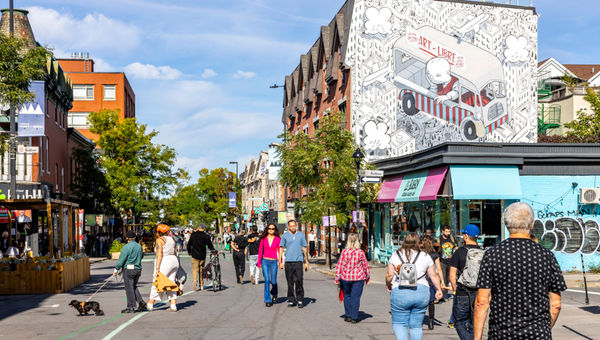
Mont-Royal Avenue beneath the mural "Free Art" by Italian artist Millo. Photo Credit: Eva Blue, courtesy of Tourisme Montreal
Each month has its own draw, too. June marks the start of festival and concert season, while the months that follow each bring their own perks. August and September are ideal months to visit because they offer warm weather during the day, cooler evenings and all the benefits of the open streets' programming.
"Both summer and autumn are wonderful seasons to experience the neighborhood," Seivewright said.
Where to stay
Hotel options in the borough include Hotel St-Thomas and Hotel de l'ITHQ, operated by the largest French-speaking hospitality school in North America. A much-anticipated property, Hotel Mile End, is set to open this fall.
Hotel de l'ITHQ also manages Restaurant de l'ITHQ on its ground floor, a restaurant that features food prepared by students in one of the most prestigious culinary schools in Canada, Seivewright said.
"It's an opportunity to eat food prepared by future top chefs," he said. "It's a really cool experience."
Since Le Plateau-Mont-Royal is easy to reach by metro or bus, luxury-minded travelers will likely opt for downtown accommodation options like the Four Seasons Hotel Montreal or Fairmont The Queen Elizabeth, directly above the city's Central Station. The Fairmont even offers an exclusive Mile End-themed suite, designed to involve the spirit of the neighborhood.
How to get there
Throughout the city, the Montreal Metro operates daily from 5:30-1 a.m. (or 1:30 a.m. on Saturdays), with an average wait time of eight minutes (or three minutes during rush hour). The most central metro stop to reach the borough is the Mont-Royal station on the Orange Line.
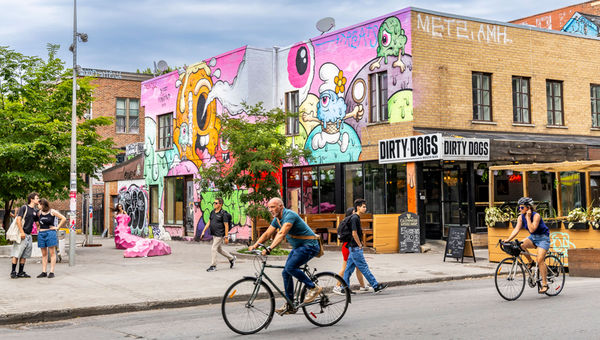
Cyclists ride underneath "The Seven Deadly Sins" mural by American street artist Buff Monster. Photo Credit: Eva Blue, courtesy of Tourisme Montreal
Buses are also an option, as are Bixi bicycles (both traditional and electric), available for pickup and drop-off at stations throughout the city. Montreal features 480 miles of bike paths, with an ever-expanding bike system that the Copenhagenize index has named one of the most bike friendly in North America.
And once there, slow travel is the way to go.
"On a beautiful day, you can walk from the mountain down to Mont-Royal Avenue, walking through the park and to all of the Plateau's restaurants, cafes and shops," Piazza said. "It's a wonderful way to experience the neighborhood."