With a large majority of the world's passenger flights grounded, airlines have begun cargo-only operations in an effort to find incremental revenue and to keep global supply chains moving during the Covid-19 crisis.
"When you have lemons, make lemonade," said aviation analyst Bob Mann of R.W. Mann and Co. "You have all the capability to do this, and if someone needs something done, you are willing to do things today that normally you wouldn't prioritize."
Airlines from New Zealand to Africa to South America to the U.K. have gotten into the act, flying charter cargo flights using aircraft such as Boeing 777s, Boeing 787s and Airbus A350s that otherwise would be sitting idle.
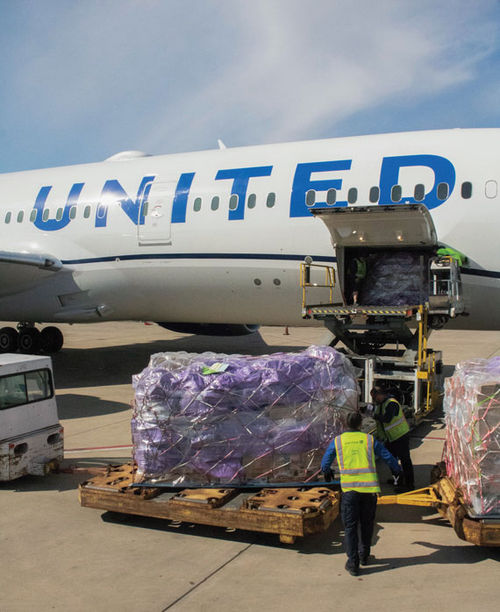
United is operating at least 40 cargo-only flights weekly aboard Boeing 777s and 787s, with a focus on delivering mail to U.S. military bases
All three major global U.S. airlines -- United, Delta and American -- have also begun such operations. With the majority of their passenger flights currently limited to domestic service, they are flying the cargo charters primarily on international routes.
Hawaiian, however, has beefed up its existing network of interisland, all-cargo flights. Cargo opportunities were also the reason Hawaiian cited when it decided to maintain daily Honolulu-San Francisco service, after initially announcing it would suspend mainland flying to everywhere but Los Angeles.
To be sure, the quantity of cargo that passenger airlines are moving is way down from usual levels. Normally, passenger airlines transport nearly half of all air cargo, using the bellies of aircraft, according to IATA. United, for example, typically ships more than a billion pounds of cargo each year. But that's while flying approximately 5,000 departures daily. As of this month, United has announced capacity cuts of more than 60%.
Still, with international service slashed much more than even that, United is now operating at least 40 cargo-only flights weekly aboard 777s and 787s, with a focus on delivering mail to U.S. military bases in places such as Guam, the Marshall Islands and several countries in Europe.
More generally, said United vice president of cargo Chris Busch, the carrier has seen a shift in its cargo hauls in recent weeks, with loads containing more protective equipment such as masks and ventilators.
"Our main intent is to make sure we keep the global supply chain moving," he said.
Moving vital supplies is also a key reason Delta resumed regularly scheduled China service on March 30, after suspending flights there in early February due to the Covid-19 outbreak. But now, the thrice-weekly A350 service between Detroit and Shanghai is freight only.
China suppliers of protective medical equipment have restarted production, said Delta, but they've been searching for more freight alternatives due to the drop in passenger flights. The Shanghai-Detroit service will help those suppliers get surgical masks, gloves, gowns and other protective equipment to the U.S. quickly, the airline added.
Busch said that United may well increase its cargo-only flying in the coming weeks, and it hasn't ruled out cargo-only domestic flights. The current operations, he said, produce enough revenue to cover the variable cost of flying them.
"It's a sense of duty for us now to keep our teams motivated and to make sure the global supply chain is moving," he said. "That's what is really driving us to put in all the hours."