When Morgans Hotel Group's Mondrian brand and management team was unceremoniously booted from New York's 4-year-old Mondrian SoHo last month by new owners Alex Sapir and Gerard Guez, Graham Leslie insisted that it wasn't about the money.
Leslie, the former Hilton, Kempinski and Rocco Forte Hotels executive who was installed as CEO of the newly renamed NoMo SoHo, pointed to a new management approach with an operations strategy that will include a wider array of curated guest services, more local artwork and even fresh replantings around the building.
That approach, he said, could help boost both room rates and occupancy at the 263-room hotel while keeping its high-end client base happy.
Still, he did allow that the new owners would get more bang for the buck by taking management in house and founding their own brand.
"We believe owners can do more with the property than a branded hotel group," Leslie said. "We can invest more in the property itself rather than in the umbrella brands."
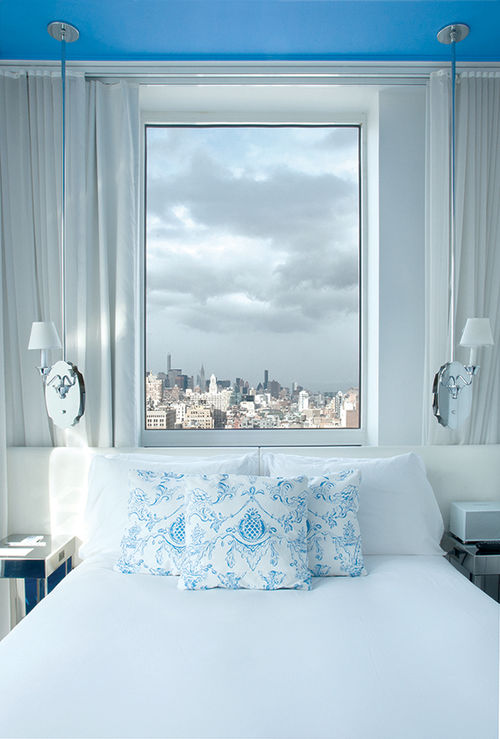
New York’s Mondrian SoHo became the NoMo SoHo in 2015 after new ownership won a legal battle against Morgans Hotel Group.
The Mondrian-cum-NoMo SoHo represents the most recent example of a growing trend: More owners of high-profile properties in the Americas are questioning the value of hotel-brand management companies. In many cases, they are trying to kick out the brand managers altogether, generating lawsuits and, in some cases, standoffs between ownership and management representatives.
The SoHo case was the culmination of more than a year of turmoil for a hotel that had fallen into foreclosure despite operating in the most lucrative U.S. market, had changed hands for a reported $200 million, had been the site of a late-night attempt by the new owners in early April to oust Mondrian management and had been the subject of a court battle that was decided in favor of the new owners.
Morgans Hotel Group, whose representatives declined to comment for this report, subsequently filed a damages claim seeking more than $100 million for what it alleged was a violation of its long-term management contract.
"Morgans went to court three times," said Leslie, who added that hotel's ownership was looking to expand the NoMo brand to cities like Miami and London. "On each occasion, they were turned down."
That scenario echoed one from last November pitting owners against brand managers at Cabo San Lucas, Mexico's 5-year-old Capella Pedregal, whose luxury badge is headed by former Ritz-Carlton chief Horst Schulze. After the owners removed Capella Hotel's management staff from the property, a New York State Supreme Court denied Capella Hotel's appeal to take back management of the 96-room hotel (it had been closed for repairs following last September's Hurricane Odile), at which point the property was renamed the Resort at Pedregal.
Owner Hoteles del Cabo, S.de R.L.de C.V. at the time accused Capella Hotels of both mismanagement and withholding donated funds earmarked to help displaced hotel workers, while Capella had called the owner's allegations "inflammatory and intentionally misleading." Neither party would comment for this article.
Other recent high-profile tussles between owners and managers have involved brands run by Marriott International, the largest publicly traded U.S. hotelier. In 2013, Marriott's Renaissance brand was removed from what had been the Eden Roc Renaissance Miami Beach about six months after the owner, Key International, attempted an early morning coup of sorts. The 627-room Eden Roc Miami Beach, which opened in 1956, is now part of Destination Hotels & Resorts' stable of hotels.
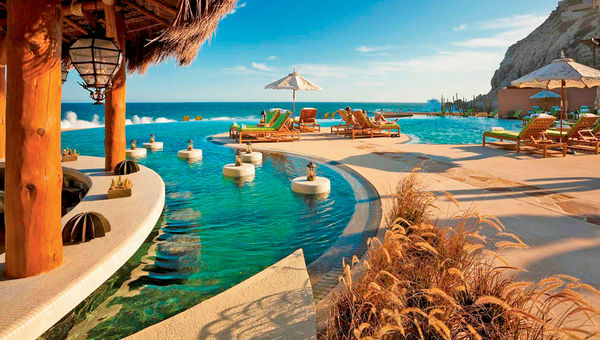
Mexico’s Capella Pedregal was reflagged in late 2014 as the Resort at Pedregal after a legal fight.
Also in 2013, the Marriott's Ritz-Carlton luxury brand was removed from what had been Florida's Ritz-Carlton Palm Beach after a court battle of almost a two years with owner Lewis Trust Group, which resulted in the 310-room property being renamed the Eau Palm Beach Resort & Spa.
And that followed a 2011 tussle in which owners of the then-Waikiki Edition, the world's second property under the Marriott International-Ian Schrager Edition lifestyle brand, kicked out management and ultimately gained the legal rights to move management to Hawaii-based Aqua Hospitality and rename the 353-room hotel the Modern Honolulu (in 2013, Aqua sold the hotel's management rights).
Marriott did not respond to requests for comment.
The conflicts reflect the high stakes involved in management and branding control over high-profile properties in some of the world's most popular destinations, especially as brand managers are paid anywhere between 10% and 15% of a hotel's gross revenue for their services. For a hotel like the Mondrian/NoMo SoHo, where average nightly rates approach $450 and occupancy hovers in the 90% range, that can mean $5 million a year or so that can be paid to, or withheld from, a brand management company like Morgans Hotel Group. Hence the nine-figure legal claim.
Jan deRoos, associate professor at Cornell University's School of Hotel Administration, said that conflicts over management control tend to boil over during either especially prosperous or especially challenging times.
"During the depth of the recession, owners think, 'I'm losing a lot of money. I'd do better if I had another manager,'" deRoos said. "When things are really good, it's, 'If only I didn't have my manager, I could be saving a lot of money.' It's always, 'I think I can do better.'"
Bjorn Hanson, former dean and currently clinical professor at the NYU School of Professional Studies Preston Robert Tisch Center for Hospitality, Tourism and Sports Management, said, "If the brand is spending a half-million dollars a year on flowers in the lobby, that can generate an incentive for owners to take action."
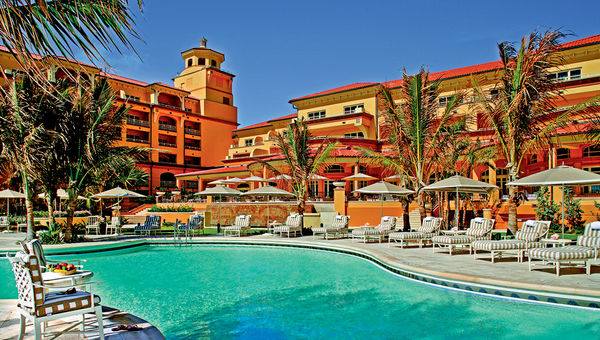
Florida’s Eau Palm Beach Resort & Spa was reflagged in 2013 after ownership waged a lengthy battle with Marriott International over management and branding of what was previously the Ritz-Carlton Palm Beach.
The stakes involved continue to get higher as an increase in travelers boosts both occupancy and room rates, owners pay more for their hotels and branding and management companies take more of an "asset-light" strategy by selling off real estate and deriving a higher percentage of their revenue and profit from management and branding contracts.
Last year, hotels in the 25 largest U.S. markets on average generated nightly revenue of $102.45, up 15% from the $88.88 revenue per available room (RevPAR) rate two years prior, according to STR. Occupancy during the same timeframe increased to 72.4% from 68.6%.
Many newer hotel owners are looking to boost the return on their investment by changing or removing brands. Global hotel transaction revenue could reach $68 billion this year, the highest since 2007, according to commercial real estate broker Jones Lang LaSalle. Single-asset transactions could represent as much as $50 billion of that total, up from about $10 billion during the recession lows of 2009.
"We believe owners can do more with the property than a branded hotel group can. We can invest more in the property itself, rather than in the umbrella brands." -- Graham Leslie
Meanwhile, hoteliers are increasingly dependent on management contracts. Last year, Marriott's revenue from owned and leased hotels accounted for 7.4% of its total revenue, down from 9.3% five years prior. More asset-heavy Hilton Wordwide's percentage of revenue from owned properties also dropped, to 40% from 45%, during the same time period.
As a result, the combination of hoteliers' asset-light strategy, increasing travel spend and the growing presence of third-party, nonbranded management companies like Interstate Hotels & Resorts, White Lodging and Davidson Hotels & Resorts may have shifted the balance of power away from companies like Marriott, Hilton and Starwood Hotels & Resorts, which in previous cycles were more likely to be the party calling the shots when it came to keeping or removing a flag on a hotel, said both deRoos and Hanson.
"If you look at some hotels that lost their flag because their brands left, their performance deteriorated seriously," Hanson said, alluding to past conflicts.
William Brewer, partner with the Bickel & Brewer law firm, which represented the Waikiki Edition's owner in its case against Marriott, said that in that instance and in other cases where ownership did make the move to remove management, it was often an egregious example where the hotel was either underperforming relative to its competition, overspending to establish a brand, or both.
"Marriott was starting a chain brand that hadn't materialized," Brewer said, noting that the only other Edition property at the time was a 72-room hotel in Istanbul. "That one hotel was carrying the burden of the entire brand management team back in the states."
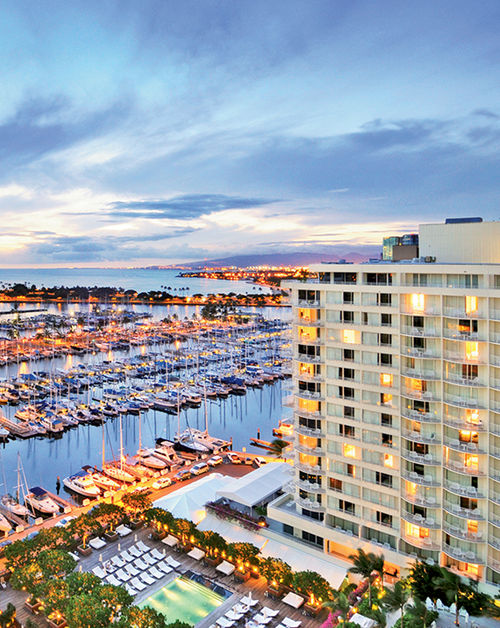
Due to owner dissatisfaction, the former Waikiki Edition became the Modern Honolulu in 2011.
That said, the most recent owner-management tiffs have involved largely atypical properties in highly desirable locales like New York and Honolulu and are unique properties like the Eden Roc, Capella Pedregal and Ritz-Carlton Palm Beach. In addition to their less frequented locations, many of those properties are known as much or more for their service efforts as they are for their physical look or branding approach, according to deRoos, who added that some of those properties now have the additional advantage of being picked up by the growing group of unbranded hotel collections.
"The balance of power is shifting, especially with the proliferation with the soft brands like [Marriott's] Autograph or [Hilton's] Curio. Even Radisson has a soft brand," deRoos said. "And these hotels are generally high end, which are a less physical product-oriented and a lot more service product-oriented."
Whether that balance of power shifts back the other way as the lodging sector cycles downward, as it's expected to during the next few years, remains to be seen. Reports surfaced last year that the Green family, which acquired Bermuda's Fairmont Hamilton Princess in 2012, was trying to push the Canadian luxury hotelier out of its management contract, though the 410-room property continues to be operated by Fairmont.
"Our long-term management of the Hamilton Princess, Bermuda's iconic harborside resort, continues uninterrupted," Fairmont spokesman Mike Taylor said. "We are working closely with hotel ownership on the resort's second phase of a robust $90 million renovation plan and look forward to managing this iconic Fairmont hotel well into the future."
Still, with many more high-profile legal decisions going against the brands, more owners might feel more comfortable pushing managers out, Brewer said, even if it means going to court to do so.
"In the next downturn, it'll be interesting to see just how quickly owners use the opportunity to change brand managers that just aren't doing a good job," he said. "There are chains out there that just don't make money for their owners."
Even so, Hanson said, some brand managers, especially the well-funded ones, are likely to continue to challenge any efforts to have them removed, especially if the hotel in question is performing well and if it's a newer property that the flag helped establish.
"Any brand may say, 'We helped you launch your hotel, we helped you design it and position it, and it's successful. Now you want to throw us out?'" Hanson said.
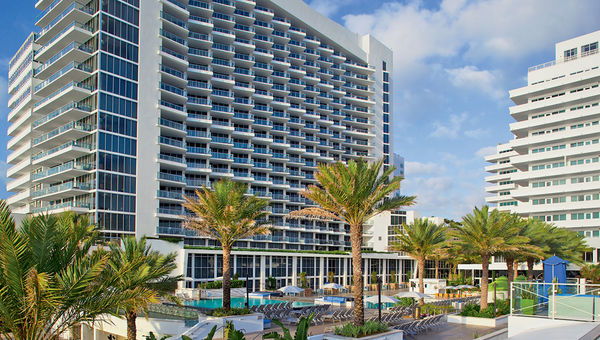
Florida’s Eden Roc Miami Beach parted ways with Marriott International’s Renaissance brand in 2013.
With that in mind, Brewer and deRoos both pointed out that public companies like Marriott and Morgans Hotel Group aren't likely to go quietly when they're being pushed by owners to leave, because the loss of a trophy property impacts those companies' stock performance.
In the Morgans Hotels case, Brewer said, the Mondrian SoHo was one of just a dozen worldwide properties under management, making the loss of its contract that much more significant than it would have been for a larger company like Marriott, Hilton or Hyatt.
"Morgans has to fight," said Brewer, who has worked on "dozens" of owner vs. management cases and had represented Starwood on the management front before moving to the ownership side. "They have a much smaller collection of assets. Losing that is tantamount to a run on a bank."
As for Marriott, the hotelier might also be trying to split the difference and work more extensively with concerned owners by moving some properties from being fully branded to Marriott's Autograph Collection of "independent" hotels, which eliminates many of the branding requirements and, potentially, many of the costs inherent in a branding relationship.
Last month, Host Hotels & Resorts, which owns the 281-room Ritz-Carlton Phoenix, said that property would close in July for renovations and would reopen as Arizona's first hotel within the Autograph Collection early next year.
Earlier this month, Washington's 657-room Mayflower became that city's first Autograph Collection property after flying Marriott's Renaissance upper-upscale flag.
When that option isn't presented, though, expect Marriott to continue to protect its position when it comes to management contracts.
"Marriott's big," deRoos said. "They play hardball."