ARC president and CEO Mike Premo will hang up his bow tie
next year.
The ARC leader, whose old-school taste when it comes to
neckwear is well-known in the travel industry, will step down at the end of 2020.
COO Lauri Reishus will succeed Premo.
"I have been involved in the industry for a long time. My
wife is long-suffering with my travel activities. I'm deeply in hock to her and
my family, and it is time to start paying it back on that side of life," Premo,
64, told Travel Weekly.
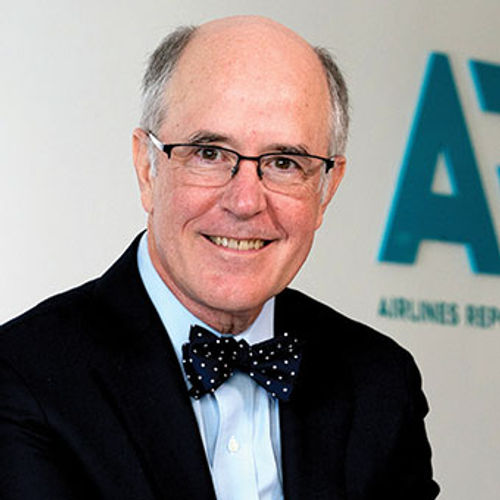
Mike Premo
He said his retirement announcement comes more than 13
months in advance because succession planning is one of the biggest
responsibilities of a CEO and a board of directors.
Though Reishus, who has been with ARC since 2005, is already
highly familiar with the business, the long transition will allow her to ease
into certain aspects of corporate governance -- including dealing with the
compensation committee -- that she has not been a part of to date. In addition,
Reishus will be able to take over the budgeting process next year, ahead of
administering that budget as CEO.
Premo joined ARC in 2006 as vice president of business
development and became CEO in 2011. During his tenure, Premo has overseen
enhancements to ARC's settlement, data and reporting systems platforms,
including cloud migrations. Expansion in ARC's services, data products and
roster of member airlines has led to revenue growth of 44% under Premo's
leadership, the company said.
Premo counts shepherding that revenue growth as among his
top achievements. This year, ARC expects to record revenue of $143 million.
But he said he is most proud of transforming the
relationship between ARC and travel advisors for the better.
"We've been able to really change the relationship with the
agency community to the point where they think of us as an enabler instead of police
for the airline industry," he said. "It wasn’t that long ago that ARC sent
inspectors into travel agencies to make sure they had a safe of a certain size
and that it was bolted to the floor. We’ve moved away from that to trying to
treat agencies as the responsible businesses that they are."
Premo said that the shift has been enabled by the
replacement of paper tickets with e-tickets, which gained widespread use early
last decade and became mandated for IATA members in 2008. E-tickets sharply
reduced the potential for fraud, Premo said. Before e-tickets, agency default
levels often reached eight figures in a calendar year compared with now, when
they sometimes don't even exceed five figures.

Lauri Reishus
One specific way in which ARC has worked to ease tensions
with travel agents is by addressing debit memos. The travel industry, believes
Premo, is the only one where a distributor can buy a product and only find out
several months later that there is a problem. ARC established its Debit Memo
Working Group, comprised of stakeholders across the airline-agent sales chain,
in 2014 and standardized its first debit memo reason codes in early 2017. The
total value of debit memos has dropped in recent years.
As Premo starts the 13-month wind-down of his career,
airline distribution through the agent channel has begun to diversify beyond
GDSs to a broader set of solutions, including direct connects. Last July ARC
decided to move forward with a transition toward omni-channel retailing
support. That means that in addition to the support the organization provides
for sales through the GDSs, ARC will help agencies manage direct bookings as
well.
That transition, said Premo, will take five to seven years,
which is well beyond any window he could foresee for himself with ARC. As such,
he said, stepping down so the company can transition to Reishus ahead of that
process is sensible.