Watching my teacher crimp the dumplings made the task seem so easy: scoop in the filling and fold, creating perfect crescents. But when the delicate dough was in my hands, it transformed into a mushy mess.
Thankfully, mine weren’t for dinner. The experience was just for practice, to show us the art of dumpling making. The dumplings we’d eat later would be created by expert hands that have likely molded thousands of them.
I was in Beijing on a fam trip with Century Cruises, where a group of travel advisors and I visited a traditional courtyard house located in a hutong, or a traditional narrow street. Hutongs were first established during the Yuan Dynasty in the 13th and 14th centuries.
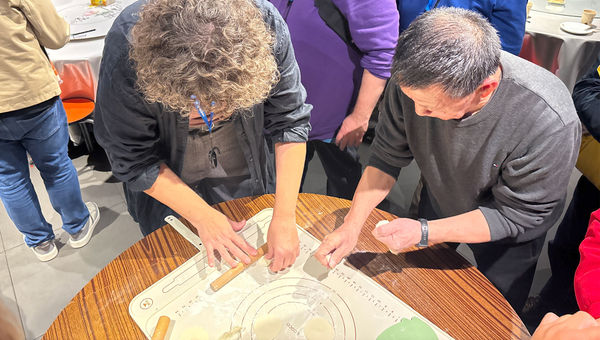
Travel advisors practice making dumplings while on a fam in Beijing. Credit: Brinley Hineman
The maze of streets is residential, filled with courtyard houses, spacious homes that would have housed multiple generations of one family. But during China’s cultural revolution, which began in 1966, some of the residences were seized by the government, forcing out the occupants and placing new ones in the property.
During the ’80s, some of the original families were given their homes back, but the process was tricky, since other families, then acting as tenants, occupied the houses, too, and had a legal right to residency.
The modern-day hutongs
Today, the web of hutongs is near a vibrant and busy shopping district, where visitors can enjoy street food and buy everything from clothes to postcards from local shops. The properties are expensive to own; some have been reinvented into boutique hotels, while others operate as restaurants to offset costs and generate income.
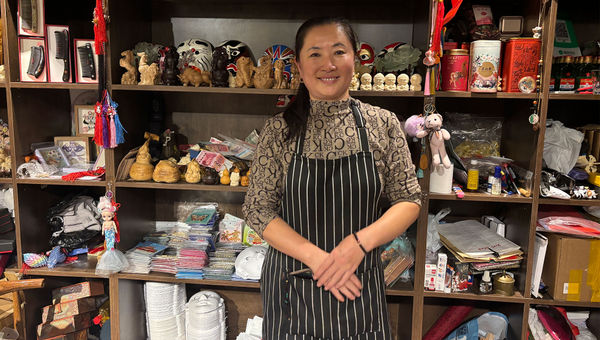
Zhang Jie hosted travel advisors in her traditional courtyard home in Beijing, where they learned to make dumplings. Credit: Brinley Hineman
And they’ve become a tourism magnet, with some owners opening their abodes to teach traditional paper crafts or dumpling making.
Zhang Jie’s residence is one of them. She welcomed us into her home for an evening, where we started our excursion with paper crafts. We had our choice of painting a mask, learning Chinese calligraphy or creating Jianzhi, a Chinese paper cutting. She hosts travelers from around the world who want a peek into how China’s ancient history meets its modern one.
I opted to paint a Peking opera mask, a souvenir version of lianpu, the traditional painted faces of stage performers. The vibrant makeup uses colors to denote a character's moral alignment and role based on visual cues alone.
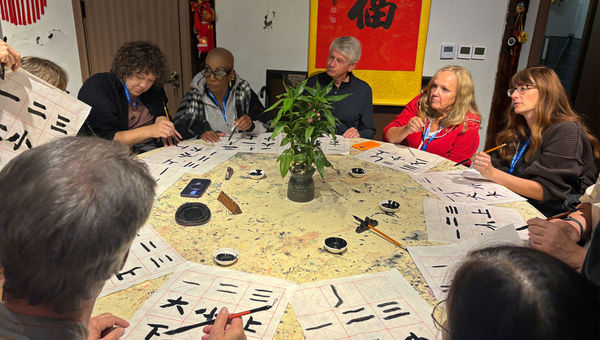
Travel advisors try their hand at Chinese calligraphy. Credit: Brinley Hineman
After our crafts were complete, we received a fast, hands-on instruction for dumpling making. Some of the travel advisors rolled out the dough into flat discs while others stuffed, crimped and folded. Several got the hang of it immediately, while others (me) took a little longer to catch on to the technique, though we eventually all figured it out.
To round out the evening, we enjoyed dish after dish of homemade cuisine, with our host serving us fried chicken, prawns, rice, beef and potatoes, chicken and bamboo shoots and, my favorite, black bean noodles. The noodles, called Zha Jiang Mian and also known as fried sauce noodles, are one of Beijing’s most popular and famous foods; every family has their own recipe.
And, of course, those thick and chewy dumplings were on the table, too.