As cruise lines race to modernize their fleets but yard space and financing for shipbuilding is tight, a trend is emerging amid the frenzy: ambitious, extensive ship renovations.
In April, Holland America Line announced the largest renovation in its history, a revamp of six ships in its Vista and Signature classes: the Oosterdam, Noordam, Westerdam, Zuiderdam, Eurodam and Nieuw Amsterdam.
Four months earlier, Azamara revealed that all four of its ships (Journey, Quest, Pursuit and Onward) would get a makeover, calling the project "the most extensive renovation and refurbishment in the company's history."
Under its OceaniaNext program, Oceania Cruises in April announced that sweeping changes are coming to two ships: the Marina and Nautica. In March, Celebrity Cruises unveiled the remade Solstice, the first of five Solstice-class ships to be transformed.
These are strategic decisions in response to the breadth of newbuild activity in the industry, said Robert Kwortnik, a Cornell University marketing professor who teaches a course on the cruise industry. Ship refurbs allow cruise lines to increase fares and modernize for a fraction of the cost and time it takes to build a new ship.
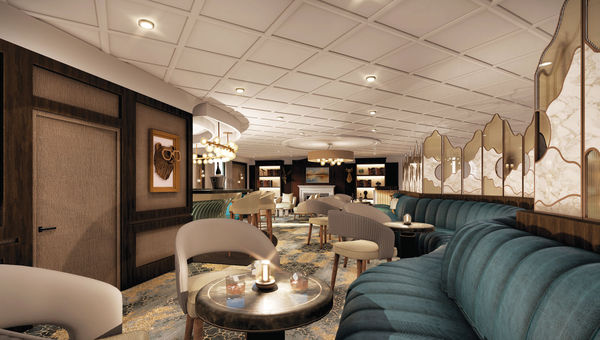
Azamara is introducing the Atlas Bar across its fleet. Photo Credit: Azamara Cruises
"How do you deal with the shipbuilding constraint?" he said. "Well, try to make an older ship new again."
These projects are more than ordinary drydocks for updates like new furnishings and carpets. Holland America and Oceania are adding dozens of suites and staterooms, suite categories and dining venues that are on its newest vessels. Azamara is giving the Quest a whole new deck.
"Done right, it absolutely becomes easier to sell and can support higher pricing," said Caroline Hay, senior director of cruise and partner marketing at Global Travel Collection. "The biggest thing is it gives the ship new life without losing what people already love about it."
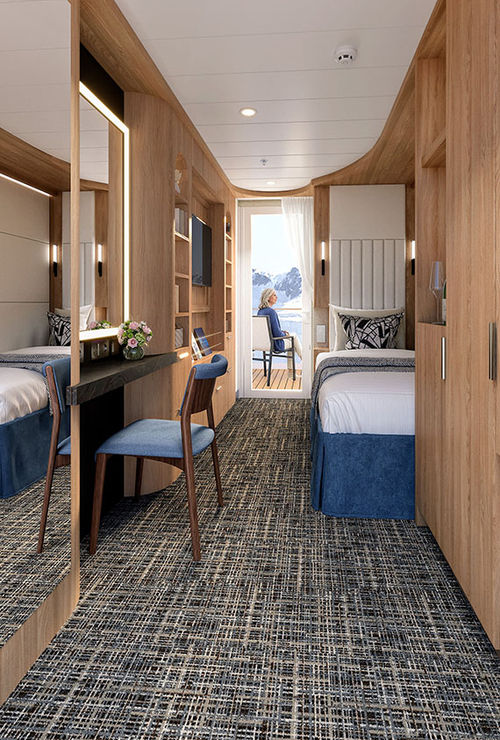
A rendering of a solo verandah stateroom, a new category that Holland America Line is introducing as part of its fleet renovation. Photo Credit: Holland America Line
The introduction of more suites gives the cruise lines an opportunity to capture more luxury consumers, Kwortnik said. Suites are in particularly high demand and are growing in quantity and size on the industry's newest ships. Older vessels are more constrained in what they can offer luxury guests.
In Oceania's case, introducing larger suites on the Nautica means reducing the number of total cabins from 349 to 238. The number of suites will rise from 62 to 179.
Also, the ship will emerge with a new name after the transformation: the Oceania Aurelia.
Oceania chief luxury officer Jason Montague said the cruise line is "constantly evaluating how to consistently meet the needs of today's luxury traveler."
Bang for the buck
Cruise lines haven't been coy about how much these fleet refurbishments will cost: $80 million for Azamara, $500 million for Holland America Line and $250 million for Celebrity. Oceania hasn't revealed a dollar figure.
The renovation price tags are marginal compared to the price of new ships, but they help close the gap in yields between newer and older hardware, Kwortnik said.
Many of the features being added have already proven popular on cruise lines' newer ships, making the investments low-risk. Holland America is adding the Grand Dutch Cafe to more ships, and Azamara is introducing the Atlas Bar across the fleet after what it called "enthusiastic guest reception aboard the Azamara Onward."
Royal Caribbean, the trendsetter
Royal Caribbean International has had two major fleet-upgrade projects in the last 15 years, one of which is ongoing.
It launched Royal Advantage in 2011, a $300 million revitalization of its older ships to increase consistency with its Oasis-class ships. Then in 2018, it announced Royal Amplified, a more than $1 billion update for another 10 ships with activities like the Sky Pad virtual reality trampoline and racing waterslides.
Royal Amplified was also tied to a strategy to invest more in short itineraries. The Mariner of the Seas, for example, transitioned to the short-cruise market after its $120 million upgrade.
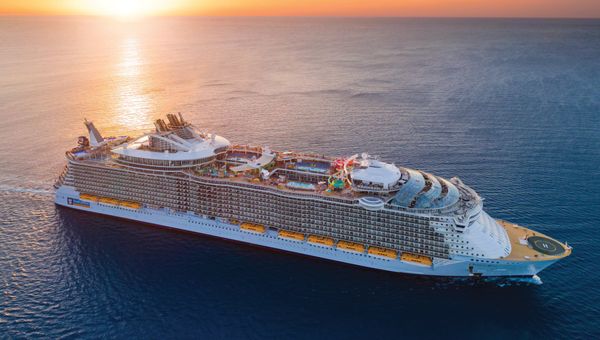
The Oasis of the Seas received its "Amplification" in 2019. Photo Credit: Royal Caribbean
The ship refurbishments that result in the most excitement and sales are those that are easy to understand and explain, and Royal Amplified is a great example, Hay said.
Royal Caribbean has effectively branded and communicated the changes made to the ships, which gets through to advisors, she said.
"That matters, especially when you're selling against brand new ships with all the latest features," Hay said. "If an advisor can confidently position an amplified ship alongside a newbuild, that speaks directly to how strong and clear the messaging is. There's a defined story, it's easy to repeat, and it resonates with clients."