
Teri West
Last week, I wrote about how the newest luxury cruise lines -- some of which bill themselves as yachts or hotels at sea -- are attracting younger guests in their 40s and 50s.

Ron Kurtz
It struck Ron Kurtz as familiar. After all, he had helped craft a luxury cruise line on yachts 40-plus years ago and similarly found that it attracted a younger guest. That line was Sea Goddess Cruises.
Kurtz was president of the line, a new venture in 1984 by Norwegian Cruise Line president Helge Naarstad. When designing the brand, Kurtz recognized it had qualities that he – then 42 years old -- would like in a vacation.
Those included one-week itineraries, which were shorter than the average luxury cruise, and tendering rather than docking.
"We could go into more interesting ports, and that also included yacht marinas like Puerto Banús in Marbella, Spain -- places that larger cruise ships just couldn't get into," Kurtz said.
Onboard, dining was open seating but also styled like contemporary restaurant service with "attractive presentations and smaller, modest portions," he said. It was also all-inclusive.
Because of these differentiators, he figured the line might draw a younger guest than other luxury cruises, where the average age was 60 or older. He called it a pleasant surprise that the average age turned out to be as young as mid-40s.
"We were looking for professionals," he said. "We were looking for business owners and entrepreneurs who were all still working, but it did end up being even a little bit younger than we had expected."
The ship had just 58 cabins, and most guests didn't bring children. The atmosphere was communal, where travelers developed connections with other passengers, Kurtz recalled.
Though the brand took some time to gain traction, it started drawing repeat guests.
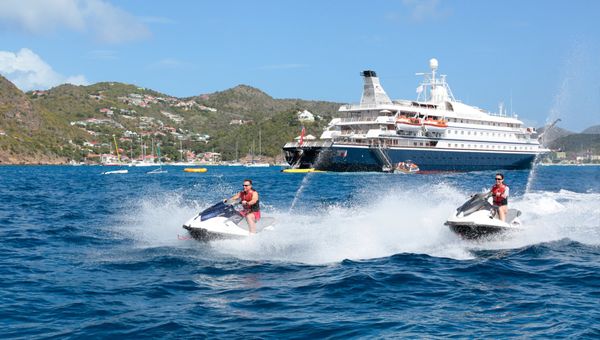
The SeaDream II was once the Sea Goddess II. Photo Credit: SeaDream Yacht Club
The Sea Goddess ships ended up going to Cunard and then Seabourn. Then they became the SeaDream I and SeaDream II in 2001, where they still sail today for SeaDream Yacht Club.
Kurtz predicts that the newer versions of this concept will do well, particularly the lines with hotel brand recognition like Ritz-Carlton Yacht Collection, Four Seasons Yachts and Aman at Sea.
There has long been a gap in the luxury cruise market for something that caters to a younger clientele, he said.
"The capacity in the luxury industry has been very small relative to the number of millionaires -- people who can afford these kinds of products," Kurtz said. "It was a question of structuring and tailoring a product that would be attractive to these people and to overcome some of the negative stereotypes that cruising has among younger people."