The small-ship cruise sector is booming, but getting its
ships built on time is proving to be a big challenge.
Expedition and small luxury ships are among the hottest
segments when it comes to passenger demand. But unlike the mega-liners churned out
like clockwork by the big shipyards, small ships tend to be built at small
yards, where inexperience with cruise work is the general rule.
The latest example is the Ritz-Carlton Yacht Collection, a
new entrant to the cruise industry that had hoped to make a splash this winter with its
298-passenger Evrima before the Super Bowl in Miami.
Instead, on Oct. 4, three months before scheduled delivery,
Ritz-Carlton announced that the much anticipated Evrima (Greek for "discovery")
would be delayed until June 2020 because of shipyard issues.
In a statement, Ritz-Carlton blamed "delivery and project
cost" problems at the Hijos de J. Barreras shipyard in Vigo, Spain, for the
delay.
"With additional challenges around the former shipyard
management, both the new board of Hijos de J. Barreras and the board of the
Ritz-Carlton Yacht Collection are working cooperatively toward a long-term
solution for the shipyard," Ritz-Carlton's statement said.
Ritz-Carlton joins Scenic Luxury Tours & Cruises, the
German line Hapag-Lloyd Cruises and Norway's Hurtigruten in suffering delays,
ranging from minor to extensive, in the past two years in attempting to bring
their ships to market.
All were building ships of under 600 passengers, and all
were being built at smaller, lesser-known yards.
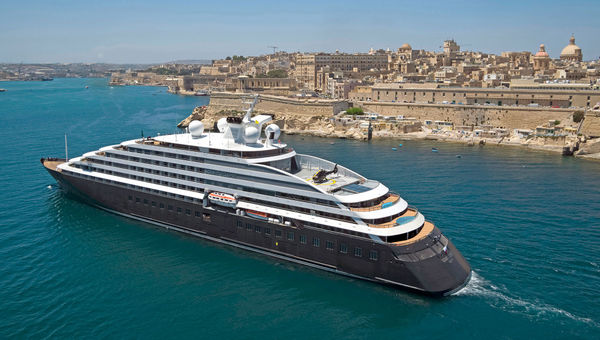
The Scenic Eclipse was delayed several times before making its debut in September 2019.
The delays make life hard for travel advisors. Many have
clients who want to be among the first to experience new vessels. Some agents
are themselves booked on inaugural cruises in order to better evaluate new
ships for clients.
When ships are delayed and inaugural plans canceled, it is
hard to explain to clients who have blocked out time off and who have high
expectations that they will be the first to sample the ships.
"When it hurts the advisors, of course it hurts us," said
Ann Chamberlin, vice president of sales at Scenic, which christened its
200-passenger Scenic Eclipse expedition yacht in New York on Sept. 10.
The ship, built in Croatia, was delayed not once but several
times. All a line can do, Chamberlin said, is protect agent commissions,
re-accommodate passengers and beg both groups for understanding.
The delivery of the Scenic Eclipse was hurt by multiple
issues, including worker strikes, financial malfeasance, management turnover
and frozen bank accounts. In February, Scenic owner Glen Moroney invested in
Uljanik Shipyard in Pula, Croatia, along with Croatia's DIV Group and Italy's
Fincantieri to get the ship finished.
Scenic is not the only line to become a shipyard owner.
After delays on its 530-passenger Roald Amundsen last year, Hurtigruten bought
the Kleven shipyard in Norway to expedite the project.
In March, Hapag-Lloyd canceled the first two scheduled
cruises of the expedition ship Hanseatic Nature because of delayed delivery
from the Vard shipyard in Norway. Fincantieri, which owns Vard, said in its
most recent financial report that reorganization of Vard is a top priority and
that some of its best Italian employees have been assigned to the job.
Lawrence Rapp, a principal at Seawise Consulting, said that
many small yards are better prepared to build simpler ships.
In general, Rapp said, "these small yards are not aware of
just how complex the projects really are. To get a prototype fully approved by
[country] flag and class takes much more time than they would anticipate,
because you have to go through impact-stability calculations, damage-stability
calculations. And each time you make adjustments to one of these things, it
affects the others and also the functionality of the ship itself."
In addition, small ships are more often designs from
prototypes, rather than copies of previous ships.
"When Carnival or Royal Caribbean are building ships, they
will build five, six, eight, 10 of the same class," Rapp said. "Once the
calculations have been gone through and the design has been accepted, it's a
whole lot easier to plan going forward."
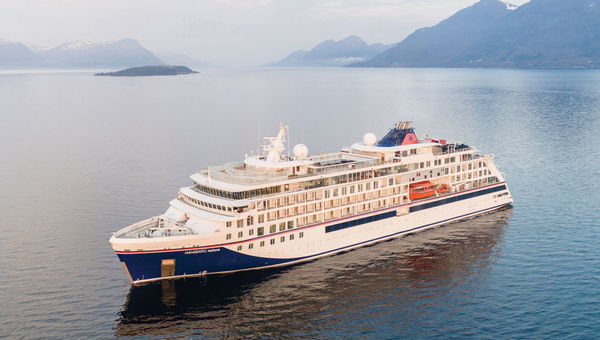
In March, Hapag-Lloyd canceled the first two scheduled cruises of the Hanseatic Nature because of delayed delivery from the Vard shipyard.
Moreover, small yards sometimes have to bring in workers who
have cruise experience.
"If you're a small yard and you're undertaking a project
that is an order of magnitude bigger than anything you've ever done before, you're
probably bringing in a lot of people who are not used to you, and you're not
used to them, and relationships can be difficult to maintain," Rapp said.
Daniel Schaefer, CEO of Sea Cloud Cruises, is currently
building a 136-passenger ship at Metalships & Docks shipyard in Vigo,
Spain. The project has been in the works since 2008, when it was at another
shipyard that went bankrupt.
"Most of the time it's that the yards have no experience in
what they’re doing," Schaefer said.
Small-ship owners are forced to work with them because
getting a slot at one of the big yards is next to impossible.
"Going to Meyer Werft in Germany, you get a slot in 10
years," he said. "So you have to go to some inexperienced yards and see if you
get a berth there."
One common stumbling block is weight, Schaefer said. And
then there's interior craftsmanship. "That creates a lot of problems. They come
at the end, because interior work is done at the end. And if you find out that
it's not the quality you were expecting, you don't have much time to correct
it."
Schaefer said Sea Cloud made its mistakes on a ship built in
2001 and is confident that the Sea Cloud Spirit will be ready for its August
2020 debut. He said the ship is already in the water at the proper weight and
ready to be finished.
"Looking at the mock-up quality work, we're pretty sure our
interior workers will do a good job," Schaefer said.