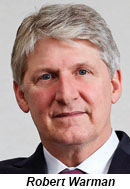
 Luxury hotel veteran Robert Warman became Langham Hospitality Group's CEO just as the company was preparing the largest expansion push in its 149-year history. Langham has 22 properties worldwide and is looking to bring that total to 100 in the next five years with its Langham and Eaton brands. Warman spoke with Travel Weekly Hotels Editor Danny King at the Langham Huntington in Pasadena, Calif.
Q: Tell us about your first days at Langham.
A: It's been great. Building on history is a better approach to success than to try and change things, and Langham has great history. It's a company that runs great hotels but does it very quietly, and it's very unknown to a lot of the industry. But we think that with some of our recent acquisitions, that's going to start changing.
Q: We reported that Langham is looking to spend $1.5 billion for 10 hotels in the U.S. and Europe. That's pretty ambitious.
A: We're looking at about $1.5 billion of real estate around the world right now. Will all of that happen? No. But we hope to be able to close on a number of them. And we have six hotels under contract in China and are very close to signing our second resort in Bali. [In the U.S.,] we're looking at New York, Chicago, Washington, D.C., San Francisco and L.A., and most of those would be for our Eaton brand, which will be more of a lifestyle brand.
I read somewhere that there are 1 billion travelers today, and the estimate in five years will be 2 billion. So we're probably undersupplied. I was one of the original Ritz-Carlton guys, and when we had five or six hotels, somebody said the luxury market is over, it's shot, it's gone. Well, since then, Ritz-Carlton and Four Seasons [both have] 90 hotels worldwide.
Q: With the growth in luxury hotels, how does Langham differentiate itself?
A: Langham represents the classic luxury hotel experience, and that service shouldn't be dictated by the style of the hotels; it should be dictated by customer expectations and desires. In the past, luxury hotels created things for you, and if we guessed right, we were a good hotel. Today, with people's access to everything, we're not the creators, we're the enablers. Now ... the Internet has given guests the ability to create what they want. We just have to make it happen. That's the future of great service.
Q: It appears you're reaching for a younger demographic with the Eaton brand.
A: Our proposition is to take the same commitment to service as Langham and deliver that with a different style. It's a mistake to assume that the [younger] customer doesn't want service and wants all environment. These travelers have the same [service] expectations, they just want to do it in a different environment.
Q: How will your experience with Ritz-Carlton and Capella inform your leadership of Langham?
A: There was a show on the Discovery Channel about the building of the San Francisco Bay Bridge, and it made me think about how we built brands in the past. We'd build them to withstand the owners' pounding, so, like we did with bridges, we made them as thick as we possibly could and said "Mother Nature, come after us." But in the past 10 years, the brands started to lose, and what we learned with Capella is that in order to build a brand, one has to learn how to work with owners. So it has to be a partnership, it can't simply be, "Here's our brand standards, do this."
Follow Danny King on Twitter @dktravelweekly.