The Brando, the ultraexclusive resort that opened on Marlon Brando's private island in French Polynesia 10 years ago, remains one of the most sustainable luxury getaways on the planet with its unique ocean-powered air-conditioning system, solar-power systems, research center and more.
But please don't call it an ecoresort.
"I abhor that word," said Richard Bailey, the founder of Beachcomber Tahiti, French Polynesia's largest luxury resort group, who worked with Brando before he died in 2004 to plot development of the one-of-a-kind destination.
"People immediately think, 'What am I going to have to sacrifice? Television? Am I not going to be connected to the internet? Am I going to have to go work on a farm someplace? Are there tents?'"
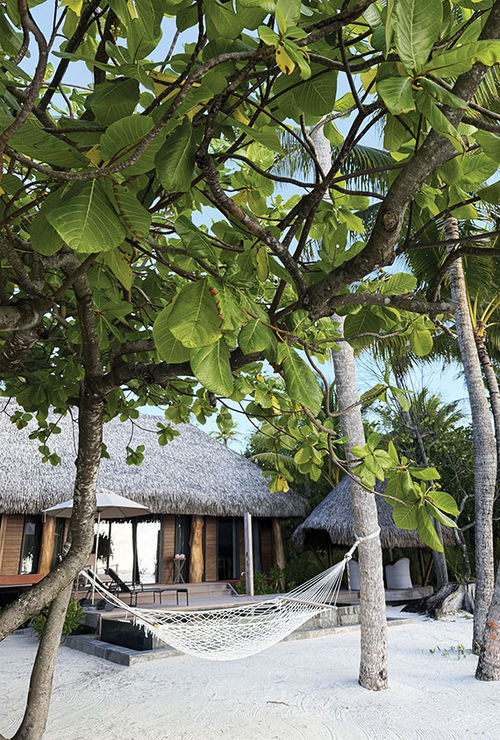
The 35 villas at The Brando are positioned to maximize privacy. Photo Credit: Jeri Clausing
After spending three perfect days at the island paradise, I can assure you, no creature comforts have been sacrificed. This is indeed pure luxury at its finest.
Think large villas with their own pools and private beaches; a host of optional activities, from its sprawling tropical jungle spa to relaxing lagoon tours, kayaking, paddleboarding, diving, snorkeling, bird-watching, Polynesian dance and cooking lessons, tennis and cycling.
But if you do care about sustainability (and studies say luxury travelers increasingly do), The Brando's accomplishments over the past decade in partnership with its nonprofit arm, the Tetiaroa Society, are impressive. And growing.
"The island is in better shape today than when we started," said Bailey, who is chairman of the Tetiaroa Society.
The bird population has quadrupled, he said. And the green sea turtle population has exploded, from two dozen nests in 2004 to 500, thanks in large part to its yearslong effort to eradicate rats, which feed on bird and turtle eggs and hatchlings.
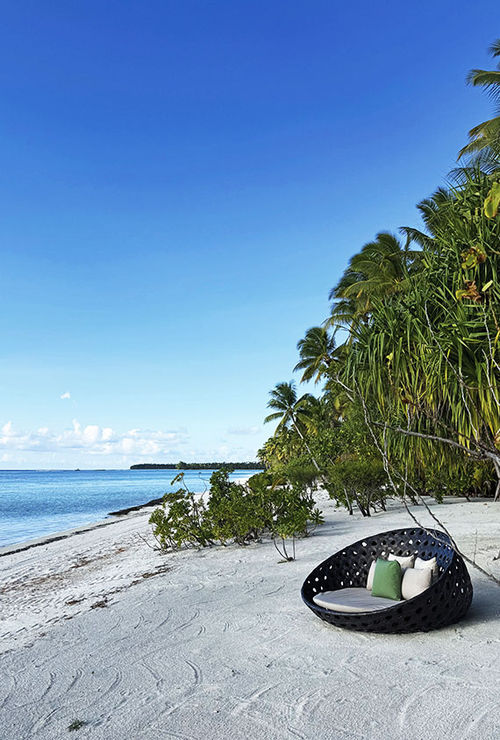
Each of the villas at has its own private beach. Photo Credit: Jeri Clausing
An island fit for royalty
The Brando is located on Tetiaroa, a 2-square-mile atoll where Tahitian royalty used to come to escape the missionaries and celebrate their Polynesian culture.
While the atoll had little more than Brando's bar, Bob's, and a few huts on it after the actor bought it in the 1960s, today it's a popular getaway for a new generation of the rich and famous, not only because of its stunning, well-preserved natural beauty but also for its privacy. Surrounded by coral reefs that are nearly impossible to breach, the only way in is by private plane or via a three-hour boat from Papeete to The Brando's private dock.
While one might be tempted to make the increasingly cliche comparison to "The White Lotus," this is really more like a modern-day, ultraluxe Gilligan's Island, with a full-fledged and growing research center that the Professor could only have dreamed of.
Flying in, or even kayaking or boating around the serene lagoon, it does indeed look like a deserted island, save for the clearing for the landing strip.
Brando nixed Bailey's proposal for overwater bungalows, insisting instead on villas that are set back from but with clear views and easy access to the crystal-clear lagoon. All 35, ranging from 1,000 to 3,000 square feet, are spaced for maximum privacy and are largely hidden from each other and the golf cart and bicycle path that winds through the resort by the lush palm trees and tropical foliage.
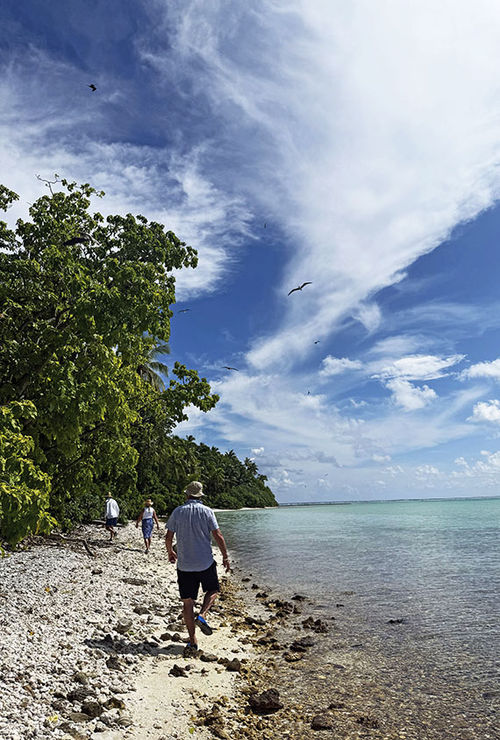
Activities at the resort include a lagoon tour, with stops to explore and look for birds and giant coconut crabs. Photo Credit: Jeri Clausing
Saving Tetiaroa
While Bailey admits his main focus at first was on developing a resort that would make money and provide investors a return on capital, he said the heart of its success has been its ability to incorporate the crucial sustainability missions that were the core of Brando's mission, including saving the lagoon and the surrounding islands, or motus, from invasive species that were destroying its ecosystems.
Today, in addition to eradicating rats and so-called crazy yellow ants, research on the atoll has also nearly eliminated pesky mosquitos, thanks to a program that developed male mosquitos in the on-site lab that, when released, sterilized females.
Moving forward, efforts focus on reducing the aggressive growth of coconut trees on the atoll's motus, which disrupt fragile ecosystems, and broader efforts -- in partnership with universities and organizations from around the globe -- to accelerate ocean-related strategies to address the climate crisis and other pressing environmental issues.
Bailey said he hopes to expand the research center and add more dorms for visiting students and scientists. And next year, in partnership with a company called Honu, the Tetiaroa Society plans to add submersibles that will be deployed throughout French Polynesia to explore the depths of the Pacific.
The main goal of the sub program is research, Bailey said, but The Brando also plans to enable guests to take dives with scientists on the three-person vehicles.
Because while Bailey said The Brando's first job is to provide guests with memories of a lifetime, the Tetiaroa Society's hope is that by also showcasing the programs that have made it a model for sustainability, its visitors will also become "agents of change."