Brand USA launched an "America the Beautiful" tourism-marketing campaign, aiming to increase inbound tourism to the U.S.
The destination marketing organization launched the campaign to accelerate growth ahead of 2026, when the U.S. will host the FIFA World Cup soccer tournament and celebrate America’s 250th anniversary. It comes shortly after the U.S. Travel Association forecast earlier this month that international travel to the U.S. will fall 6.3% in 2025, the first decline since 2020, and that inbound visitation is not expected to recover to 2024 levels until 2027.
Brand USA CEO Fred Dixon said that the U.S. remains the top international destination for long-haul leisure travel in the world, "reflecting the enduring appeal of our varied and unique destinations and experiences."
"As we look ahead to 2026 and the decade of mega events on the horizon, we remain laser-focused on maximizing international tourism opportunities to drive economic impact and job growth while inviting the world to celebrate 250 years of America the Beautiful," Dixon said.
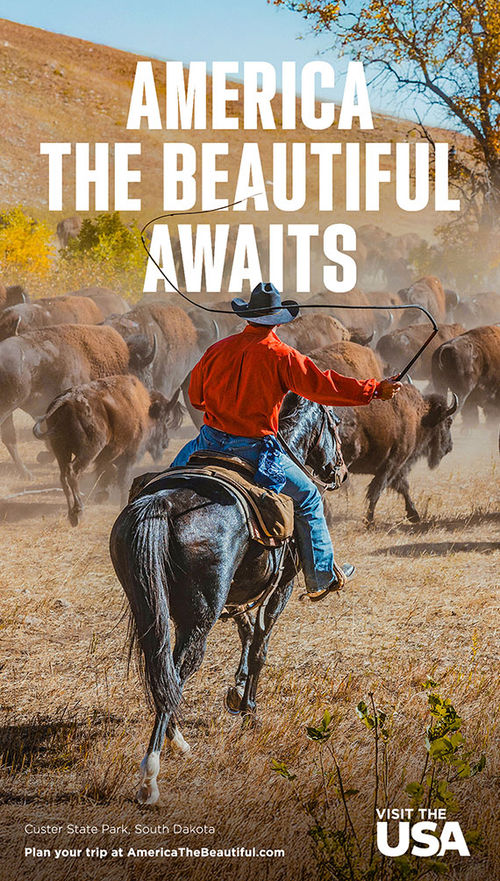
Photo Credit: Brand USA
U.S. Travel said there is risk of a further downturn in part due to negative sentiment towards the U.S. in key markets. Trying to counter that, Brand USA said the campaign is designed "to cut through the noise and reconnect travelers with what they truly love about the United States. It shifts focus from product to people, reminding the world that what sets the U.S. apart is not just the places to visit, but the people to meet and the stories, culture and unique experiences shared along the way."
Brand USA said research across 10 global markets shows the campaign is resonating with travelers, with 72% responding positively and 67% reporting increased desire to visit the U.S.
The campaign will roll out across TV, streaming, out-of-home, digital and social media channels in nine countries: Argentina, Australia, Brazil, India, Ireland, Japan, Mexico, South Korea and the U.K., which were identified through data-driven analysis of travel intent, economic trends and consumer sentiment.