Do you break out in a cold sweat if you forget your smart phone at home? Do you look forward to stopping at red lights while driving so you can check for mail and messages? Has your manager caught you checking your LinkedIn account when a critical deadline is looming? Do you crave alone time with your smart phone when you’re out with family or friends?
If any of these behaviors ring a bell, you might have a distraction addiction. It’s a very real phenomenon according to Alex Pang, senior consultant at Strategic Business Insights and author of The Distraction Addiction. Getting the information you need and the communication you want without enraging your family, annoying your colleagues, and destroying your soul (Little, Brown and Company, 2013).
Pang describes himself as “a futurist” who works “at the boundary of forecasting, social media, and psychology.” He has 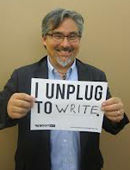 a doctorate in the history of science and is currently a visiting scholar at Stanford University and Oxford's Saïd Business School.
Pang’s book draws on history and science to provide insights into the positive and negative impacts information technologies have on the fabric of our lives. He also presents an approach he calls contemplative computing which rests on using information technologies with conscious choice and care.
“The key idea behind contemplative computing is that we can use information technologies in ways that help us be more focused and mindful rather than perpetually time stressed, distracted, and cognitively fractured,” Pang said.
This is the first installment from a dialogue between Pang and Diane Merlino about the negative impact of distraction addictions and how to recover.
Merlino: Alex, how did you come up with the construct for contemplative computing?
Pang: I started working on the concept in an effort to solve problems I was having in my work as a futurist and technology forecaster. This kind of work is very project-focused, very client-centered. You spend a lot of time jumping quickly from one thing to another. You read a lot of very different kinds of material and you are constantly trying to make sense of it and figure out insights or implications for clients.
Years of doing this — this constant reading and jumping around and traveling, both cognitive and literal travel — was having an effect on my ability to focus and concentrate. I felt I needed to take a step back and figure out how to deal with it. Given the kind of work that I do just turning off everything is not really viable. I think that’s the case for many professionals. Furthermore, as someone with a fairly technology-centric focus it was also not something that I really wanted to do. Technologies can be a great source of distraction for me but I also really like using them and learning about them and figuring them out.
Merlino: You reference a lot of scientific studies in your book. How did science shape the development of your ideas about contemplative computing?
Pang: About the time I started working on all this in 2008 and 2009 there was a bunch of work on the neuroscience of attention and the first studies attempting to measure the effect of the Internet or Web use or text messaging on our cognitive abilities. I drew a couple of things from that. First of all, that this was a real thing. It wasn’t just me having a midlife crisis. The second thing was that it ought to be possible to get back the cognitive abilities that I felt had eroded over time.
The idea that the Internet changes your brain is well established. It does so thanks in part to a phenomenon neuroscientists call neuroplasticity; your brain changes in response to your doing new things. What I took from that was it really ought to be possible to get back old abilities.
So I started experimenting. I started meditating, thinking, paying close attention to the way I interacted with my devices and what sort of affect they had on my mood and my ability to concentrate. And I realized that there were things you could do that would result in a marked improvement in your own mental ability, mental agility, sense of calm, and so on.
Merlino: The title of your book is “The Distraction Addiction.” Let’s do a little exercise in self diagnosis. What are the symptoms of a technology-related distraction addiction?
Pang: One of them would be how you feel when you can’t access this thing. So if you leave your smart phone at home and you panic, you feel like part of your brain has been left at home, that’s a pretty good sign that you’re more invested in it than you ought to be.
Sticking with smart phones, it’s not just habitual checking of your email. It’s doing so reflexively at any down moment, when you’re at a traffic light, or in line to use the ATM. When those go from things that you do often to things that you do automatically, and you feel anxious if you don’t do them, that’s also a good sign that you need to step back a little bit.
Another thing is: Does it affect your productivity or your ability to concentrate on things that you should be doing instead. If it’s taking away from family time, from your ability to do more urgent tasks at the office, that’s a really good sign that you need to make some structural adjustments and some changes in your practice.
Merlino: Alex, there are some very revealing — dare I say frightening — statistics cited in the book about our work habits. One of them is that on average employees have only three to 15 minutes of uninterrupted work time in a day. Were we always this way? Is it a recent development?
Pang: That’s a very good question. Unfortunately, there are no studies of attention and distraction in the workplace from 50 or 100 years ago that we can use to compare. But we can look at other indirect measures and say that, yes, the problem has gotten worse than it was 30 or 50 years ago, and it’s gotten worse for a couple reasons.
One of them is that you have people being asked to be more productive in less time than a generation ago. Productivity levels by any measure have gone up, not just because of the miracle of automation but because workplaces are more demanding. Another reason is that there is a sensibility that smart people multitask; this is just what intelligent, productive people do. So if you’re not trying to do two or three different things at once that’s a sign that you’re getting slow, you’re getting behind the curve.
Merlino: So ramped up expectations are partly responsible for making uninterrupted time in the workplace a scarce commodity these days.
Pang: There is also an expectation, especially in service-oriented professions, that because technology makes you more accessible you must therefore be more accessible.
The fact that I can be on a golf course in Dubai and call my lawyer, and it’s 3 a.m. their time, is not just this amazing technical thing that I can reflect on as I work on my short game. It means that I ought to be able to call, and they ought to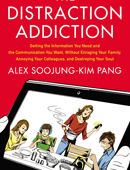 be able to pick up. So the technological fact of 24/7 accessibility has very quickly turned into a professional expectation of perpetual accessibility and that’s good for almost no one.
Arguably, if you work in counterterrorism or you’re some kind of hedge fund person or you’re on call for an emergency room then yeah, that level of accessibility makes sense. For everybody else though it is a problem. Ultimately it is a source of tension and burnout and a real mismatch between expectations and our ability to deliver. It also has other costs that we’re only beginning to measure.
Merlino: What kind of other costs?
Pang:A study came out a few months ago looking at how much an advertising agency spent dealing with email in the office. This is everything from sending out weekly newsletters to clients to efforts to schedule a meeting that result in 47 Reply Alls that you’ve got to wade through. They calculated that when you factored in the cost of reading and writing these messages, and then factored in labor costs, every email costs about a dollar. So what was supposed to be this free, frictionless, instantaneous form of communication had because of constant use and misuse turned into a thing that was costing this agency upwards of half a million dollars a year.
Merlino: That’s a very high, hard-dollar cost. Can those findings be extrapolated to other businesses?
Pang: Unless you are a business that uses incredibly little email, and in which people are spectacularly medieval-Japanese-royal-court-level of thoughtful about how they communicate, then, yes, those findings can be extrapolated.
Merlino: Alex, you mentioned multitasking. In the book you debunk the whole idea of multitasking and replace it with switch-tasking.
Pang: We greatly overestimate our ability to do two cognitively challenging but different things at once. When you start doing them your ability to monitor yourself, to measure your own productivity, takes a nosedive and you end up feeling like you’re getting more done even when every external measure says you’re actually getting less done.
If you’re working in a factory it’s really easy to measure your productivity. It’s the number of widgets you do in an hour. If you’re working in an office, on the other hand, it’s a lot harder to actually have a good external measure of your productivity. If you’re working in something creative it becomes really, really hard to measure productivity. So it’s easy to fall into the trap where you try and do multiple things simultaneously and end up doing none of them very well.
Merlino: So we just aren’t built to multitask?
Pang: Humans actually have evolved to do a very different kind of multitasking and to do it really well. It’s the kind of multitasking where you’re dealing with multiple things that all converge around a single goal.
Playing music is a really good example. Someone who’s playing guitar and singing in a band isn’t having to think first about where do my fingers go on the chords, what note do I play next, what note do I sing next, what’s the next word? They’re able to do the physical thing of playing the instrument, they can sing expressively, they’re aware of how the crowd is responding, what the other musicians are doing. It’s not like you’ve got to switch mentally from one of these things to the other. You can handle all of them simultaneously because they are using different parts of your mind. The part that is aware of how responsive the crowd is is different from the part that places your fingers on the fret board.
Also these things all converge around giving a great performance and that’s very different than trying to write an email to your boss while reading a spreadsheet during a conference call. That kind of multitasking is illusory.
NEXT ISSUE: Alex Pang on who is responsible for technology-related distractions, the users or the makers?