In moving from the relative calm of Expedia's corporate
culture to the chaos that has been the defining feature of Uber Technologies in
recent months, Dara Khosrowshahi is betting he can turn around one of the
industry's most troubled and controversial -- not to mention valuable --
enterprises.
Known for his calm, level-headed approach to management,
Khosrowshahi, 48, will immediately provide a stark contrast to his 41-year-old
predecessor, Uber's confrontational co-founder Travis Kalanick.

Dara Khosrowshahi
But anyone expecting cuddlier leadership at the world's
largest ride-hailing company could be in for a surprise. Despite his
understated demeanor, Khosrowshahi, in his years at the helm of Expedia Inc.,
proved to be a hard-driving CEO who eliminated much of his competition through
aggressive pricing strategies and shrewd acquisitions.
In addition to vanquishing many competitors, Expedia, under
12 years of Khosrowshahi's leadership, gradually pulled market share from
travel suppliers, along the way growing the company into what has become by far
the most popular OTA among U.S. travelers.
Yet, in a move that appeared to surprise investors and
analysts alike, Khosrowshahi last week agreed to take on troubled Uber, where
he will try to apply some of those leadership strategies.
Lorraine Sileo, senior vice president at Phocuswright, said,
"The challenge is taking over a company that maybe still has a startup
mentality. Maybe the folks aren't used to processes. What's helpful is that he
knows what it's like to be a market leader and understands that if you're No.
1, you're not always going to be No. 1."
There is a great deal at stake for both companies'
investors. That is especially true for Uber, a privately held company that has
a market value estimated at three times Expedia's yet has reportedly never made
a profit.
"There's a meme that Khosrowshahi is a kinder and
gentler leader for Uber," said Benjamin Edelman, associate professor at
Harvard Business School. "Compared to Kalanick, that's probably true, but only because Kalanick is so far at the end of the
spectrum."
Investor response to Khosrowshahi's decision, first reported
by Recode on Aug. 27, was quick and substantial: Expedia's market value dropped
about $800 million on Aug. 28, although it rebounded on Aug. 30 with the
announcement that the company was promoting financial chief Mark Okerstrom to
succeed Khosrowshahi.
In Uber, Khosrowshahi takes on a company that has been
dogged by controversy all year, including sexual-harassment allegations within
the company as well as bad publicity from both Kalanick's short-lived
participation on President Donald Trump's economic advisory board and a
February video showing Kalanick verbally accosting an Uber driver.
"If Dara succeeds in turning around Uber, gets it through a successful IPO and gets the company focused on the lines of business that make sense, it'll be a case study at business schools for years to come." -- analyst Henry Harteveldt
As a result, former Target Corp. executive Jeff Jones
stepped down as Uber's president in March after less than seven months on the
job. Three months later, Kalanick, who co-founded Uber in 2009, also resigned.
And in the latest potential setback, Uber last week confirmed that it was
cooperating with a Justice Department probe into allegations of bribery of
foreign officials.
Uber representatives did not respond to a request for
comment last week.
Amid such challenges, Khosrowshahi is expected to address
corporate-culture issues immediately. The urgency of that mission became clear
last week when, in his first meeting with Uber staff, he indicated his
intention to take Uber public in as little as 18 months, according to
Bloomberg.
Yet, Christopher Anderson, director of the Center for
Hospitality Research at the Cornell School of Hotel Administration, said Uber "is
a fast-growing company with lots of opportunity."
"People are not necessarily there for the culture or
environment," Anderson said. "They're potentially there in spite of
that. Now there's this opportunity to create a real positive environment for
employees. And it's kind of like Expedia was 15 years ago, at the forefront of
basically changing how people acquire travel."
Expedia announced last week that Khosrowshahi will remain on
its board.
By promoting Okerstrom to CEO, Expedia is betting on an
11-year veteran of the company who has been CFO since 2011 and helped
orchestrate the acquisitions of Orbitz Worldwide, Travelocity, HomeAway and
Trivago, among other enterprises.
"There was no other candidate that the board
considered," Expedia chairman Barry Diller said last week in a statement
announcing Okerstrom's appointment. "Under Mark's leadership, surrounded
by his excellent and tenured executive team, I'm confident we'll continue to
grow and prosper."
Still, Expedia remains challenged by the growing presence of
both Priceline Group and Airbnb.
Priceline remains a larger player than Expedia overseas, and
it has boosted U.S. hotel sales in recent years via its Booking.com division.
"When I talk to suppliers outside of the U.S., it's
Booking, Booking, Booking," Anderson said of the Priceline division. "Expedia's
kind of an afterthought."
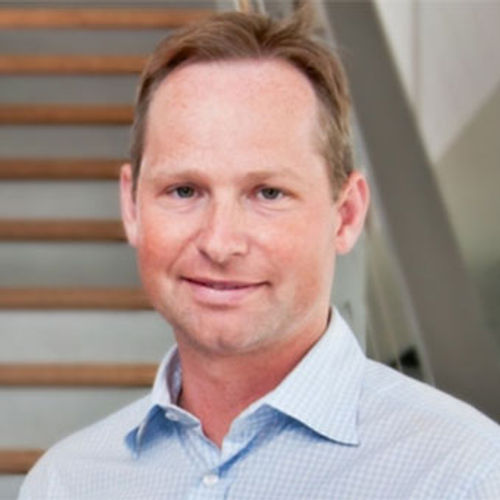
Mark Okerstrom
As a result, despite Expedia completing its acquisitions
of Travelocity, Orbitz and HomeAway in 2015, Priceline last year actually
narrowed the gap between its annual bookings, which jumped 23% in 2016, to
$68.1 billion, and Expedia's, which rose 19%, to $72.4 billion.
From a sales standpoint, Priceline's $10.7 billion revenue
in 2016 was 22% more than Expedia's $8.77 billion.
On a second front, Airbnb's continuing rapid growth reflects
success among the kind of price-sensitive travelers who make up the core
customer base of OTAs. But in addition to acquiring HomeAway, Anderson said,
Expedia's efforts to simplify its commission structure with independent hotel
operators should boost its share further.
In addition to seeking out more strategic acquisitions, Anderson
said, Okerstrom's experience with the company and his consulting background
should help him expand that process with hoteliers.
As for Khosrowshahi's move to Uber, both Anderson and Henry
Harteveldt, travel industry analyst and founder of Atmosphere Research, said he
has everything to gain and little to lose by moving on to a company whose
reputation for management chaos is in stark contrast to Expedia's relative
stability.
"If Dara succeeds in turning around Uber, gets it
through a successful IPO and gets the company focused on the lines of business
that make sense, it'll be a case study at business schools for years to come,"
Harteveldt said. "If Uber remains a fatally flawed organization, Dara can
wipe his hands of it, and he'll have no shortage of reasons why."
The bottom line, said Phocuswright's Sileo, is that "Expedia
is losing a great leader and a great spokesperson" in Khosrowshahi.
"The good news is that he's staying in the travel
industry."