On Wednesday, the 26th day of the longest government shutdown
in U.S. history, Norma Pratt, president of Rodgers Travel in Wayne, Pa.,
counted the number of calls the agency had received up until just after 2 p.m.
"Normally, we'd have every day around 70, 80, 100
calls," she said.
But on that day, she had received only 10.
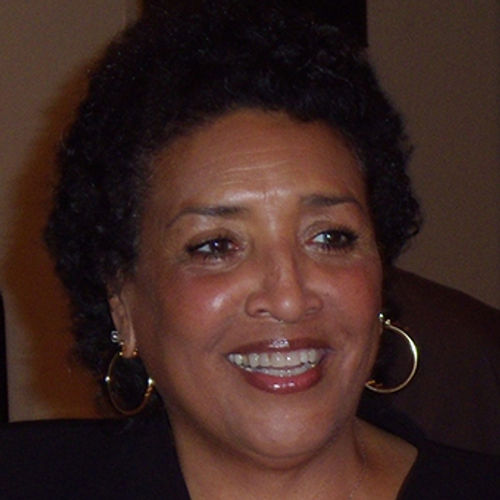
Norma Pratt
"The accounts we have are not working, so we're getting
hardly any calls. It's been like that since the shutdown started," she
said.
At that rate, she said, "We won't survive very long."
Rodgers Travel has been around since 1949. More than half
its business today is from government contracts, and that business is off at
least 90%.
"We are now laying people off, cutting their hours and
that kind of thing," Pratt said. "I just started doing that. I was
trying to hang on."
She added: "So far, I've managed to pay my people, but
that is because I'm in my personal pocket to try to keep my people working."
When the shutdown ends, furloughed government employees are
promised back pay, but of course travel agents are not.
"It's awful," Pratt said. "Whoever is making
decisions about this doesn't care about anybody."
Nicholas Vournakis, president of the U.S. Military &
Government Markets for CWTSatoTravel, the largest provider of corporate travel
services for the U.S. military and government agencies, said that
year-over-year declines vary from 25% to well over 50%, depending on the
agency.
"We have definitely seen a decrease in travel from
impacted civilian agencies since the start of the [shutdown]," Vournakis
said. "The levels vary by customer, depending on the nature of each agency's
mission and the overall number of essential employees who must continue to
work."
As government travel providers, the impact on Rodgers and
CWTSatoTravel is outsized. But the shutdown's tentacles have already begun
reaching deep into the broader travel industry, pushing groups like
ASTA and the USTOA to press Congress and the Trump administration to end the
impasse.
ASTA CEO Zane Kerby stated: "While the immediate impact
to our industry is limited, the longer the shutdown lasts, the greater the
chance of negative economic consequences."
Terry Dale, CEO of the USTOA, said his organization had been
lobbying on Capitol Hill every day since the shutdown began. He said inbound
travelers were not likely to book a national park package even for May "if
we don't know what condition our parks are going to be in, let alone if they
will even be open."

Terry Dale
Those fears were echoed in an MMGY Global online survey
conducted Jan. 10 and 11. The survey found that 16% of Americans had canceled or
planned to cancel a vacation because of the shutdown. Top concerns revolved
around closed national parks and attractions and uncertainty over what would be
open at a destination.
Chris Davidson, executive vice president of global strategy
at MMGY Global, said, "Uncertainty is really the killer in travel
planning, so I think it wasn't surprising to see that people had either delayed
or canceled travel. Obviously, people have only a limited amount of money to
spend on travel, and they want to make sure it's a great trip. I think that
level of uncertainty just makes you question whether it's going to be a
flawless trip or whether you can wait a couple of weeks or a month or two, or
maybe longer, to book it."
The International Inbound Travel Association (IITA) reported
that 43% of its membership had been affected by the shutdown. Of
those, 85% cited impacts from national park closures, while international
visitors being waylaid by the slowdown of TSA upon arrival was cited by 36% and
delays in visa processing by 29%.
The IITA said that while it was too early to calculate the
financial impact on its members, 36% had reported "hardships from loss of
revenue and unexpected costs" as a result of the shutdown.
Lisa Simon, the president of the IITA, said, "Nearly
60% of the respondents indicated that they have had to reroute itineraries, and
50% reported they had to provide alternatives to national parks, Smithsonian
museums and other sites that have been closed. That can create real problems
and liabilities for our members who are providing services for international
travelers who are protected by the strict consumer laws in other countries."
Pam Inman, president of the National Tour Association (NTA),
reported hearing similar reports. Three-fourths of the NTA's tour operators
package national parks into their trips, while hundreds of other members rely
on those visitors.
One of the few silver linings for domestic tour operators,
Inman said, is that "January is a slow time for group travel" to the
parks and U.S. landmarks.
But with no end to the shutdown in sight, members are
concerned about tours deeper into the year. Inman said that one operator cited
a sold-out tour two months from now for which he is considering creating a
backup plan.
"All that takes time, and it takes him away from
developing new business," Inman said.
NTA member Chris Babb, president of the Group Tour
Company, which offers trips in Washington and New York, said his clients had
been patient at the outset but were growing more concerned.
"People have a choice where they spend their travel
dollars, and if they think their visit might be compromised by the shutdown,
they will choose to spend their dollars elsewhere," Babb said.
Dale warned that if the shutdown were to go on much longer
it could put a dent in 2019 results, threatening to dampen a year in which 100%
of USTOA members surveyed in November said they expected growth.
___
Jeri Clausing and Jamie Biesiada contributed to this report.