Richard Eastman is founder and president of the Eastman Group, which builds travel software solutions implemented by GDSs, computer reservations systems, airlines, tour operators, travel agencies and corporations worldwide. The Eastman Group is a lead consultant in the redesign of the U.S. Department of Transportation Data Modernization platform used by the government to capture airline origin, destination and fare data. Travel Weekly's Kate Rice interviewed Eastman about the state of GDSs today. (This article originally appeared in Travel Weekly's 2013 Travel Industry Survey. To view the full report, click here.)
Travel Weekly: What is the biggest issue facing GDSs?
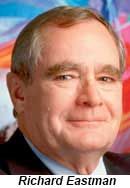 Richard Eastman: It's a two-part issue. The first part is culture, a mental mindset that says GDSs are the distribution systems and are the only real source of travel information. But the Internet allows travelers and, more specifically, their agents to bypass the GDS systems.
The second fact that limits the GDSs is that the GDSs to this day remain dependent on the legacy architecture of major airline hosting systems. The airline hosting systems like Sabre host and Galileo host and particularly the Shares host, which is United-Continental's host system, those systems are designed using what is called a six-bit word. That is either six ones or zeros or 36 possible combinations of ones or zeros. Now, our alphabet is 26 characters, so you can have 26 capital letters and nine or 10 command instructions in a six-bit word, and to this day, the airline host systems still retain that architecture. It didn't take long for computer geeks to figure out that not everybody spells their name with a capital letter and not all streets have capital letters. So the system evolved to the eight-bit word, which gave you 64 ones and zeros and you could have uppercase and lowercase characters. Today, computer systems other than airline systems all use some eight-bit derivative -- eight-bit, 16-bit, 32, 64,128, 256 -- but they are all divisible by 8. So if you want to dumb down the message you can divide by 8 to get to the core elements of the language, but you cannot get down to six. You have to build a translator to get from six to eight bits.
TW: So how does a six-bit system work in an eight-bit world?
Eastman: If you send a six-bit word across and the airlines -- and even the GDSs use the eight-bit networks now -- they have to lop that six-bit word in a message packet to send it, and they have to translate it both in and out, and the cost of doing that in computer terms in humongous.
 TW: How is this sustainable?
Eastman: The GDSs continue to prevail using this technology because the airline settlement process, the BSPs [billing settlement plans] or ARC, continue to use that same messaging structure. The reason only an agent can sell an airline seat is because they have access to that six-bit ARC message structure. If it were not for that control over the message structure, then Macy's or Kroger or whoever else wanted to could sell seats using today's banking and credit card technologies. It is a control mechanism used primarily by the GDSs but also to some extent by ARC and the BSPs to control the financial structure.
Now airlines can settle with credit cards. They do alliance sales direct. Why pay the transaction fees and cots of GDS distribution when you can bypass those costs using interbank and credit card systems? Hotels have been doing it for years. Everyone is abandoning that architecture in favor of contemporary solutions.
TW: What does this mean when it comes to declining numbers of agents using GDSs?
Eastman: [Agents say they are] not using the GDSs; [the GDSs, they say,] cannot supply us with the service we need to have in order for us to supply our customers with their needs. Or, I have to pay too much to be able to service my customers. I can do the same thing more cheaply on the Internet. What is happening is the technology revolution has taken the underpinning out from underneath that control mechanism that the GDSs had.
The Internet enables agents to integrate a much broader spectrum of travel product into a single itinerary for a given customer than do the GDSs. And that comes back to the original architectural issue. There is far more product available on the Internet than there is in the GDSs. If you want to offer your product in the GDS, you have to redefine that product in a message structure that will dumb down into the GDS architecture.
On the Internet, you can put up a video. GDSs don't even understand video. If you put up a video and the public finds it and the public wants it, they click on the video, and the next thing you know, you have bookings.
The product mix on the Internet is much broader. When travel first started, getting an airline seat was dominant to travel. Hotels were secondary. Things like car rental and limousines, that stuff wasn't even considered when the GDSs started. That whole model has reversed to the point where the traveler says, "I'm going down to golf," and his wife wants to take the younger son to Disneyland, and the older son wants to see a rail museum. And you can't do that on the GDS. The agent serves the traveler, and that is the value the agent brings, the ability to package all those things for all members of the party. And that is on the Internet; it is not on the GDS.
Follow Kate Rice on Twitter @krtravelweekly.