"It's a blue whale, the largest animal on the planet!" the expedition leader cried out, as passengers rushed to the front of the ship to watch for the telltale spout.
After an initial pass, the captain turned the ship around to get another look as the whale rose several more times before disappearing beneath the waters of the Bolivar Channel in the Galapagos Islands. While visitors to the Galapagos can expect to see an abundance of wildlife, including giant tortoises, marine iguanas and a plethora of endemic bird species, the blue whale sighting was an added bonus, as was clear from the enthusiastic reactions of even the seasoned crew members.
We had come to the Galapagos with National Geographic-Lindblad Expeditions to explore the islands and attend the official naming ceremony of the two newest additions to the line's fleet: the National Geographic Gemini and the National Geographic Delfina. The ships were acquired last year and began sailing in early 2025 after undergoing multimillion-dollar renovations.
My home for the 10-day trip was the 48-passenger Gemini, which features 28 cabins, outdoor and indoor dining spaces, a whirlpool hot tub, a spa and a fitness center. The 16-passenger Delfina is a luxury catamaran.
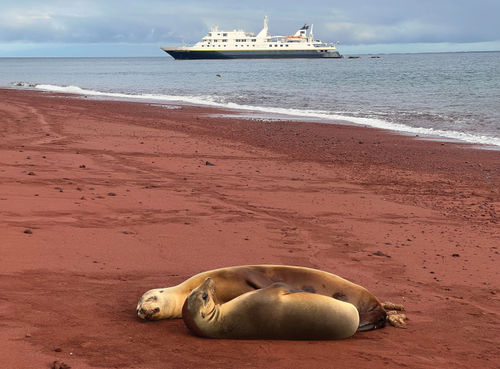
Sea lions bask on the beach with the National Geographic Gemini in the background. Photo Credit: Bart Beeson
Gemini and Delfina
We stayed in a Category 4 cabin on the Gemini's bridge deck, a bright 205-square-foot space with a queen bed, sitting area and private balcony. The balcony was the perfect spot to relax after a day of adventures before heading down to the nightly briefing from the expedition leader. It was also a great place from which to view the rugged volcanic landscapes from the comfort of our cabin.
While the ship is limited to 48 passengers, it has the capacity for 100, so we could always easily find a quiet spot to read or take in the scenery and even enjoyed having the hot tub to ourselves.
Breakfast and lunch were generally served on the outdoor deck, with dinner indoors at Darwin's Restaurant. All the meals featured superb food with local Ecuadorian specialties and were great opportunities to get to know the other passengers.
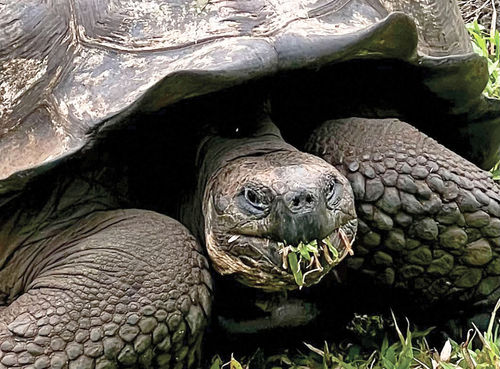
A giant tortoise photographed in the Galapagos during a National Geographic-Lindblad Expeditions cruise. Photo Credit: Bart Beeson
The atmosphere throughout our journey was one of constant excitement and anticipation. For many, the Galapagos is the ultimate bucket-list destination, and during cocktail hours and dinners, passengers would recount their snorkeling encounters with a giant manta ray, penguin or sea turtle.
The addition of the Gemini and the Delfina brings the total annual Galapagos departures for the company to more than 200 and enables guests to experience new destinations in the archipelago. The Gemini is the only ship in the fleet that visits Elizabeth Bay and Punta Moreno on Isabela Island, and the Delfina is the only ship in the fleet to visit Puerto Villamil and Sierra Negra Volcano, also on Isabela.
Lindblad Expeditions CEO Natalya Leahy, who took helm of the company last December, said that the two new ships also responded to demand.
"The Delfina is a unique ship," she said. "At 16 passengers it's more like a yacht -- and it's perfect for private charters. We know that some of our prospective guests want to have the National Geographic-Lindblad experience, but they would like to have it more in a private setting."
With the addition of the Gemini, meanwhile, Lindblad can respond to the growing demand for sailings overall, including those for multigenerational travelers, where Leahy said they've seen an increase in skipped-generation travel -- grandparents traveling with their grandchildren.
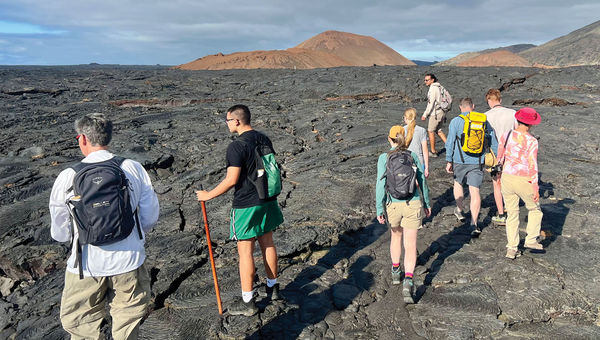
Passengers from the Gemini explore the lava rock landscape of the Galapagos. Photo Credit: Bart Beeson
A timeless experience
National Geographic-Lindblad Expeditions' trips are geared toward guests who want to learn as much as possible about their destination, and the Galapagos is truly a fascinating place. On my trip, the itinerary called for as many as four outings in a day, including snorkeling; Zodiac tours; hikes ranging from easy walks to brisk climbs; and kayaking or paddleboarding.
I had seen pictures from friends who visited the islands decades ago, and one thing that struck me was how the visitor experience in the Galapagos seems remarkably unchanged thanks to the strict protection measures of the national park and the financial support of tour operators like Lindblad, which helps fund efforts such as scientific research and sustainable marine reserve management.
While I had heard accounts of how unfazed the wildlife throughout the islands is by human presence, it was still a remarkable experience to come face to face underwater with a marine iguana while snorkeling or to have to step back to get out of the path of two frolicking sea lion pups. I got close-up photos of bird species like the iconic blue- and red-footed boobies with just a camera phone.
The obviously passionate naturalists also explained the current challenges facing the Galapagos, such as the effects of climate change and how critical it is that current and future generations continue efforts to protect the islands. As Leahy explained, the addition of the new ships in the National Geographic-Lindblad fleet will enable even more guests to experience the "special feeling of responsibility that we all share in this very fragile, very special place in the world."