Walk to the corner of Sixth and Brazos streets in downtown Austin, and you'll get as good a view as any of where the past and future of lodging meet in the Texas capital.
On the northwest corner sits the Driskill. Opened in 1886, Texas' longest continually operating hotel is most of the way through a $9 million refurbishment to its 189 rooms. And while the Hyatt-owned property last year reconcepted its 1866 Cafe & Bakery as a European-style eatery with grab-and-go options and plenty of connectivity for laptop-toting guests, the hotel's Driskill Bar still has its cattle head on the wall and its "Widow Maker" bronze statue, and the Driskill Grill (where a young Lyndon Johnson proposed to his future Lady Bird) boasts leather chairs, burgundy curtains and steaks that are dry-aged in-house.
Old-school Texas.
Across the street is Littlefield Lofts, which is run by an Austin-based, private-accommodations operator, Top Trip Rentals. The two-dozen split-level lofts, which were built in 1979 but updated this year, forego the Lone Star retro look completely. Industrial concrete hallways connect guests' self-parked cars in the adjacent multilevel garage to their spacious two-bedroom loft units (950 to 1,150 square feet) with floor-to-ceiling windows and content-streaming televisions. The building's entryway features a painting of a pig wearing a jet pack.
Welcome to Austin, where Cosmic Cowboys meet construction cranes. Sure, much of the city tries to cling to its "Keep Austin Weird" slogan, but things have gotten downright conventional, in every sense of the word, in the Texas capital.
Between a growing tech sector, its entertainment offerings and its "Live Music Capital of the World" distinction, Austin has parlayed both its business-friendly environment and the growth of events such as South by Southwest and Austin City Limits into a booming tourism sector.
In fact, Austin now attracts more than 20 million people annually, which is triple what it did a decade ago and more than other Southern cities such as Miami, Nashville and New Orleans, based on visitor numbers cited by each city's tourism bureau.
Hotel developers and owners are responding, ensuring a frenetic, experience for anyone looking to find out what's new in the local lodging sector. While the city's hotel-room inventory is only about half of the approximately 80,000 rooms in Dallas, that number is changing fast.
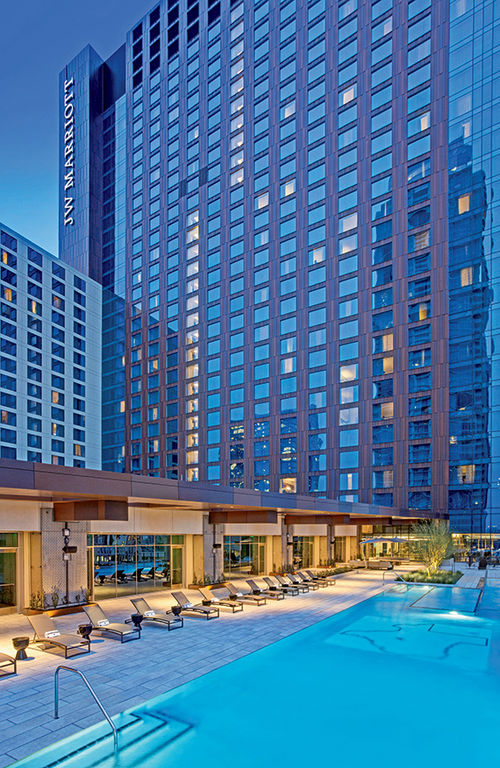
The 1,012-room JW Marriott Austin debuted as the city’s largest hotel in February.
In February, the 1,012-room JW Marriott Austin opened as the city's largest hotel (a distinction it will surrender when the 1,060-room Fairmont Austin opens a few blocks away in 2017), and includes nods to the city's past and present.
While the lobby includes lots of Texas limestone and the hotel's Corner Restaurant features a substantial tequila collection, the hotel's outdoor Burger Bar reflects the city's food-truck culture, while the sleek, 14,500-square-foot pool-deck area (the bottom of the pool reveals an outline of the state of Texas) and the hotel's massive bandwidth speaks cosmopolitan.
At least to this reporter, the lobby's black-iron fireplace sculpture appeared to reference the famous bats that live under the Congress Avenue Bridge nearby, in a postmodern, bats-getting-cooked sort of way.
Nearby, Starwood Hotels' 366-room Westin Austin Downtown quotes local music history more literally. Granted, local owner White Lodging (which also built the JW Marriott) constructed the hotel's rooms with floor-to-ceiling windows and used a clean and modern blue-and-gray design scheme while including a 20th-floor pool deck adjoining a glass-enclosed gym for those who want to look a little better before parading by that pool.
Still, the hotel won't let guests forget the city's musical roots. The ground-floor's design scheme integrates references to the strings, straps and neck of a 1953 Gibson guitar, while the hotel's second-floor meeting rooms are named after Texas-bred music luminaries such as Willie Nelson, Janis Joplin and Stevie Ray Vaughan.
On downtown's southeastern edge Kimpton Hotels will make its Austin debut with this fall's opening of the Hotel Van Zandt. Named in honor of 19th century Republic of Texas leader Isaac Van Zandt (whose great-grandson was the late local singer-songwriter Townes Van Zandt), the 319-room hotel will include touches such as a bar with wood reclaimed from a barn in Lockhart, Texas; a cafe serving local specialties such as breakfast tacos; and a fourth floor that includes a pool deck with views of Lady Bird Lake and a live-music area with a "writer's lounge" section set aside for less-known local talent looking to get in front of a mic.
Such newbuilds aren't limited to downtown. This month marks the opening of the South Congress Hotel, which will be operated by the same folks who two years ago redeveloped Hotel Ella out of the historic Goodall Wooten Mansion near the university.
The 83-room property takes the place of what had been a food-truck lot and recalls the mid-20th century architecture dotting much of the city. The hotel includes a chilled (not heated) pool and all-day eatery Cafe No Se (Spanish for "I don't know"). The hotel also ensures its local foodie bona fides by including a 12-seat, high-end, omakase-style Japanese restaurant, Otoko, run by local celebrity chef Paul Qui.
On the opposite end of the spectrum is Hotel Granduca Austin, which is also slated to open this fall, albeit in the city's Westlake Hills area. The Tuscan-style luxury hotel will be the sister property to the Hotel Granduca, which opened in Houston in 2007. With money streaming into the local economy, the 194-room Tuscan-style hotel looks to tap into a trend toward formality creeping into the Texas capital, complete with an Italian restaurant boasting a 200-bottle wine list and doors once used in a 16th-century Italian monastery.
Meanwhile, the tourism influx has spurred the 32-year-old Hyatt Regency Austin (where local director Richard Linklater famously discovered actor Matthew
McConaughey, drinking, of course) into its own improvements. The 448-room hotel is most of the way through a $30 million renovation project that started in 2013.
Lest anyone forget Austin's DIY roots, however, there's always the Heywood Hotel, which husband-and-wife team Kathy Setzer and George Reynolds rebuilt out of a 1925 bungalow in East Austin in 2011. Boasting just seven rooms, the hotel is chock full of local art and Danish-modern furniture in both its original craftsman structure and its modern addition.
And while the city's melding of modern and traditional at Sixth and Brazos may also be well reflected in what's likely the city's smallest hotel, perhaps an even better explanation of Austin's work/play ethos is reflected by the city's largest hotel.
"See these meeting rooms?" said JW Marriott Austin Director of Sales and Marketing Jay Spurr, pointing to a line of doors bordering the hotel's pool-deck area during a hotel tour on a scorching August day. "We're going to convert them into cabanas."