Montenegro is smaller than Hawaii, but mile for mile it packs an impressively scenic punch. Hugging the eastern Adriatic coast opposite Italy's Puglia region, the destination is diverse, picturesque and welcoming yet still flies under the radar for most international travelers.
It took me just four days to discover its dual soul -- the contrast between its coast and mountains and between its historical roots and contemporary appeal.
Podgorica, the pleasantly low-key capital, has remnants of Ottoman history and is just seven miles from the international airport, which has flights from such cities as London, Paris, Frankfurt and Rome that make it an easy add-on to a European vacation.
Nearby, the Plantaze vineyard is one of the largest in Europe, producing prized red vranac and white krstac wines and welcoming visitors. From there, it is about 40 miles on good roads to Kolasin, the main ski area, with modern facilities, challenging slopes and welcoming hotels, such as the Bianca Resort & Spa (and, when I stayed, a Crowne Plaza across the road was nearing completion).
Kolasin is also the gateway to one of the country's five parks, the Biogradska Gora, which is one of the last remaining undisturbed forests in Europe and is popular for trekking, mountain biking and kayaking. My hike around the lake under canopies of red and golden foliage made for two peaceful hours before lunch in a rural home on the Klisura farmstead.
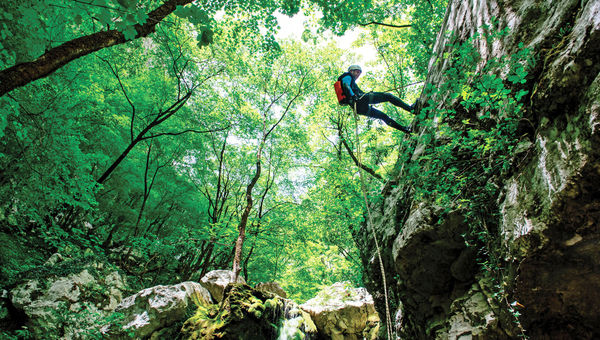
A rock climber in Platije Canyon, located between the towns of Podgorica and Kolasin. Canyoning and mountaineering are gaining popularity in Montenegro. Photo Credit: Courtesy of National Tourism Organisation of Montenegro in Italy
Local sights and flavors
Little English was spoken there, but any language gaps were easily outweighed by the hospitality of the owner, Danijela Dulovic, and her family. The lunch ingredients were prepared with care, from the kacamak potato-cornmeal polenta to the homemade bread and rich beef goulash.
It was a most memorable home-cooked meal, deeply rooted in Montenegrin tradition. As I watched Danijela stir the kacamak slowly over the stove and took in the rich aroma of melted butter and cream, I thought back to my Irish roots and memories of the traditional colcannon with mashed potatoes and greens that my grandmother used to make.
Cetinje, the former royal capital of Montenegro, is modest in size and has a quiet formality, with leafy avenues, neoclassical villas and a museum that served as home to King Nikola I in the early 1900s. It also has a monastery that houses some extraordinary relics, including fragments from the True Cross and the hand of St. John the Baptist.
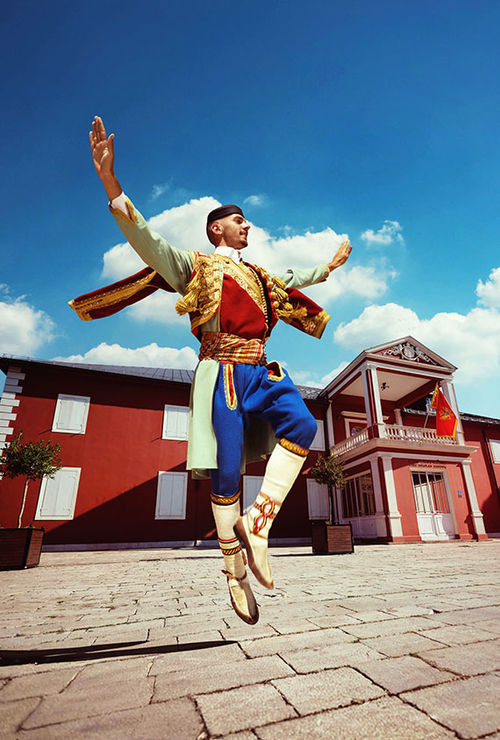
A traditional dance is performed in Cetinje, the former royal capital of Montenegro. Photo Credit: Courtesy of National Tourism Organisation of Montenegro in Italy
From here, the Lovcen Serpentine, a 5-mile descent of 16 hairpin bends, zigzagging from the Njegusi Plateau to the sea, was part thrill ride and part scenic wonder. With every turn, the view widened until the Bay of Kotor appeared -- a long, tranquil gulf framed by steep mountains that is a major Adriatic cruise port.
I found that Kotor, a Unesco-fortified town with a labyrinth of alleys and tiny squares (one with the unusual Cats Museum, run by gregarious owner Piero Prati) rewards slow wandering, which is better early in the morning before the first tour groups descend.
Nearby Tivat has the country's second international airport and Porto Montenegro, a marina packed with superyachts, designer boutiques and gourmet restaurants, positioning it as Montenegro's primary hub for luxury travel. Farther south, Budva's medieval Venetian walls, historical center and citadel contrast with the modern beachfront and big-name hotels, like the Maestral Resort & Casino, which offer full-service resort amenities.
In the old town, I wandered into a small artisan shop where shelves were stacked with local olive oils, honey and herbal liqueurs. I left with a small bottle of raspberry rakija, thinking that a lingering taste of the local fruit brandy would be the best Montenegro souvenir to bring home.
Popular for cruise travel
The nearby islet of Sveti Stefan, an Aman property that is currently closed, is the country's most photogenic and iconic silhouette, and One&Only Portonovi adds another layer to Montenegro's growing luxury appeal.
With standout dining, a Chenot Spa, private beaches and refined service, it is the new face of Montenegro's high-end tourism that appeals to couples, wellness seekers and families, who are also drawn by the coast's mild Mediterranean climate (which stretches the high spring and summer season well into fall).
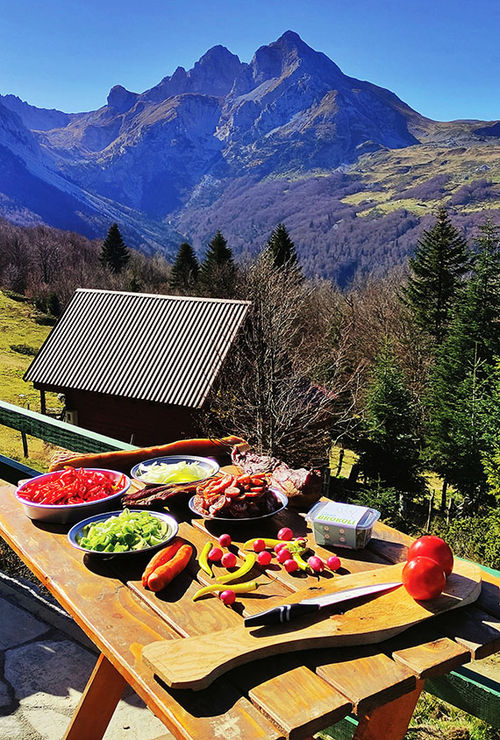
The rustic town of Katun Kobil Do is tucked into Montenegro's mountainous region. Photo Credit: Courtesy of National Tourism Organisation of Montenegro in Italy
Travel advisors should know that Montenegro, while not a member of the EU, uses the euro as its currency. Its main appeal is a mix, combining the draws of culture, nature, sea and sun as well as local food and wine experiences.
American visitors are rising fast, up 8% in 2024 to around 53,000, with overnights increased by 12%. And the momentum is strong: In the first nine months of 2025, they rose another 15%.
Many visitors arrive on cruises, and an increasing number are staying longer to explore parks and villages in the mountains, which cover 80% of the territory.
The average stay for Americans is around four days (shorter than Europeans), but this is trending upward thanks to better air access, stronger destination branding and a broader array of activities. Canyoning and mountaineering are popular here, as are softer adventures and private guided tours.
In spring and summer there are daily ferries from the Italian coastal city of Bari to the main seaport, Bar, which is on the coast not far from Kotor and Budva. This route is popular with visitors arriving in cars and with anyone who enjoys unhurried travel, as the Adriatic crossing itself becomes part of the experience.
It is also an attractive sea-access option for niche or incentive groups seeking a novel arrival into Montenegro.