It's tough to argue with travelers who insist the summit area of Haleakala National Park, a 30,000-acre preserve on Maui, is the natural attraction's major draw. Views from the crater atop the 10,000-foot shield volcano and the panoramic vistas over the Pacific toward the neighboring islands are no doubt some of Hawaii's finest.
East of the dormant volcano's rim, however, the sprawling rain forest of Kipahulu Valley descends toward Maui's southeastern shore, where the national park's visitors can get a dramatically different look at the Valley Isle's natural diversity.
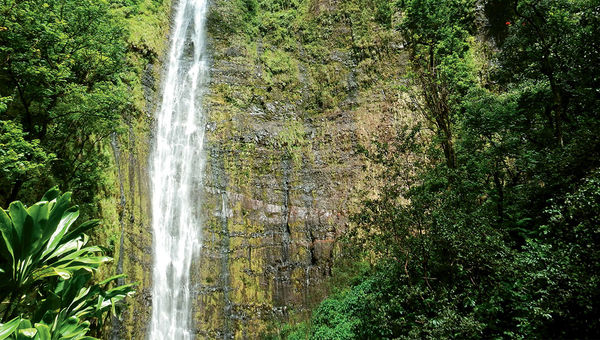
Waimoku Falls is off the Pipiwai Trail in Maui’s Haleakala National Park. It is 400 feet high. Photo Credit: Shane Nelson
Experienced Maui travelers will tell first-timers that planning stops at both the Haleakala summit and the national park's Kipahulu coastal region in the same day isn't really feasible. It's about a four-hour trip one way along the scenic Hana Highway out to the park's Kipahulu entrance, while the winding drive up to the volcano's summit runs about 2.5 hours from Kahului.
The best way, in fact, to enjoy the park's Kipahulu side is to plan a leisurely drive along the well-known, often oceanfront road to Hana, stopping whenever the urge strikes, and then stay overnight in the remote eastern Maui community.
"Depending on how often you stop, it can take a good four to six hours to get to Kipahulu," said Polly Angelakis, the chief of interpretation and education for Haleakala National Park.
"Our busiest time of day is typically in the afternoon, between 12 and 4," she said. "If people want to avoid crowds on the trails, a lot of times they'll come over the day before, stay overnight in Hana and then get an early start on the trail the next morning."
Hoping to enjoy a tranquil trek up the national park's Pipiwai Trail to the 400-foot, photogenic Waimoku Falls, I stayed overnight in Hana on a recent visit and arrived around first light at the Kipahulu facility's parking lot, which is about 12 miles from town.
"It's a beautiful hike," Angelakis said of the four-mile roundtrip trek to Waimoku. "Along the way you pass by two waterfalls: one is a half-mile up the trail and the other is two miles. Unfortunately, most of the vegetation you're going to see is non-native, but the waterfalls and the stream views are just beautiful."
I didn't run into any other hikers on the trail up to Waimoku, which is a stunning outing, but I did encounter more adventurers on the way down.
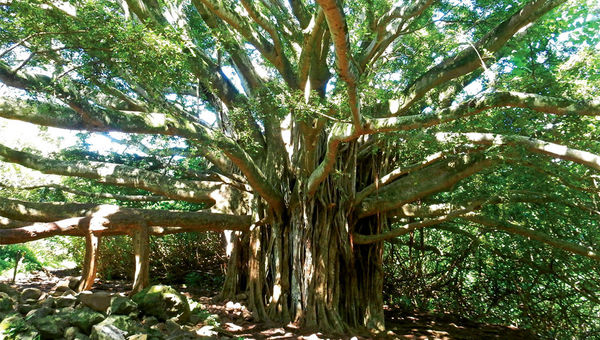
This banyan tree, off the Pipiwai Trail, is a great spot for photo opportunities in Haleakala National Park.
For folks not interested in a major commitment, the half-mile walk up to the trail's first waterfall view at the Makahiku overlook does involve a bit of a climb, but it's very manageable for most people and a nice, short hike for those without a lot of time.
Travelers looking for more of an adventure with a gorgeous payoff will certainly want to head all the way up to Waimoku, passing by the trail's massive banyan tree, which is a terrific photo op for families with kids; a soaring bamboo forest; and, as Angelakis mentioned, wonderful looks at some surprisingly deep canyons along Pipiwai Stream.
"You want to wear sturdy hiking shoes, bring sunscreen, mosquito repellent, water and snacks," she said. "And people need to keep in mind that it's very hot and humid in Kipahulu and it can rain at any time, so people should be prepared for those conditions."
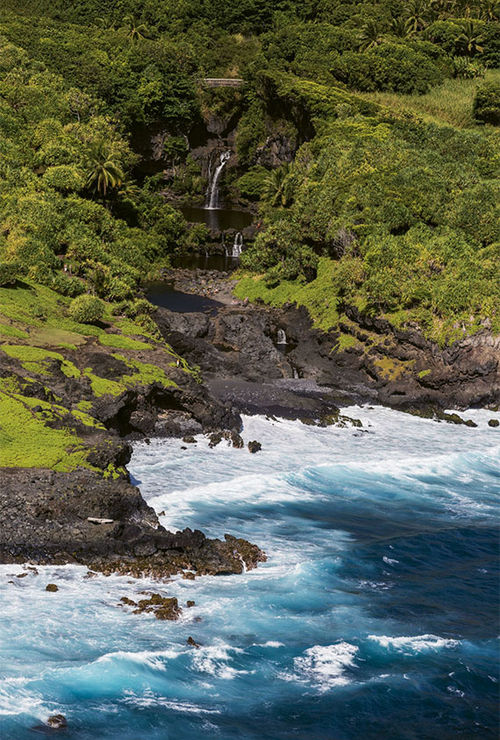
Oheo Gulch contains several waterfall-fed pools that empty out into the Pacific Ocean. Photo Credit: Tor Johnson/Hawaii Tourism Authority
Haleakala National Park's Kipahulu district also attracts many visitors eager for a closer look at the stunning Oheo Gulch, which is a collection of waterfall-fed pools that empties into the Pacific Ocean. The natural wonder has long attracted local swimmers, and many visitors still venture into the water there. Although bathing in the pools is permitted by park officials when conditions are safe, they would prefer people stayed out of the water entirely in the area.
"We don't recommend that people swim in the pools of Oheo due to flash floods and rockfalls," Angelakis said. "People do it all the time, but we do not recommend it."
For travel agent Paula Simpson Takamori, a longtime Hawaii resident and the owner of Travel to Paradise on Oahu, outlining some of the dangers of swimming in Hawaii's freshwater streams is part of any booking to Hana when clients are intrigued by the Kipahulu area.
"A lot of times people don't understand what flash flooding really means," Takamori said. "When the water in a stream suddenly goes from one inch to six inches deep in a few seconds, that's a sign that people could really be headed for trouble."
Takamori also regularly encourages clients to consider spending at least one night in Hana if they're interested in exploring Maui's iconic eastern highway, listed in the National Register of Historic Places, and Kipahulu.
"I usually have people spend the night after driving over," she said. "Then they can get up the next day and head to Oheo Gulch when it's not so crazy."
Along with regularly booking clients at the luxury Travaasa Hana Maui resort, Takamori likes to suggest the small community's Hana Kai Maui condo property, where room rates start around $250 a night.
"They don't pay any commission anymore, but I still book it for folks because I just think it's a good place," she said. "It's right on the edge of town, and it's all condos: one and two bedrooms, all with ocean views. There's no beach right there, but the views are just wonderful."
For travelers looking to really soak up the remote, country vibe of eastern Maui, Takamori often suggests the property, which features full kitchens, for multiple nights.
"I've had clients who've stayed there three nights," she said, "and they've told me after, 'We should have stayed longer. It's just fantastic.'"
Visit www.nps.gov/hale and www.hanakaimaui.com.