Note: This interview was conducted before the ban on most travel from Europe to the U.S. was announced last week.
___
As the Covid-19 virus shut down Italy and continued its spread last week, the European travel industry, already reeling from the loss of its huge inbound Chinese market, was facing growing uncertainty. Senior editor Jeri Clausing talked with Eduardo Santander, executive director and CEO of the European Travel Commission, about the situation.
Q: Things have gotten worse since we spoke a few weeks ago. Can you tell me what you are seeing on the ground in Europe?
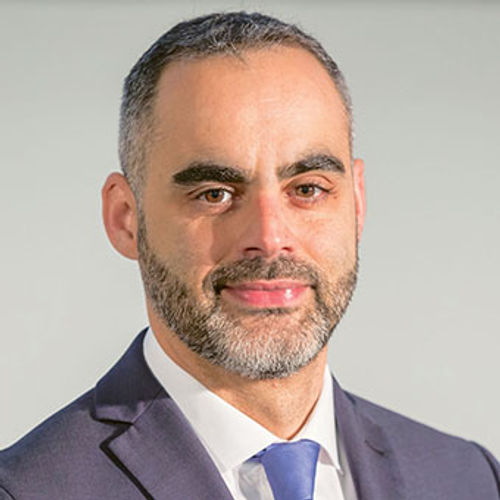
Eduardo Santander
A: Things are not going well. This is spreading really fast. All the scenarios we discussed the other day, the main issue here is we just don't know what's going to happen. And I would like to underline that's because the government responses are so different. They have locked down Italy, some parts of Spain. They have canceled major events, including ITB Berlin. But there is no European Union guideline on how to act. This is creating uncertainty.
Q: Do you have any data on travel cancellations or financial impacts to the industry yet?
A: The number of cancellations now exceeds new bookings. Italy fell over 155%. And the [inbound] Chinese market has collapsed. We are seeing rates drop, but there are no numbers yet. The problem is the situation is changing extremely fast. It's difficult to make any kind of predictions or forecasts. We are also seeing big corporations suffering. The cruise industry is suffering.
Q: Is there anything being done on the Continent to try to help companies mitigate the impacts?
A: Yes. The Spanish government is already calling for recovery plans. You see IATA lobbying for moratoriums so they don't have to fly empty aircraft. But it goes beyond air transportation. We see now the whole tourism value chain affected. Hotels are reporting very bad numbers. They have more personnel than clients. Tour operators, restaurants, retail, historical sites and many others. Belgium has canceled every kind of public gatherings like concerts. And this has a domino effect on society. We see governments asking people to lock down. We'll see that people will consume less and that travel will not be on the top of the list.
Q: The upcoming Easter holiday is a big travel time in Europe, isn't it?
A: Yes. It is a huge deal in Europe. Some of the schools here have two weeks off. The Easter season is at very high risk. We see massive cancellations, not only for Italy and Spain. Ski resorts are also reporting very bad figures. Some are closing [for the season] already.
Q: Here in the U.S., President Trump and Congress have started talking about economic stimulus and relief packages. Are you seeing the same in Europe?
A: Yes, we have seen announcements from member states to support small and medium enterprises with measures of tax alleviation. We are very actively lobbying for that. We are also lobbying for a joint promotion of travel and tourism to recover Europe as an iconic, diverse and safe destination.
Small and medium and family-owned businesses are going to be hit hard, small B&Bs, bike rentals, all these value chains. We are talking about a lot of micro-enterprises that will probably not survive the season if this continues.
Q: We just got a forecast from Tourism Economics predicting this could be as bad as 9/11. Would you agree that could be the same for Europe?
A: Yes. 9/11 impacted us in the same way. Probably an analogy with 9/11 is pretty valid. But I would say at that time we had the moral duty to resume work and keep our democratic societies running. Then the enemy was terrorists, whereas now our enemy is a small tiny thing we cannot see, and our only moral duty is to stay at home and be better safe than sorry.
Q: Are there any bright spots in any of this?
A: I always say that optimism is the perfume of life. Whenever this passes -- and this will pass -- this will result in a major upswing later. Everyone keeps saying we are not canceling, we are postponing. I don't know how we are going to manage [all the