Prior to the Covid-19 pandemic, Etihad Airways was operating five routes between North America and its United Arab Emirates hub in Abu Dhabi. The carrier has now resumed four of those routes and has also introduced the Wellness Ambassador program to provide assurance to customers about its health safety initiatives. Airlines editor Robert Silk spoke with Etihad vice president for the Americas Vincent Frascogna about the carrier's U.S. flying, the ambassador program and about its overall prospects during the Covid-19 pandemic.
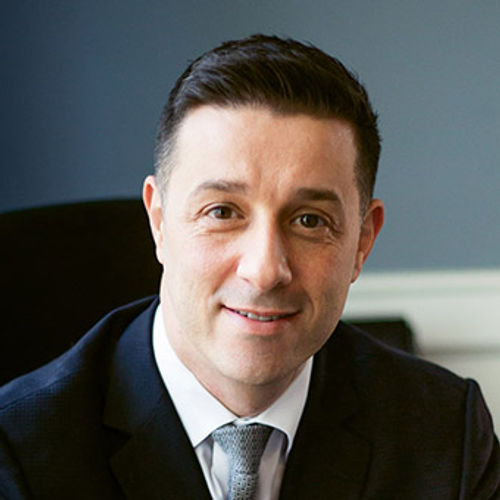
Vincent Frascogna
Q: Take me through the service you were operating from North America before the pandemic and the flights you are offering now.
A: Previously, we operated a daily A380 flight to JFK, daily Washington Dulles 787 service, daily Chicago O'Hare 777 service and five times weekly service to Los Angeles and Toronto on 777s. Now, we are operating five times per week out of JFK, five out of Chicago, three out of Washington and five out of Toronto, all using 787-900s. We haven't decided on LAX. For now, the demand doesn't really warrant putting LAX back on the schedule.
Q: Many borders around the world are still closed, especially to Americans. And Abu Dhabi is closed to tourists. With that in mind, who is on these flights?
A: It's a mix. Dual nationals. Nationals of other countries. Pakistan is open right now. We have a good deal of traffic connecting through to there. There is some repatriation still going on. We are seeing some transit into other parts of Asia, as well. And we are supplementing passenger traffic with cargo.
Q: Overall, how much capacity are you offering to the U.S. compared with this time last year?
A: About 40%. Load factors are sustainable right now. They ebb and flow depending upon what is going on around the world. We have seen an increase since the United Arab Emirates implemented a requirement a few weeks ago that all passengers get PCR (molecular coronavirus) tests before the flight. Customers can go to an approved lab within the U.S. The increase has been small, but it's big enough to show that there are actually consumers out there.
Q: Are you seeing any significant leisure travel?
A: It's generally the visiting friends and relatives market. They don't have the added piece of having to stay at hotels at the other end. Abu Dhabi right now is creating a safe certification program for hotels and tourist sites. Abu Dhabi will open its doors when the time is right.
Q: I was intrigued to read about your ambassador program, which is a piece of your health safety program, Etihad Wellness.
A: The program takes the safety and security of passengers and repositions it into a format that is communicable to our guests. Ambassadors are available via phone, email and web chat to travelers 24 hours a day. They are able to at least give consumers and the travel agency community some level of peace of mind before the booking is made. When you get on the plane, you will meet a dedicated member of the crew who has specialized training in all of our wellness and sanitization protocols on board the aircraft. The representative is in a special uniform and can answer questions and will engage with people exhibiting signs of illness.
Q: Tell me about the overall state of Etihad. Already, several global carriers have gone into bankruptcy.
A: For us, it's more about how we came into this. We have been making significant changes over the past two years, whether it was fleet adjustments or cost adjustments. So when we came into this, we were already pretty fit in terms on how we operate the organization. When we grounded, we actually embarked on the biggest maintenance operation in the history of our airline. We dealt with minor technical requirements. We replaced all carpets and all seat coverings. We looked at our in-flight entertainment systems and our seats. And we did bigger maintenance work, as well. Ultimately, when we do go back to some semblance of normal, customers will return to us and feel like they are getting a brand-new aircraft.