The European Union and the UK have cleared the Boeing 737 Max for a return to the skies.
The European Aviation Safety Authority (EASA) formally declared the aircraft safe on Wednesday, joining the FAA and regulatory authorities in Canada and Brazil. The U.K. Civil Aviation Authority quickly followed suit, saying that it worked alongside EASA during the assessment process.
"This assessment was carried out in full independence of Boeing or the Federal Aviation Administration and without any economic or political pressure -- we asked difficult questions until we got answers and pushed for solutions which satisfied our exacting safety requirements," EASA executive director Patrick Ky said in a prepared remark. "We carried out our own flight tests and simulator sessions and did not rely on others to do this for us."
The move was expected. Ky told reporters last week that the ungrounding would happen this week. In addition, EASA in November had issued a Proposed Airworthiness Directive, a preliminary step to Wednesday's ungrounding.
EASA has ungrounded the Max with most of the same conditions as the FAA. Most notably, aircraft must receive a software update for the automated flight control system. And all pilots will have to be provided with Max flight simulator training.
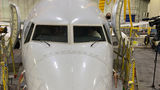
An American 737 Max jet. Photo Credit: Robert Silk
Aviation editor Robert Silk discusses the return of the Max jet in this episode of our Folo by Travel Weekly podcast.
The flight control system, known as MCAS (Maneuvering Characteristics Augmentation System) was responsible for the two Max crashes over five months that led to the worldwide grounding of the plane in March 2019. A combined 346 people died in those Lion Air and Ethiopian Airlines crashes.
The EASA conditions for the Max return go beyond the FAA's November order, by adding requirements concerning the plane's stick shaker, a device that vibrates the flight controls in order to alert a pilot that a plane is approaching a stall. EASA is requiring that flight crews be able to stop a stick shaker from continuing to vibrate once it has been erroneously activated by the flight control system, a measure intended to reduce distraction of the crew.
Transport Canada also included the stick shaker requirement in its ungrounding order this month.