Travel Weekly's contributing editor for Hawaii, Shane Nelson, spoke recently with Lois Mitchell, manager of the Sherman Oaks,Calif., branch of leading luxury travel agency Protravel International and a veteran of the travel industry with more than 30 years' experience, about her luxury business to Hawaii and her expectations for 2011.
Travel Weekly: How was your business to Hawaii in the luxury sector during 2010 compared with the year before?
 Lois Mitchell: It was much better in 2010. I think everybody was just holding their breath in 2009, and we saw that change a great deal last year. I didn't break it down for Hawaii or anywhere else, but I know that we did probably 30% better in 2010 than in 2009. People were very hesitant in 2009. And I think by 2010 they were starting to feel a little bit more comfortable. And I think there was a certain sector that said, "OK, I was good all of 2009. I did without, and now in 2010, regardless of what's going to happen in the future, I need my vacation. I need my break."
TW: Have you seen an increase in average daily rate for rooms and suites at luxury properties in the Islands?
Mitchell: Yes. [In 2009] I think the hoteliers, including the luxury properties, were saying, "What can we do to provide a stimulus for people to come back to Hawaii?" so a lot of them across the board lowered rates. They started trying everything as far as amenity packages and "buy three [nights], stay four" or "buy five and stay seven," breakfasts, massages during a stay, a round of golf -- just myriad amenities to try and entice people to come. And in 2010, it started to recover, and I think what you are seeing now in terms of the ADR is the result of "OK, we're starting to get healthy again. We've got to get those rates where they belong."
TW: In 2009, there was a lot made of shrinking booking windows to the Hawaii market. Did you see those windows increase any in 2010?
Mitchell: In 2009, I think many people chose to travel at the last second because they thought there would be a better "deal" out there. I get the impression from our clients now that things are leveling out, that things are settling down, and we are going into a relatively good pattern. We are certainly seeing more advance bookings now than we did last year.
TW: Many travel agents have told me the increase in airfares during 2010 has made selling Hawaii more difficult. Have you seen fares increase in 2010? Does that extra cost make it more challenging to sell Hawaii luxury products?
Mitchell: The airfares are killing us, and it's still discouraging for the affluent market. And to be honest with you, they haven't put the newer aircraft on those routes either, so the first-class flyers are not overwhelmed by the first-class cabins. Other than the size of the chairs and fewer seats in that section and more food service, you don't get the feeling that you are in first class.
TW: What distinguishes the Hawaii luxury market from some of its competitors, like Mexico or the Caribbean? What are its strengths?
Mitchell: It's still the U.S. That's No. 1. There's no language barrier. Hawaii is also a wonderfully safe place for children. The medical care that you can get in Hawaii is outstanding. I'm always very concerned about people traveling with small children to distant places. Kids get into trouble, they have accidents. They get sick. I always like my clients to have access to excellent medical care wherever they go.
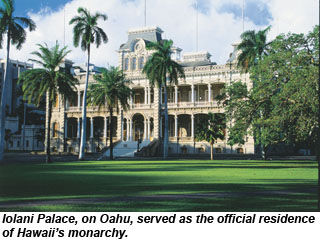 If agents do their due diligence, they will become familiar with what there is to see and do, and I don't mean the helicopters or the luaus. I'm talking about the history. I'm talking about the culture. I'm talking about the out-of-the-way places where people can still experience old Hawaii.
There are still old cane towns on some of the islands. There are still some adventure things that you can do that will take you off the beaten track. You can go into magnificent valleys with wonderful waterfalls. There are some excellent museums. Most of the tourists go and sit on a beach and don't even know what's there. I mean, how many places can you go where you can go to an upcountry winery that makes wine from pineapple? We do have [affluent clients] that all they want to do is sit on the beach, and God bless them. That's absolutely fine. But we do have people that say, "Is there something else for me to experience?" How many people have seen the Iolani Palace? If you really want to continue to entice your clients, you should at least offer these options.
TW: Is there some advice you might give other agents looking to increase their luxury business to Hawaii?
Mitchell: Know your properties. I find the biggest subtlety in Hawaii from island to island and hotel to hotel is the difference between which is right for a family, which is right for a water baby who just has to have the best water for snorkeling, all of those increments that go into it. You need to know the differences between the islands because I find a lot of people, especially those travel agents who are not as familiar with Hawaii, don't realize there is a huge difference between Kauai and the Big Island or Oahu and Maui, etc.
Hawaii also has some magnificent homes that can be rented, and I find that they work beautifully for families. They work wonderfully for celebrities. You can get the privacy that they need, and there's usually staff accommodations on the grounds. It provides all the bells and whistles, and yet they have all the convenience of staying in a luxury home. Some of those that I've rented are $15 million, $20 million homes, and there's a big market for them. It's the same feel people get when they stay in presidential [suites], but you can get them for less than presidentials.
TW: What is the best way for an agent looking for those luxury home products to find a good match for clients?
Mitchell: My biggest concern anywhere in the world where I'm renting houses is the broker that I'm dealing with, because I have to know, No. 1, that they're legitimate; No. 2, that they inspect their properties; No. 3, that they maintain a certain level of excellence or they drop the house and don't handle it; and that I can call that broker for any special request that I might need.
I have clients who want certain brands of treadmills or want certain foods. They want a chef brought in and put in the house. There are all sorts of demands for the luxury market, and you have to know where to go to get that, and you have to start compiling a dossier everywhere you rent homes. And this is why you interact with other members of a consortium, other members of your company, or if you know other people who do luxury travel, you call them and say, "If you don't mind, is there somebody in St. Kitts you use? Can you give me their name?"
TW: What do you think 2011 will be like in the Hawaii luxury market?
Mitchell: I've already seen improvement, and I think it is going to continue. As I said, we're seeing a better window of booking time in advance, [though] not huge. It will never go back to the old days, but it's certainly an improvement over the last couple of years. I'm looking for a strong 2011.