With Congress slated to debate FAA reauthorization this fall, the trade group Airlines for America (A4A) finds itself in the middle of numerous political battles. The group, for example, is championing the proposed privatization of the U.S. air traffic control system but opposes proposals to raise the cap on ticket fees that airports can collect and to regulate aircraft seat configurations. Airlines editor Robert Silk caught up with A4A CEO Nick Calio in Las Vegas last week to discuss those and other issues.
Q: The Senate is proposing to raise the passenger facility charge that airports use for capital projects by $8 per roundtrip. A4A opposes an increase, which would be the first since 2000, but if airports were more pleasant and efficient, wouldn't that make people more likely to fly?
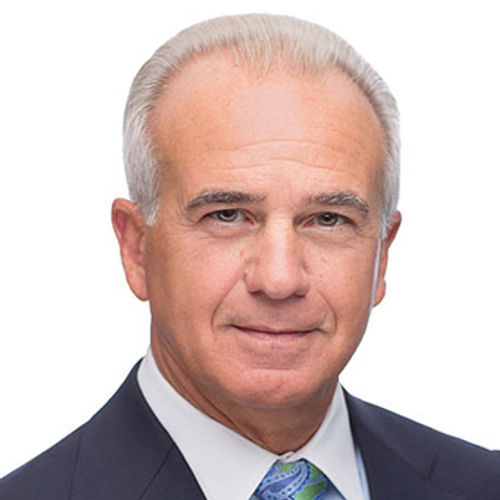
Nick Calio
A: You have to start at the baseline of the facts, which are that airports have currently more money than they've ever had before and they have not been able to make a solid case for why the increase is needed.
Since 2008 there have been more than $100 billion of capital projects finished, underway or approved at the 30 major airports in the United States and similar activity at smaller and medium airports. They were asked at hearing to come up with a list of projects that need to be completed but can't be undertaken; they have not come up with anything that's credible.
Q: The Airports Council International -- North America put out a report in March saying that airports will have $100 billion in infrastructure needs in the next five years. You don't think that's credible?
A: No. There's nothing to back it up because they don't have the projects to show what is necessary and what is not. If you take what has been proposed in the Senate, for a family of four you're increasing the fee by $32. OK, you can say that's not a lot. But if you look at who's flying today and the fact that one-third of the people flying have annual incomes under $50,000, an additional $32 onto all of the already existing taxes and fees is very significant.
Q: A4A is a leading champion of the proposal to spin off air traffic control from the FAA to a private nonprofit. Does it still have a chance this year?
A: It's supposed to come to the floor the week of Sept. 12. I assume if it made it to the floor they would have the votes. I think it's going to be very close. The politics of the issue is, it is always easier to stay with the status quo than it is to go forward. There's a lot of embedded opposition to it because it benefits the establishment. I think [the current ATC system] leaves a lot of other people in the dust because it is not operating as it should.
Q: The House and Senate FAA reauthorization bills each would direct regulators to impose minimum standards related to seat configuration in aircraft. A4A has opposed such a measure. But Rep. Steve Cohen, who has championed the measure, told me you acquiesced to the current bill moving through the House. Can you live with the proposal as currently written?
A: I think he may be confusing A4A with an airline. We did not back off. We think it is a terrible idea. Consumers have choices, and the government should not be mandating passenger comfort. If it becomes a matter of safety, that's a legitimate reason to regulate, but the government should not be mandating seat size and seat pitch based on the personal needs of the consumer.
Q: Negative customer service headlines dominated the spring for your members after the United incident in Chicago. What must airlines do to become more liked?
A: That's a critical question and one for which we are constantly searching for the answer. If you look at all the customer service metrics, they are all at basically their all-time best. Lost bags, on-time performance, everything across the board. So we're doing that. There are certain high-profile incidents that are unfortunate, but again, 27,000 flights launch in the United States per day, almost all highly successful flights. The key question is how do you get past the anecdotal?