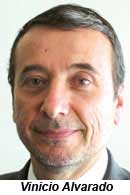
 At the 37th annual TravelMart Latin America, held last week in Quito, Travel Weekly's Eric Moya spoke with Ecuador Tourism Minister Vinicio Alvarado, who took office June 19, about efforts to grow the country's tourism industry beyond the Galapagos.
Q: What percentage of Ecuador's visitors are here primarily to visit the Galapagos, and of that number, how many spend significant time on the mainland?
A: This year we'll receive 1.4 million tourists, and of that number, the Galapagos will only receive 200,000. One of our priorities is to make a stronger association between the Galapagos and Ecuador ... so that we will promote the whole country of Ecuador, with our diversity, beaches and the Amazon, on a global scale.
Q: Is it difficult to persuade agents and tour operators in the U.S. to sell Ecuador beyond the Galapagos?
A: The Galapagos is an expensive destination. So when tour operators [sell to clients from] the United States, they're going to try to sell the Galapagos, because the people from the States can pay. Maybe that's why tour operators position the Galapagos over Ecuador; the Galapagos is the hook. But the truth is, most of the visitors from the U.S. come [to visit mainland Ecuador].
Q: What can travel agents do to persuade clients to visit Ecuador beyond the Galapagos?
A: It's one of our worries and definitely one of our objectives to help the agent. Not only because we [want] North Americans to come to the continental part of the country but because the Galapagos is arriving at its limit [of tourists it can accommodate]. So our campaign message, "All You Need Is Ecuador," is going to focus on Ecuador having so much to offer, so much diversity. Our focus is going to be on the continent, and also the Galapagos.
Q: During the opening press conference of TravelMart LatinAmerica, you mentioned your "five pillars" of tourism development. One of those pillars was security. What are some fears/concerns you believe potential visitors have that you need to dispel?
A: The first issue is physical security, safety from serious crime. But security also includes other types of safety: to have safe transportation, to ensure adventure tour operators are prepared to operate adventure activities, using the right equipment. Also, food preparation: to prepare food with quality, with cleanliness. Those are the most important areas.
Q: Another pillar was education for those working in tourism. What will that entail?
A: One of the things that we're looking to do is training: for example, "1,000 Phrases You Need to Know in English," "1,000 Phrases You Need to Know in Portuguese." We need more training to elevate the level of professionalism of our guides and our tourism service sector.
Q: Last year at a Proexport Colombia event in New York, Maria Claudia Lacouture, Proexport Colombia's CEO, said her organization was working with other countries to create multinational tourism routes. She said work was under way with Ecuador for a route with a religious theme and that Proexport was talking with Mexico, Peru and Chile to tap into common heritages. What's the status of those efforts?
A: We have a proposal to work on a campaign called Destinations South America, to create tourism standards for all of South America. When people travel to Europe, they go to Europe; they don't particularly think of going to one destination. Europe is seen as a regional destination. Although our objective is that tourists come to Ecuador, part of our objective, as well, is that they come to the region of South America.