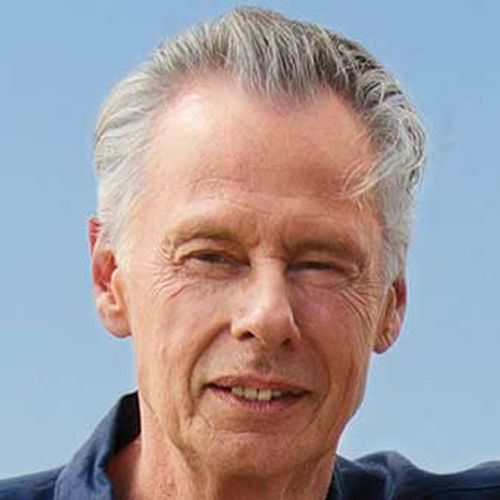
Sven-Olaf Lindblad
Following a merger deal with investment company Capitol
Acquisition Corp. II, Lindblad Expeditions will be a public company. Travel
Weekly’s Michelle Baran spoke with Lindblad founder and president Sven-Olof
Lindblad about what it will mean for the growth and expansion of the adventure
travel company with strong ties to National Geographic.
Q: Why did Lindblad decide to merge with an investment firm?
A: Well, the backstory is [our ships] are running at or near
capacity for much of what we do. We want to expand the business. And we believe
that this was a great opportunity to build that in the public marketplace.
Q: Did you approach Capitol or did Capitol approach
Lindblad?
A: They approached us. We were contemplating doing this
entirely through a debt structure perspective, and then this opportunity came
up, so we decided this was a much wiser and more beneficial track.
Q: What’s in it for them?
A: They see this as a very strong business that is focused
in an arena that is growing considerably — the adventure travel/adventure
cruising business. They believe this a good long-term play in terms of growth
and profitability and that this will be a very strong public entity.
Q: Why now?
A: We simply have nowhere to go within our existing asset
base. So, in order to grow, we have to expand inventory. We’re going to do it
responsibly; we’re not going to build 20 ships in one year or anything silly
like that, we’re going to do it responsibly and methodically.
Q: Lindblad has always been so strongly associated with your
name and legacy. Do you see that changing now that it will be a public company?
A: I do not. Our entire management team will stay fully
ensconced, and I see no reason for it to change. I would imagine that we would
augment it in a variety of ways, but no changes in that regard.
Q: When Lindblad was founded in 1979, did you ever think the
day would come when you would be selling a 50% stake in your company for $90
million?
A: Probably not. The most important thing is a company like
this needs to survive … and I believe this is a very rational way to do that,
to be in the public domain with a really responsible board of directors, and I
would imagine a whole lot of our guests will be shareholders.
Q: There is definitely a different culture of management
when you go from being a privately held company to a publicly traded one. Are
you prepared for that culture shift?
A: At the end of the day, particularly at a company that
requires capital, or any company that has assets like we do — we own six ships
— you’re always responsible to somebody in some fashion, and we believe in
transparency. We want to run a really good business, so the disciplines that we
have in place are going to be largely the same as the disciplines we will have
in place going forward. Of course there will be more public disclosure, and I
think that’s really going to be the main difference. So I don’t feel a
significant change in the sense of responsibility, I just feel that it’s going
to be more transparent, obviously.