
Meagan Drillinger
From fishing to kite-surfing to Jet-Skiing to flyboarding, there's plenty to do on the water along Mexico's 5,800 miles of coastline. But there's much to do below the waterline, as well. Here's a look at five top dive spots south of the border.
Cozumel
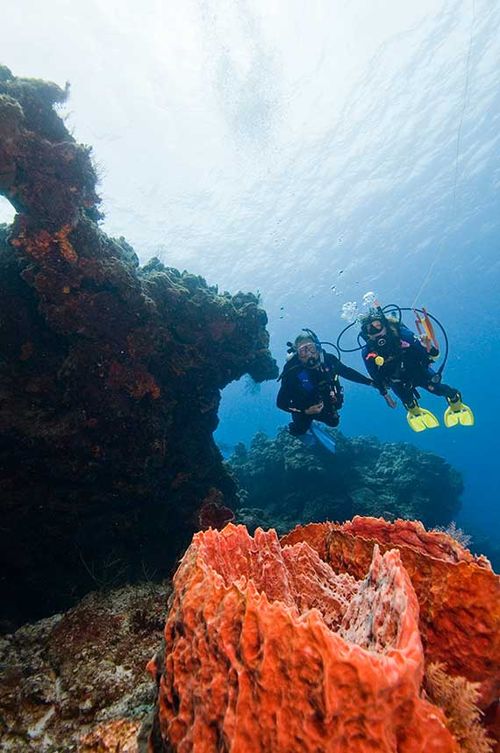
Diving in Cozumel Reefs National Marine Park.
Most dive sites here are found within the boundaries of Cozumel Reefs National Marine Park, which protects the reef, which is the second-largest barrier reef system in the world. The park, which was founded in 1996, is home to 26 types of coral with more than 100 subspecies. More than 500 fish species live in the park, as well. Divers can also see loggerhead, hawksbill and green turtles.
Dive details:
Visibility: 80 to 100 feet
Water temperature: 77 degrees in the winter, 85 degrees in the summer.
Weather: 70 to 85 degrees; humidity around 90%; rainfall is rare other than in rainy season (late summer/early fall).
Featured creatures: Toadfish, eagle rays, grunts, snappers, angelfish, parrotfish, moray eels, groupers, hawksbill turtles, trumpet fish, wrasses, hogfish, spotted drum fish, amberjacks, lobsters, octopuses, long-snout seahorses.
Recommended training: The Professional Association of Diving Instructors (PADI) suggests its PADI Deep Diver, PADI Drift Diver and Peak Performance Buoyancy courses for diving the walls. The PADI Cavern Diver course is also a good choice for many sites with swim-throughs.
The Cenotes, Riviera Maya
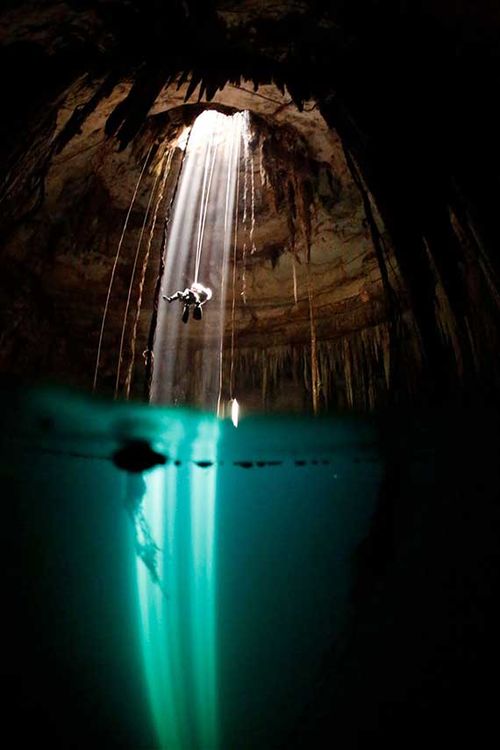
Cenotes are found throughout the Riviera Maya.
One of the more uncommon dive experiences travelers will encounter in Mexico involves cenotes, which are freshwater-filled sinkholes formed when the roofs of limestone caverns collapse and fill with water. The Yucatan peninsula has a number of elaborate cenotes, branching into cave systems and underground tunnels. Most cenotes have clear, turquoise water and iconic stalagmites and stalactites.
Dive details:
Visibility: Limited by the quality of your vision. For open-ocean dives off Riviera Maya, visibility is 40 feet in the winter and 90 feet in the summer.
Water temperature: 77 to 82 degrees in winter, 81 to 85 degrees in summer.
Weather: 65 to 90 degrees. Rainy season is from May to October. The dry season is November to April.
Featured creatures: There is rarely wildlife within the cenotes. Open-ocean dives along the Riviera Maya may include encounters with hawksbill turtles, eagle rays, moray eels, lobsters, spadefish, parrotfish, Creole wrasses, trumpet fish, angelfish, lemon sharks, nurse sharks and possibly even manatees.
Recommended training: PADI's Cavern Diver courses help make the most of the cenotes.
La Paz
On the Baja peninsula, far from the crowded, high-energy streets of Cabo San Lucas, sits La Paz. This city by the sea has only 220,000 residents and is surrounded by barren desert. But the sleepy oasis of La Paz still delights visitors with restaurants, museums and colonial-era buildings and offers some fantastic diving. In fact, Jacques Cousteau once called the Sea of Cortes, "The Aquarium of the World." It teems with more than 800 species of marine life, including gray whales. This is also one of the premier dive sites in the world to see schools of hammerhead sharks, which range from as few as six to as many as hundreds traveling in a clockwise direction.
Dive details:
Visibility: 100 feet and beyond
Water temperature: 80 to 86 degrees year-round
Weather: High 60s in winter, high 80s in summer.
Featured creatures: Hammerhead sharks, manta rays, schooling pelagics, sea lions and more.
Recommended training: The PADI Deep Diver course is recommended for the more adventurous dive sites.
Isla Mujeres
Just five miles long and three-tenths of a mile across, Isla Mujeres is a slice of diving paradise in the Caribbean Sea. The island is less than four miles off the coast of Cancun and offers a quiet respite from that destination's buzzing activity. Clear, warm water and abundant marine life as well as reefs and caves are what pulled Jacques Cousteau here, and divers have been frequenting the island ever since.
Dive details:
Visibility: 40 feet in the winter, 90 feet in the summer
Water temperature: 77 to 82 degrees in winter, 81 to 85 degrees in summer.
Weather: 65 to 90 degrees
Featured creatures: Eagle rays, moray eels, lobsters, spadefish, parrottfish, Creole wrasses, trumpet fish, angelfish, lemon sharks and nurse sharks.
Recommended training: Consider the PADI Digital Underwater Photographer course to capture images of marine life.
Isla Guadalupe
Isla Guadalupe is a volcanic island that lies 150 miles west off the Baja peninsula, 250 miles southwest of Ensenada. With a population of around 200 people, there's not a whole lot of activity to be had on the island, save for diving. When you're diving off of Isla Guadalupe, what you're looking for are sharks. Great white shark cave diving is the ultimate thrill in this part of Mexico. Venture into the waters surrounding the island to encounter the large population of great whites. Many dive shops offer cage diving for an "up close and personal" experience. (www.greatwhiteadventures.com/guadalupe.html)
Dive details:
Visibility: 100 feet and beyond
Water temperature: 80-86 degrees year-round
Weather: High 60s in winter; high 80s in summer.
Featured creatures: Great white sharks