While Etosha National Park draws significant visitor numbers as the flagship wildlife destination in Namibia, just across the park's southern border lies a private, 250-square-mile reserve where wildlife viewing happens without the crowds. Etosha Heights Private Reserve has become one of Africa's most fascinating conservation success stories as it is funded entirely by tourism revenue.
Since Natural Selection Travel partnered with local landowners to create Etosha Heights in 2017, this stretch of former cattle ranches and hunting concessions has been completely transformed into thriving wildlife habitat.
The results are measurable: The elephant population has jumped to over 270 (where previously they avoided the area entirely), lion numbers have climbed to over 30, and the reserve's 370 giraffes represent one of the healthiest populations in the region. The reserve also provides a critical roosting habitat for two of Namibia's vulnerable vulture species.
However, it's the rhino story that really showcases what tourism funding can accomplish.
As a designated Black Rhino Custodian area, Etosha Heights has both black and white rhino populations that receive 24/7 protection from a specialized anti-poaching team. Camera surveillance, advanced monitoring technology and even gyrocopter patrols are all funded through Natural Selection's 1.5% revenue contribution paid by guests.
Conservation at the center of it all
At the heart of the conservation effort is an incredible research hub. The Etosha Heights Conservation Centre, which is run in partnership with the Giraffe Conservation Foundation and Namibia University of Science & Technology, informs conservation strategies across the Greater Etosha area. This year alone, the center has supported research on everything from predator-prey dynamics to elephant movement patterns.
The momentum continues building. Four giraffe translocations have already happened this year, and the reserve's documented success is attracting researchers and conservation organizations seeking replicable models.
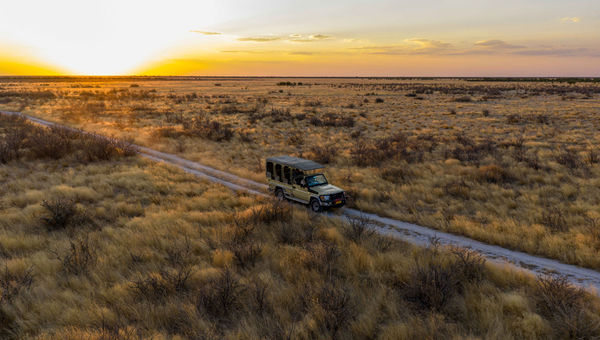
A safari vehicle explores the vast plains of Etosha Heights Private Reserve in Namibia. Photo Credit: Natural Selection
The reserve's conservation success is also attracting attention from international researchers and conservation organizations looking for models they can replicate. As Jennifer Lalley, Natural Selection's co-founder and chief impact officer, puts it: "Conservation is a long game, and Etosha Heights is proving what's possible when land is given back to nature and when people work together with patience, respect, and vision."
How can travelers experience this conservation story?
The reserve offers three distinct accommodations options, each with its own character. Safarihoek Lodge features 11 thatched chalets named after local tree species, including family units and wheelchair-accessible options. The lodge's modern interiors blend seamlessly with traditional Namibian architecture, and each chalet offers 180-degree wilderness views from private balconies. Luxury chalets include outdoor showers alongside indoor facilities.
Etosha Mountain Lodge, situated in the heart of the reserve among dolomite hills, provides nine classic Namibian chalets with panoramic views and a refreshing swimming pool, essential for those hot African afternoons. The lodge's location makes it particularly good for spotting mountain zebra, kudu, and the elusive cats that favor the rocky terrain.
For the ultimate in privacy and luxury, Safari House offers exclusive-use accommodation in a traditional Namibian farmhouse with three ensuite bedrooms, a fully equipped kitchen and a dedicated guide, vehicle and chef.
Game drives, day or night
From any camp, travelers can enjoy morning and evening game drives during which they will be able to see a wide range of wildlife from the desert-adapted Hartmann's mountain zebras and oryxes to classic savanna species like giraffes, elands, and kudus. The reserve's healthy predator populations mean regular sightings of lions, leopards and cheetahs, while dedicated rhino-tracking drives offer guests the rare privilege of encountering both black and white rhinos in their natural habitat.
The reserve's star attraction is its double-story photography hide overlooking a large natural waterhole. Designed by a Namibian wildlife photographer, the hide offers both ground-level and elevated viewing positions, complete with charging stations, gear storage and even a daybed for truly dedicated photographers. The waterhole draws a constant parade of wildlife throughout the day, with floodlighting extending viewing opportunities into the night.
After dark, night drives reveal a different cast of characters: spotted hyenas, various jackal species, bat-eared foxes and the elusive honey badger. Guided walks with armed rangers provide an intimate ground-level perspective, enabling guests to track rhino spoor (footprints) and discover the smaller details that make the ecosystem tick.
Deeper dives
Beyond standard game drives and lodge activities, the reserve offers deeper conservation experiences for interested guests. The Etosha Heights Conservation Centre provides specialized presentations on giraffe conservation and other ongoing research projects, giving visitors insight into the scientific work their accommodation fees support.
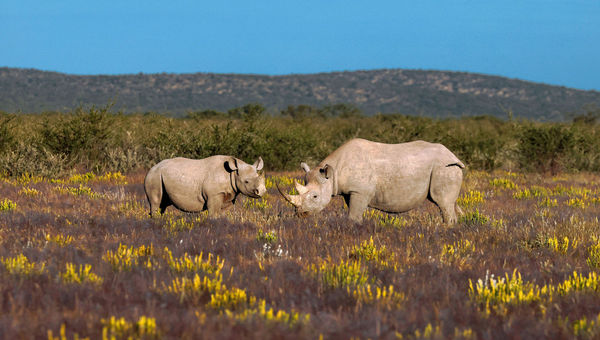
As a designated Black Rhino Custodian area, Etosha Heights has both black and white rhino populations that receive 24/7 protection from a specialized anti-poaching team. Photo Credit: Natural Selection
For clients seeking more intensive conservation engagement, the reserve can arrange immersive conservation experiences as add-on activities. These programs enable guests to participate directly in ongoing research and conservation activities, from wildlife monitoring to habitat restoration work.
In addition to offering then the luxury of wildlife-viewing without the crowds, guests will be happy to know that every Etosha National Park booking directly funds anti-poaching efforts, research and community programs, sustaining the life of a valued landscape.