Since
Pan Am launched the first commercial Boeing 747 flight in 1970, jumbo jets have captured the imagination of the
traveling public more than any other commercial aircraft. But today, many in
the industry believe, the age of the jumbo is coming to an end, thanks largely
to improvements in the range and efficiency of two-engine aircraft, combined with a pronounced shift toward
smaller planes by long-haul operators.
“It’s simply a matter of economics and common sense,” said
Richard Aboulafia, an aircraft industry analyst with Fairfax, Va.-based
Teal Group. No one, Aboulafia said, ever went bankrupt flying too small a
plane.
In July, Boeing made headlines when it stated in a
regulatory filing that it was “reasonably possible” it would end production of
the 747.
That pronouncement came just months after Boeing, citing low
demand, canceled plans to double 747 production to one aircraft per month
beginning in 2019. The plane-maker has taken a total of just 50 orders of its
latest 747 iteration, the 747-8i passenger jet, which saw its first deliveries
in 2012.
The one piece of good news in 2015 came when the U.S. Air
Force ordered two, possibly three 747s for its next generation Air Force One.
However, it’s not just the 747 that is struggling. Some
believe its jumbo competitor at Airbus, the A380, is also nearing the end of
its run only nine years after the plane first entered service with Singapore
Airlines with much fanfare. This summer Airbus announced that it would cut its
annual A380 production to just a dozen by 2018, compared with 27 last year.
To date, Airbus has taken 319 orders on the plane, which was
developed at a cost of approximately $25 billion. But Airbus records show that
142 of those orders have come from just one airline, Emirates. And of the 125
A380s that Airbus has yet to deliver, Emirates is set to receive 60.
In 2015, Airbus took just three A380 orders, company reports
reveal. Meanwhile, some airlines that have ordered the A380 are now reluctant
to take the planes. Qantas deferred delivery of eight A380s in 2014. And the
leasing company Amadeo has had to defer delivery of the 20 A380s it has on
order because it hasn’t found willing lessors.
Just last month, Singapore, which flies more A380s than any
carrier other than Emirates, announced that it won’t extend the leases on its
five oldest A380s when they expire beginning next October. However, in a
statement to Travel Weekly, Singapore did note that it has five A380s on firm
order for delivery during the second half of next year.
Aboulafia is among those who believe that the A380’s days
are numbered.
“They’re done. By the end of the decade, production will
end,” he predicted.
But though there is little disagreement that jumbo jets in
general are fighting market trends in the modern airline industry, not
everybody agrees with Aboulafia’s dire prediction.
“I suspect that Airbus will move heaven and Earth to keep
the program alive,” said aircraft industry analyst Ed Greenslet, who produces
the website the Airline Monitor. “It was conceived and portrayed as kind of
their signature product.”
For its part, Airbus is adamant that A380 production will
continue for the long term.
“The A380 is here to stay,” spokesman Martin Fendt wrote in
a recent email. Airbus, he said, is continuing to innovate and invest in its
jumbo jet. And with its standard seating capacity of 544 seats, Fendt said, the
A380 alleviates capacity problems at congested airports. For example, he said,
at capacity-limited London Heathrow, 8% of passengers fly on A380s, up from 6%
a year ago, and that number is still growing.
The flip side of the jumbos’ massive capacity, however, is
that carriers that use them typically can offer fewer flights on a given route,
leaving customers with fewer choices of flight times.
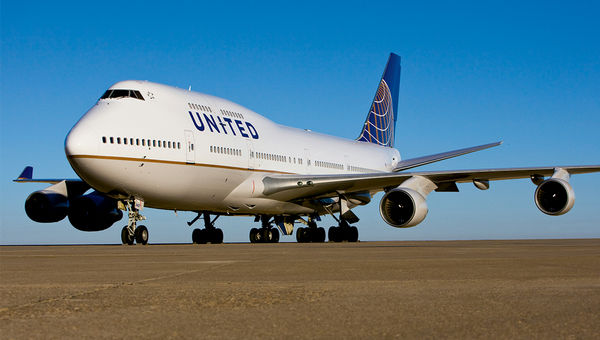
Smaller, more fuel-efficient jets such as the Boeing 787 Dreamliner are often a better option for airlines on long-haul routes than the 747, pictured.
Airbus is seeking to leverage the popularity of the aircraft
among passengers. In July, the company launched the website Iflya380.com to
help the public find a flight on the monster jetliner.
The A380, like the 747, captivates passengers because of the
sheer glamour of the jumbo jet. Etihad, for example, sells a suite on some of
its A380 flights. And it, Emirates, Korean and Qatar all feature bars on their
A380s.
More practically, at least for the many coach passengers, is
the easy ride an A380 provides.
“There’s one thing that’s universally awesome about the
A380: It’s quiet, and it’s smooth — really, really quiet and smooth,” frequent
flyer Ben Schlappig wrote for the blog One Mile at a Time in April 2015.
“Takeoff on an A380 always sounds considerably quieter than cruise [sound
levels] on most other planes.”
Still, popularity doesn’t necessarily translate to profits.
In recent years, both Airbus and Boeing have brought to
market twin-engine, widebody aircraft that are capable of flying nearly as far
as their four-engine jumbo counterparts, but at a lower cost per seat.
The Airbus A350-900, the Boeing 787-9 Dreamliner and the
Boeing 777-200LR, each of which went into service between 2006 and 2015, can
accommodate routes of 8,000 miles and more, far enough to cover the types of
long-haul routes that used to be specialties of the 747.
Equally important, all three of those aircraft have standard
configurations in the vicinity of 300 seats, meaning that airlines can fill the
planes for routes that would never make economic sense on the 450-plus-seat 747
or on the 544-seat A380.
For example, since 2014, United has launched routes between
San Francisco and the second-level China markets Xian, Chengdu and Hangzhou,
all on Dreamliners.
Greenslet said that Emirates’ uniquely strong embrace of the
A380 is largely due to its hub-and-spoke route network centered on Dubai, one
of the world’s largest business centers.
But jumbo jets no longer fit the business models followed by
the large majority of the world’s international carriers.
“They are opting for smaller aircraft that can go from point
to point,” Greenslet said.
He and Aboulafia agree that the 747 is on its last legs,
especially as a passenger jet. But Greenslet said time could be the A380’s
friend.
“We’ll see within a decade if traffic flows to the major
points are maybe rising to the level that the 380 becomes more attractive to
more airlines,” he said. “That is not imminent. Maybe that is a forlorn hope.”
___
Correction: Pan Am launched the first Boeing 747 commercial flight in 1970. A previous version of this report said in error that KLM launched the first 747 flight.