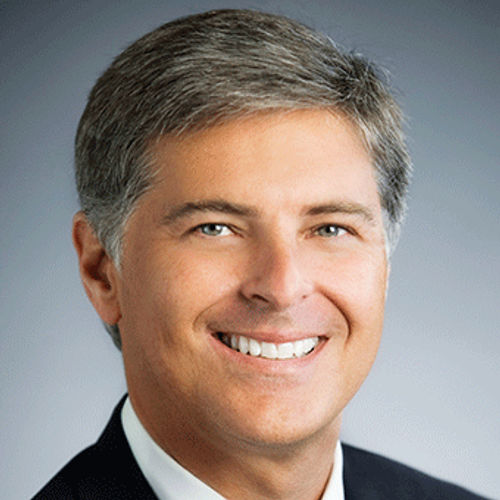
Christopher Nassetta
BUENOS AIRES -- With data showing that the travel industry
contributes 5% of total global carbon dioxide emissions, Hilton CEO Christopher
Nassetta called on fellow World Travel & Tourism Council members to
establish carbon-reduction targets.
"More and more, our customers want us to lead,"
Nassetta, the chairman of WTTC, said at its annual summit here. "We must
take collective action because ensuring life-changing travel experiences for
the billions of travelers we will welcome during the golden age of travel also
requires us to be great environmental stewards of the communities where we
operate."
Hilton has been doing its part, he said, by reducing its
carbon emissions by 24% since 2009. Still, he acknowledged, "We can do a
lot more."
"We're committing to releasing ambitious science-based
targets to reduce greenhouse gas emissions," he said. "We know it's
going to challenge us. It certainly isn't going to be easy, but it's going to
hold us accountable for the work we do to make this world a better place."
Patricia Espinosa, the executive secretary of the United
Nations Framework Convention on Climate Change, said that while the travel
industry is a positive economic, social and cultural force worldwide, "your
sector also has a significant carbon footprint: 5% of global CO2 emissions."
"To put it bluntly" she said, "if we do not
succeed to address climate change all together -- all governments, all business
and all people -- there quite simply won't be businesses to run."
Even so, Espinosa said she was not suggesting that any
restrictions be placed on travel.
"On the contrary, I am here to encourage you to find
new, innovative and more sustainable ways to reduce your carbon footprint,"
she said. "On a basic level, doing so is simply a question of survival. It's
hard to sell people a vacation package to a city that has sunk beneath the
waves."
She applauded the industry's current examples of stewardship
and suggested implementing others, including limiting water usage, increasing
supply and delivery chain efficiencies, encouraging the rental and use of
electric vehicles and finding alternatives to plastic products in hotels.
"Plastics are a big problem for our oceans," she
said, adding that even small changes "can have a ripple effect throughout
your sector."