According to James Nicol, CEO of Easybar Beverage Management
Systems, a cocktail poured by a robot is not only made much faster than one
mixed by a human bartender, it also tastes better.
"A drink is consistently better coming out of our
automated Easybar system," he asserted. "It's always accurate, so you
never have a drink that's too weak or too stiff. It's literally perfect every
time."
While automation has slowly been creeping into the
hospitality space for some time, the industry is currently experiencing an
acute labor shortage, inspiring hotels and resorts to accelerate the
introduction of robots for chores ranging from housekeeping to room-service
deliveries.
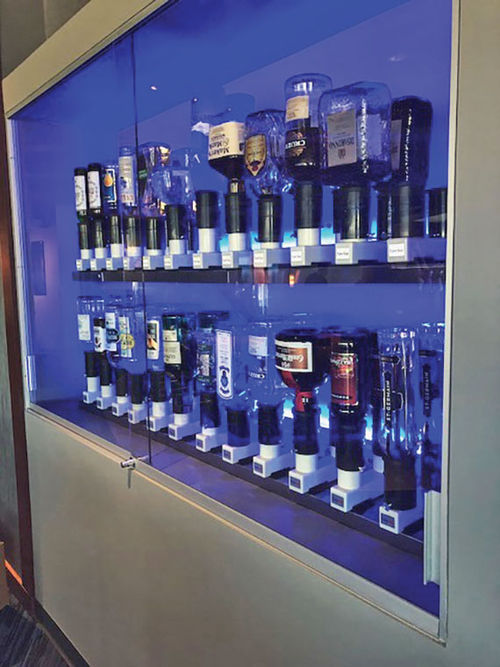
A Smartender automatic beverage system from Smart Bar USA, whose units start at around $30,000.
Oregon-based Easybar is one of several automated service bar
manufacturers taking the concept of a back-of-house robot bartender to the next
level. Since launching its first automated systems eight years ago, the brand's
technology has gained significant traction within the gaming world.
"In a casino environment, there's a lot of liquor being
served and a lot of table service out on the gaming floor, and this is where
these systems are kind of revolutionizing things," Nicol said. "Servers
can simply come up, draw all the drinks off the system and it rings up
automatically, with all that information being stored and tracked. And of
course, the speed of service is just so fast. You can get a cocktail out faster
than you can serve a bottle of beer."
Easybar's automated cocktail system can offer up to 164
brands of liquors and mixers. The company also offers draft beer and draft wine
dispensers.
Las Vegas and other gaming markets are by no means new to
the idea of drink-mixing robots. In recent years, robot bartenders have been
showcased at venues like the Tipsy Robot in the Miracle Mile Shops at Planet
Hollywood on the Strip and the Robo Bar in the Hard Rock Hotel and Casino
Biloxi in Mississippi. Unlike automated service bars, however, those robots
have largely been consumer-facing.
Barry Fieldman, co-managing member of the automated service
bar manufacturer Smart Bar USA, said, "Those robots are entertainment and
aren't even in the same conversation. They're expensive. They're slower,
because you're actually watching the robot make the drink to be entertained,
and you're going to pay a premium for that cocktail. Meanwhile, you don't even
see our machines."
Like Easybar, Las Vegas-based Smart Bar USA, which launched
in 2012, has gained a solid foothold within the gaming space. The company also
sees significant upside in venues like movie theaters, stadiums and arenas and
even onboard cruise ships. Smart Bar USA's Smartender automatic beverage
systems start at around $30,000 for a 16-brand liquor-dispensing system,
including shipping, training and installation.
Among the many major casino hotel players deploying
automated service bar technology is MGM Resorts, which debuted the tech at the
MGM Springfield when it opened in Massachusetts last August. The launch proved
so successful, Fieldman said, that MGM plans to eventually roll out the
machines across its portfolio of Las Vegas properties, as well.
At the 2019 NYU International Hospitality Industry
Investment Conference in New York earlier this month, MGM Springfield president
and COO Michael Mathis said the automated service bar "can make 300
different kinds of cocktails. We pour them consistently and can put out the
perfect bloody mary or rum and Coke in really quick time. And the interaction
with the customer is that much better because our employees aren't in the back
mixing drinks."
Mathis asserted that the back-of-house automation "doesn't
change the traditional bar experience" front-of-house.
What about housekeeping?
The bar isn't the only area where hospitality players are
looking to streamline operations. Under its recently launched RLabs innovation
division, Red Lion Hotels Corp. is testing a housekeeping robot at select
properties throughout Silicon Valley.
"The industry has not stepped up in the area of
robotics yet," said Red Lion president and CEO Greg Mount. "It has
been somewhat superficial and gimmicky in its approach, with robots as displays
in the lobby or in some cases just delivering room service."
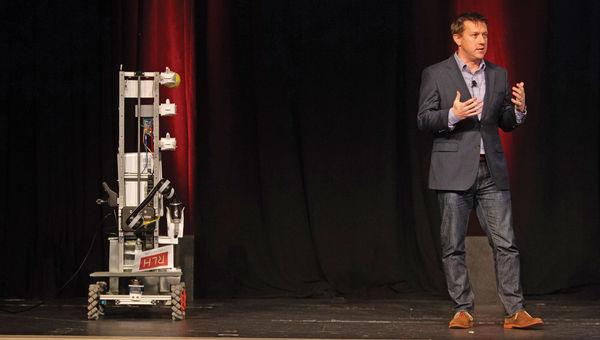
John Edwards, Red Lion Hotels Corp.'s chief information officer, unveiled the company's housekeeping robot at a conference late last year.
Created in partnership with Peanut Robotics, RLabs'
housekeeping robot is designed to buck those trends by completing all the tasks
of a hotel housekeeper, with the exception of making the bed. Though RLabs is
still working on getting the machine to work as quickly as its human
equivalent, Mount said the technology could help ease pressures related to the
ongoing labor shortages in the hospitality industry.
"We looked at the area of robotics based on the fact
that unemployment rates continue to hover below 4%, and the cost of employee
acquisition and overall general compensation costs continue to rise both in
salaries and benefits," Mount said. "I don't think you will see
robots replacing more skilled labor, ... but they can augment some more of the
tasks that require less skill and tend to be redundant."
However, according to Alex Susskind, a professor at Cornell
University's School of Hotel Administration, even hospitality's most redundant
tasks will likely continue to require human oversight, at least for the
foreseeable future.
"There's always a dimension of quality control that you
have to have in place in order to make sure these things work as they're
supposed to," Susskind said. "Just like on an assembly line, humans
will still be part of the equation."