As Portugal's tourism boom nears the 10-year mark, its
luxury and boutique hotel sector is just starting to hit its stride.
"There's definitely been a bit of a scramble to catch
up with the tourism," said Ryan Opaz, CEO of Porto-based destination
management company Catavino. "It kind of hit all at once, and Portugal
never really was set up to handle this type of mass tourism. And higher-end
hotels were definitely a missing part."
According to data from Portugal's National Statistics
Institute, the number of visitors to the country rose for an eighth consecutive
year in 2018, climbing 7.5%, to 22.8 million. While that growth rate was
notably lower than the 16.6% surge in visitors seen in 2017, hotel development
has still lagged behind. As of July 2018, Portugal's tourism accommodations
sector had grown 4.3% year over year, to 6,868 establishments.
Ingrid Koeck, a partner at Portuguese hotel group Torel
Boutiques, said, "Portugal still needs to come up to an international
level in terms of hospitality, but it's picking up quickly."
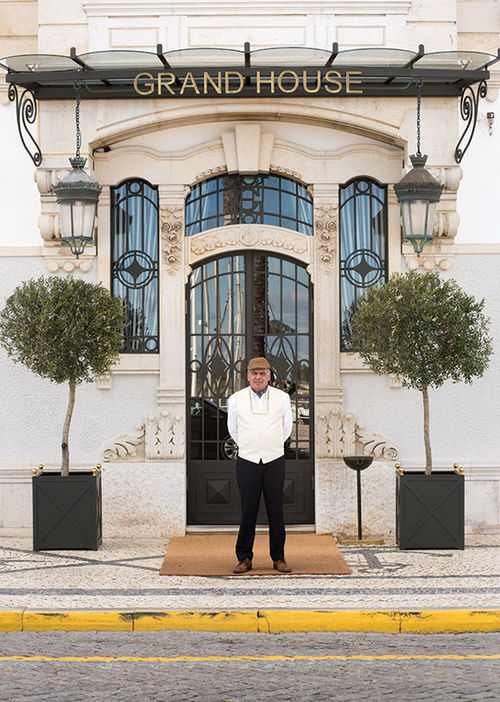
The entrance at the Grand House Algarve, which opened in Algarve's eastern region earlier this year.
Established in 2013, Torel Boutiques opened its first
property, the Torel Palace, in Lisbon. Since then, the company has opened three
more independent hotels in Portugal. The latest, the Torel 1884 in Porto,
debuted earlier this year. A fifth property, the Torel Palace-Porto, is
scheduled to open this October, with additional Porto hotels likely to follow.
"Our expansion shows just how quickly tourism has
grown," Koeck said. "When I joined the company in 2016, we never
thought we'd have five properties and plans to grow even further."
Hotels are also starting to appear in markets beyond Lisbon
and Porto, which have attracted the majority of Portugal's recent influx in
visitors and, according to some, now face a threat of overtourism.
Virginia Irurita, founder and executive partner of luxury
travel company Made for Spain and Portugal, called the influx "an absolute
invasion."
"If I have a family wanting to visit Lisbon in June,
for example, I'll ask if they'd rather stay somewhere less crowded in the
countryside and make Lisbon a daytrip instead," Irurita said.
She cited less-trafficked areas such as the Douro Valley and
Alentejo regions, which she said are known for great food and wine and are
starting to see an uptick in luxury accommodations.
Also in the early stages of hospitality development is
Eastern Algarve, which sees far fewer tourists than the neighboring Central
Algarve region. The Grand House, which opened in Eastern Algarve's Vila Real de
Santo Antonio earlier this year, claims to be the first five-star property in
the up-and-coming market. Housed in a building dating back to 1926, the
boutique property has just 30 rooms.
Marita Barth, general manager for the Grand House Algarve,
said, "We are in a town still untouched by typical tourism, but we're
lucky in that the projects that are starting to happen here are all small and
high in standards. We're seeing an evolution toward quality, not quantity."
In an effort to further spur high-quality hotel development,
the Portuguese government launched a program in mid-2017 designed to convert
some of the country's more decrepit historical monuments and buildings into
hotels and other hospitality ventures.
Dubbed Revive, the initiative enables private developers to
submit project proposals, with those projects subject to concessions lasting up
to 50 years. A building remains the property of the state for the concession
period, and the developer pays the state rent as part of an arrangement that
Ana Mendes Godinho, Portuguese secretary of state for tourism, called "very
attractive to investors."
"Revive is contributing to the rehabilitation and
maintenance of our heritage," said Mendes Godinho. "Investors want to
generate revenue, of course, but there's also a very important element of social
responsibility."
Revive made its debut with 33 eligible buildings. The first
hotel under the program, the 79-room Vila Gale Collection Elvas Historic Hotel,
Conference & Spa, officially opened earlier this summer. Located within a
former convent that was completed in 1721, the building underwent a $10 million
revitalization and now features restaurants, a bar, outdoor and indoor pools
and event space, among other amenities.
Catarina Padua, marketing manager of Vila Gale Hotels, said,
"Elvas is a city in Alentejo that has huge tourist potential and a lot of
history. This project responds to the ambition to develop new tourist centers
in the interior of the country."
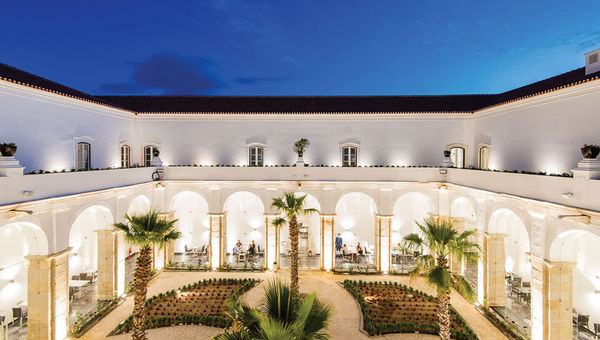
The exterior of the Vila Gale Collection Elvas Historic Hotel, Conference & Spa, which is the first hotel to open under the government's Revive program.
Vila Gale Hotels is currently investing $9.5 million to
renovate a second property in partnership with Revive, which is set to be built
at the site of a former horse farm in the rural municipality of Alter do Chao.
That hotel is scheduled to open early next year.
With Revive proving successful thus far, the Portuguese
government signed off on a second wave of eligible properties this month,
making 15 additional sites available for development.
"So far, we've received 550 expressions of interest,
[including] 150 from international investors," Mendes Godinho said. "Revive
has the potential to create new centralities and attractiveness in all the
regions of the country, [while] also creating jobs and generating revenue in
areas that are not yet that well known."